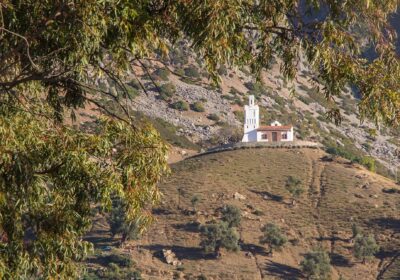

The Marrakech medina is one of the most rewarding old cities in the world, and one of the most confusing on a first visit. Inside the pink walls, lanes twist without warning, souks fold into each other, motorbikes squeeze past donkey carts, and every corner seems to hide a palace, a fountain or a workshop. This Marrakech medina guide is here to turn that beautiful chaos into a place you can enjoy with confidence.
It is written by the Morocco Trip Lines team, the local driver-guides who welcome travelers to Marrakech every week and take them through the old city with licensed guides. Below you will find the sights worth your time, how the souks are organized, how to experience Jemaa el-Fna by day and by night, a half-day walking route, and the practical advice we give our own guests on etiquette, safety, bargaining and getting around.
In this guide we cover:
- How the Marrakech medina is laid out, and how to find your way
- The 15 sights most worth visiting inside and just outside the walls
- How to read the Marrakech souks and shop without stress
- Jemaa el-Fna from morning to late evening
- A half-day route and a full-day route on foot
- Etiquette, safety, scams to avoid and when to visit
- When a guided medina walking tour makes sense
Understanding the Marrakech Medina Before You Go
The medina is the historic walled city of Marrakech, founded in the medieval period by the Almoravid dynasty and shaped by every dynasty that followed. It covers a large area enclosed by long earthen ramparts, pierced by monumental gates called babs. Inside, there are no grid streets, few signs and many dead ends. The whole old city is listed by UNESCO as a World Heritage Site, recognized for its monuments, its urban fabric and its living traditions.
What makes the Marrakech medina special is that it is not a museum. Around its monuments, people live, work, pray, shop and raise families. The best visits respect that, moving between famous sights and ordinary neighborhoods where daily life carries on as it has for generations.
The main districts
It helps to think of the old city as a handful of districts rather than one maze:
- Jemaa el-Fna and the Koutoubia: the central square and the great mosque, the natural starting point
- The souks: the covered market streets running north from the square
- Mouassine: a district of fountains, riads, galleries and Le Jardin Secret, west of the souks
- Ben Youssef: the northern area around the madrasa and several museums
- The Kasbah: the southern district around the Saadian Tombs and the royal palace
- The Mellah: the historic Jewish quarter, next to the Bahia and Badi palaces
How to find your way
Most visitors navigate from a few landmarks. The Koutoubia minaret is visible from much of the city and marks the southwest edge of Jemaa el-Fna. The square itself is the hub: most main lanes lead to it, and locals will point you back to it if you ask. Offline maps on your phone work well, but in the narrowest lanes GPS can drift, so look up the next landmark rather than following the blue dot blindly.
When you are lost, and everyone gets lost at some point, ask a shopkeeper rather than accepting help from someone who approaches you in the street. We explain why in the safety section below.
A Short History of the Old City
Knowing a little history makes every monument more meaningful. The city was founded in the eleventh century by the Almoravids, Berber rulers from the Sahara who made it the capital of an empire stretching from Spain to West Africa. They built the first ramparts and an underground water system that fed the city’s gardens and fountains.
The Almohads, who followed them, built the Koutoubia Mosque and turned the city into a center of learning and architecture. Later, the Saadian dynasty brought a golden age in the sixteenth century, building the Badi Palace and the Saadian Tombs and rebuilding the Ben Youssef Madrasa.
Under the Alaouite dynasty, which still reigns today, the capital moved between several imperial cities. In the nineteenth century, powerful viziers built grand residences such as the Bahia Palace. In the twentieth century, a new town was laid out beyond the walls in Gueliz, which is why modern Marrakech feels like two cities: the historic medina inside the ramparts and the wide boulevards outside.
Why the walls are pink
The ramparts and many buildings are made of rammed earth and plaster colored with local clay, which gives the city its famous ochre and pink tones and its nickname, the Red City. Building rules still encourage this color for new construction, so the whole city keeps its warm, uniform look.
The 15 Best Sights in the Marrakech Medina
These are the sights we recommend most often, grouped by district so you can combine them on foot. Opening hours change with the seasons, during Ramadan and on religious holidays, so check times locally before you set out.
1. Jemaa el-Fna
The great square is the heart of the city. By day it is an open space of orange juice stalls, henna artists and snake charmers; by evening it fills with food stalls, musicians and storytellers. Its tradition of performers is recognized by UNESCO as part of the world’s intangible cultural heritage. We cover the square in detail in its own section below.
2. The Koutoubia Mosque
The Koutoubia is the largest mosque in Marrakech and its minaret, built under the Almohad dynasty, is the symbol of the city. It inspired other famous minarets of the same period. The mosque is open only to Muslims for prayer, but you can admire the minaret and walk through the gardens around it, which are especially beautiful in the late afternoon light.
3. Bahia Palace
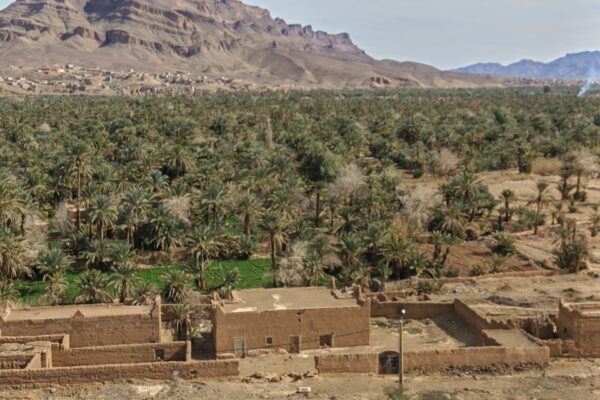
Built in the late nineteenth century for the grand viziers of the sultan, the Bahia Palace is a sequence of courtyards, gardens and reception rooms decorated with painted cedar ceilings, carved stucco and zellige tilework. It is one of the most visited sights in the Marrakech medina, so arrive at opening time or late in the afternoon to enjoy it with fewer people.
4. The Saadian Tombs
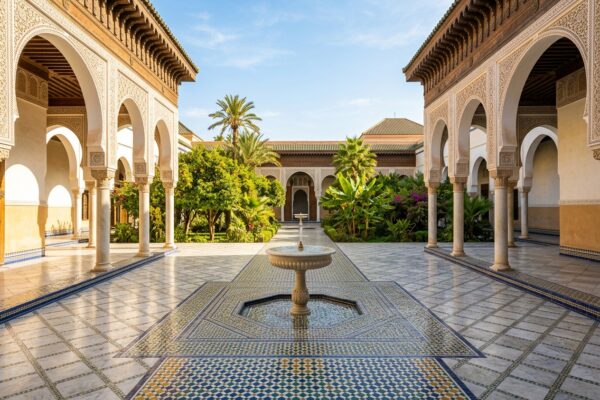
Hidden behind the Kasbah Mosque, the Saadian Tombs hold members of the Saadian dynasty, which ruled Morocco in the sixteenth century. The finest chamber, with its marble columns and intricately carved cedar and stucco, is one of the great works of Moroccan decorative art. The site was walled off for a long time and rediscovered in the early twentieth century. Expect a short queue to see the main chamber.
5. El Badi Palace
Built by the Saadian sultan Ahmad al-Mansur to celebrate a great victory, the Badi Palace was once one of the most lavish palaces in the Islamic world. Its treasures were later stripped and taken elsewhere, but its scale is still impressive: huge sunken gardens, long pools and thick earthen walls topped by storks’ nests. Climb to the terrace for one of the best views over the southern medina.
6. Ben Youssef Madrasa
This former Koranic school, once among the largest in North Africa, is a masterpiece of carved cedar, stucco and tile surrounding a central courtyard and pool. Upstairs, small student rooms show how scholars once lived here. It is a calm, photogenic place and a perfect contrast to the busy souks nearby.
7. Le Jardin Secret
In the Mouassine district, Le Jardin Secret is a restored riad garden with two sections: an exotic garden and a traditional Islamic garden laid out around water channels. Its tower offers views across the rooftops to the Koutoubia and, on clear days, the High Atlas. It is a good place to rest in the middle of a busy day.
8. Dar El Bacha
This palace, built for the pasha of Marrakech in the twentieth century, now houses a museum of cultural exchange and a celebrated coffee house. Its courtyards are among the most elegant in the city. The coffee house is popular, so expect to wait at busy times.
9. The Mellah
The historic Jewish quarter lies next to the royal palace and the Bahia Palace. Its narrow streets, spice market and covered balconies give it a distinct character. You can visit the Lazama Synagogue and the large Jewish cemetery, both reminders of the long history of Morocco’s Jewish community in Marrakech.
10. The Mouassine Fountain and Mosque
Fountains were once the lifeblood of the medina, providing water for people and animals. The Mouassine fountain, next to the mosque of the same name, is one of the finest. Around it, small galleries, concept stores and riads make this one of the most pleasant districts to wander.
11. The Almoravid Koubba
Near the Ben Youssef Madrasa, this small domed structure is one of the oldest surviving buildings in Marrakech, from the city’s founding dynasty. Its carved interior dome is a rare example of early architecture in the city and often overlooked by visitors.
12. Museums of the old city
Several museums fit easily into a medina day. The Marrakech Museum, in a nineteenth-century palace near Ben Youssef, shows art and objects in a beautiful courtyard setting. Dar Si Said, near the Bahia Palace, focuses on carpets and weaving. The House of Photography displays historic images of Morocco and has a rooftop terrace with fine views.
13. The tanneries
In the northeast of the medina, near Bab Debbagh, leather is still treated in stone vats using traditional methods. The tanneries are a striking sight but also a place where unofficial guides gather. Go with a licensed guide, or be firm and polite if someone insists on taking you there.
14. The ramparts and gates
The earthen ramparts around the medina stretch for many kilometers and change color with the light, from ochre to deep pink. Several monumental gates are worth a look, especially Bab Agnaou in the Kasbah district, with its carved stone arch. A drive or carriage ride around the walls gives a sense of the city’s scale.
15. The rooftop terraces
Seeing the medina from above changes how you understand it. Many cafes and restaurants around Jemaa el-Fna and the souks have rooftop terraces, ideal at sunset when the call to prayer rises from the minarets and the square below fills with smoke from the food stalls.
How to Read the Marrakech Souks
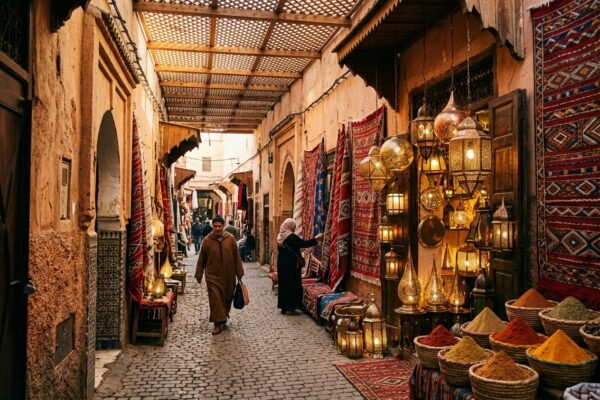
The souks are the commercial heart of the old city: a network of covered and open lanes north of Jemaa el-Fna where traders and craftsmen have worked for centuries. Understanding how the Marrakech souks are organized makes them far less overwhelming.
Souks are organized by trade
Traditionally, each lane or square specializes in one craft or product. You will find streets for leather, metalwork, carpets, spices, textiles, jewelry, woodwork and lanterns. Some of the best known are:
- Souk Semmarine: the main artery, running north from the square, with textiles and general goods
- Souk el Attarine: spices, perfumes and, increasingly, a mix of crafts
- Souk des Teinturiers: the dyers’ souk, where skeins of freshly dyed wool hang to dry
- Souk Haddadine: the blacksmiths’ quarter, loud with hammering and full of lanterns and ironwork
- Rahba Kedima: a small square selling spices, herbs, baskets and traditional cosmetics
- Criee Berbere: once a slave market, now a carpet market
Workshops behind the stalls
The most interesting parts of the Marrakech souks are often the workshops rather than the shops. Look into doorways and you will see craftsmen carving wood, stitching leather, weaving or beating copper. Many are happy to show their work, and buying directly from the person who made something is a pleasure in itself.
Shopping without stress
Bargaining is normal in the souks, but it does not have to be stressful. Our advice to guests:
- Look before you buy. Walk a few lanes to get a sense of quality and range.
- Only start negotiating if you are genuinely interested.
- Decide what the item is worth to you before asking the price.
- Stay friendly and patient; good bargaining is a conversation, not a fight.
- Be ready to walk away politely. Often, that is when the best offer comes.
- Once a price is agreed, honor it.
Fixed-price shops and cooperatives also exist in and around the medina, and they are a good reference point for quality and value before you bargain in the Marrakech souks.
What to buy
Good purchases include leather goods, ceramics, brass and copper lanterns, woven baskets, wool carpets, argan oil from cooperatives, spices, and handmade slippers known as babouches. Check stitching, glazing and finish carefully; quality varies from stall to stall.
Jemaa el-Fna by Day and by Night
No Marrakech medina guide is complete without spending time in the great square, ideally more than once. Jemaa el-Fna changes completely through the day.
Morning
In the morning, the square is open and relatively calm. Orange juice stalls line up along one side, and the first performers arrive. It is a good time to cross Jemaa el-Fna on your way to the souks and get your bearings.
Afternoon
As the day goes on, snake charmers, monkey handlers, henna artists, musicians and fortune tellers appear. Be aware that anyone who performs for you or lets you take a photo will expect payment. Many travelers prefer not to support the animal acts; if you do take photos of performers, agree on a small amount first.
Evening
At dusk, rows of food stalls are set up in the center of the square and smoke rises into the evening sky. Storytellers, musicians and acrobats gather crowds in circles. This is Jemaa el-Fna at its most famous: noisy, crowded, joyful and unlike anywhere else.
Eating at the food stalls
Food at the numbered stalls is cooked fresh in front of you. Choose busy stalls with high turnover, check prices before you sit down, and only accept what you have ordered. Popular dishes include grilled meat, harira soup, snail broth, fried fish and sweet pastries with mint tea.
Watching from above
For a calmer view, take a seat on one of the terraces around Jemaa el-Fna before sunset. Order a mint tea, watch the square fill and the lights come on, then go down into the crowd once it is dark.
Experiences Beyond Sightseeing
Some of the best memories of the old city come from doing rather than seeing.
A traditional hammam
The hammam, or steam bath, is part of everyday life in Morocco. Neighborhood hammams are simple and inexpensive, with separate times or sections for men and women. Spa hammams in riads and hotels offer a more comfortable version, with a scrub using black soap and a kessa glove, followed by a massage. After a long day of walking, it is the perfect way to relax.
A cooking class
Several riads and cooking schools in the medina offer classes that start with a visit to the market to buy spices, vegetables and herbs, followed by lessons in making tagine, salads, bread or pastries. You then eat what you have cooked, often on a roof terrace.
Craft workshops
Some workshops offer short sessions in crafts such as pottery, leatherwork, zellige mosaic or calligraphy. They are a hands-on way to appreciate the skill behind the objects sold in the markets.
Mint tea and a slow afternoon
Perhaps the simplest experience of all is to sit in a cafe or a riad courtyard with a glass of mint tea and watch the city go by. In a place this intense, slowing down is part of enjoying it.
Walking Routes Through the Old City
These two routes link the main sights in a logical order. Both start at Jemaa el-Fna and assume you are walking.
A half-day route
- Start at the Koutoubia and its gardens
- Cross Jemaa el-Fna into Souk Semmarine
- Wander through the souks to the Ben Youssef Madrasa
- Visit the Almoravid Koubba or the Marrakech Museum nearby
- Return through Mouassine, with a stop at Le Jardin Secret
- End with mint tea on a terrace above the square
This route covers the medina’s best-known sights in around four hours, with time for photos and a little shopping. It is the core of most half-day visits.
A full-day route
Combine the half-day route in the morning with an afternoon in the southern medina:
- After lunch, walk south to the Bahia Palace
- Continue to the Mellah and its spice market
- Visit El Badi Palace and its terrace
- See the Saadian Tombs and Bab Agnaou in the Kasbah
- Return to Jemaa el-Fna for the evening food stalls
This full route is long on foot. A good alternative is to split it over two days, or use a vehicle for the transfer between the northern and southern parts of the city.
A Marrakech medina walking tour with a guide
Following these routes alone is perfectly possible, but a medina walking tour with a licensed guide changes the experience. A guide explains what you are seeing, opens doors to workshops, handles the attention of touts and makes sure you never waste time lost in dead ends. We return to this below.
Etiquette in the Marrakech Medina
The medina is a living neighborhood, and a little care goes a long way.
Dress
There is no strict dress code for visitors, but covering shoulders and knees is respectful and will make you feel more comfortable, especially in the residential lanes and near mosques. Light, loose clothes are best in the heat.
Photography
Always ask before photographing people, and accept a no gracefully. Shopkeepers and craftsmen may also prefer not to be photographed. Performers in Jemaa el-Fna will expect payment for photos.
Mosques and religious sites
Most active mosques in Morocco are closed to non-Muslims. You can admire them from outside, but do not try to enter. Monuments such as madrasas and tombs, which are no longer active places of worship, are open to visitors.
Greetings and politeness
A simple greeting goes a long way. “Salam alaikum” (peace be upon you) and “shukran” (thank you) are always appreciated, and French is widely spoken. A smile and a polite “la, shukran” (no, thank you) is the best answer to persistent sellers.
Safety and Common Scams
The Marrakech medina is generally safe for visitors, but like any busy tourist area, it has its share of tricks. Knowing them in advance takes away most of the stress.
Unofficial guides
The most common situation is a friendly stranger offering to show you the way, often saying a road is closed or that the tanneries are “only open today”. The walk usually ends at a shop where they earn commission, followed by a request for payment. Politely decline and ask a shopkeeper for directions instead.
“The square is that way”
Some people deliberately point visitors in the wrong direction, then offer to lead them back for a fee. If you are unsure, check your offline map and head for a landmark.
Henna and photos
Henna artists in the square sometimes start applying a design before agreeing a price. Pull your hand away politely if you have not agreed. The same applies to photos with performers or animals.
Pickpockets
Crowded areas such as the souks and Jemaa el-Fna in the evening are where pickpockets work. Keep your phone and wallet in a front pocket or a zipped bag, and do not leave valuables on cafe tables.
Motorbikes
The medina is mostly closed to cars, but motorbikes and scooters use the lanes constantly. Stay to the side, listen for engines and keep children close.
Visiting With Children or Limited Mobility
The old city can be enjoyed by travelers of every age and ability, with a little planning.
Families with children
Children are usually fascinated by the colors, sounds and smells of the markets, the performers in the square and the animals in the gardens. Keep visits short, plan frequent breaks in a garden or a cafe, and avoid the hottest hours of the day. A riad with a small pool makes a welcome base after a morning of exploring. Hold small children’s hands in the busiest lanes, where motorbikes pass close.
Travelers with limited mobility
The lanes are uneven, often crowded, and include steps and slopes in places. Wheelchairs and strollers can be difficult in the narrowest parts. The main sights around the square, the Koutoubia gardens and several palaces are more accessible, and a vehicle can drop you close to many monuments on the edge of the old city. Choose a riad that can be reached easily from a road, ideally with a ground-floor room.
Planning a gentler day
For a gentler visit, combine two or three nearby sights with a long lunch and a rest, and use a vehicle between the northern and southern districts instead of walking. A private guide can also adjust the pace and route to your needs.
When to Visit the Marrakech Medina
The best time of day and year makes a big difference to how much you enjoy the old city.
Best time of day
Early morning is the calmest and coolest time, with workshops opening and fewer crowds at the monuments. Late afternoon is beautiful for light and atmosphere. Midday is hot and busy, a good time for a long lunch or a rest in your riad. Evening is the time for Jemaa el-Fna.
Best season
Spring and autumn are ideal, with warm days and comfortable evenings. Summer is very hot in Marrakech, so plan walking for early morning and evening. Winter days are mild and sunny, though nights can be cold.
Fridays and holidays
Friday is the main day of prayer, and some shops close around midday. During Ramadan, the rhythm of the medina changes, with quieter days and very lively evenings after sunset. Monument opening hours may change during these periods.
Where to Stay in or Near the Old City
Staying inside the walls puts the whole medina on your doorstep.
Riads
A riad is a traditional house built around an inner courtyard, often converted into a small guesthouse. Riads range from simple and affordable to luxurious, with roof terraces, plunge pools and fine decoration. Their calm courtyards are a wonderful refuge from the busy lanes.
Arriving at your riad
Cars cannot reach most riads, so drivers stop at the nearest accessible point and you walk the last stretch, sometimes with a porter and a cart for luggage. Our guide to getting from Marrakech airport to the medina explains how this works and how to make the arrival smooth.
Staying outside the walls
The Hivernage and Gueliz districts, just outside the medina, offer modern hotels, wide streets and easy access by taxi. They suit travelers who prefer quieter evenings or larger hotels with pools.
Beyond the Walls: Sights Nearby
A few of the city’s best sights lie just outside the medina and combine well with a visit to the old city.
Majorelle Garden
The famous Majorelle Garden, in Gueliz, is a garden of cacti, palms and bamboo around a striking cobalt-blue villa, once owned by Yves Saint Laurent. Next to it, a museum is dedicated to the designer. It is one of the most popular sights in the city, so book ahead and arrive early.
The Menara Gardens
West of the medina, the Menara Gardens are olive groves around a large pool and pavilion, with the High Atlas behind on clear days. They are a peaceful spot for a late-afternoon walk.
Day trips from the city
Once you have explored the old city, the mountains, the desert plateau of Agafay, the Ourika Valley and the coast at Essaouira are all within reach for a day. Our day trips from Marrakech guide compares the best options by drive time and season.
Exploring the Medina With a Licensed Guide
Many visitors explore the old city alone and love it. Others want context, efficiency and someone who knows which door leads to the best workshop. A licensed guide offers all three.
What a licensed guide adds
Official guides in Morocco are trained and licensed, and carry an official badge. A good guide explains the history behind each monument, introduces you to craftsmen, keeps unofficial guides at a distance and adapts the pace to you. On a first visit, a guided morning often helps you explore confidently on your own afterward.
Choosing a guided tour
When choosing a medina walking tour, check that the guide is licensed, that the route matches your interests and that shopping stops are optional. A good tour should never feel like a sequence of shops.
Our half-day medina and heritage tour
Morocco Trip Lines runs a private half-day medina and heritage tour with an official local guide and private air-conditioned transport between the different parts of the city. You can choose a morning or afternoon departure to suit your plans. Send us your dates and interests through the enquiry form, and we will tailor the visit to you.
Combining the Medina With a Wider Trip
Marrakech is often the first stop on a longer journey through Morocco. Two full days in the city is a good minimum: one for the medina’s main sights and one for slower exploring, a garden, a hammam or a cooking class.
Building it into a longer route
From Marrakech, many travelers head over the High Atlas to the kasbahs and the Sahara, then north to Fes. Our Morocco itinerary guide shows how to fit Marrakech into routes of 7, 10 and 14 days. If you prefer to travel with your own vehicle and driver, our guide to hiring a private driver in Morocco explains how it works.
From the medina to the desert
The desert is one of the most popular trips from the city. Our 3-day desert tour from Marrakech guide explains the classic route over the Tizi n’Tichka pass to the dunes of Merzouga.
Practical Tips for Your Visit
A few small things make a day in the old city much easier.
What to bring
- Comfortable, closed walking shoes for uneven lanes
- A scarf or light layer for sun and visits to monuments
- Small change in local currency for tips, juice and entrance fees
- A bottle of water, especially in summer
- An offline map downloaded to your phone
Money and payments
Cash is still king in the souks and small cafes, though card payments are increasingly accepted in larger shops, museums and restaurants. ATMs are found around Jemaa el-Fna and the main gates.
Food and drink
Eat where locals eat, choose busy places, and drink bottled water. Fresh orange juice in the square is a classic; ask for it to be squeezed in front of you. Mint tea is offered everywhere and is part of the welcome.
Tipping
Tipping is customary for guides, porters, drivers and restaurant staff. Small amounts are appreciated for help with directions from shopkeepers or for a performer whose show you enjoyed.
Marrakech Medina Guide FAQ
How long do you need to see the Marrakech medina?
A half day covers the main sights at a comfortable pace. Two days lets you explore the souks, museums, palaces and gardens without rushing and return to Jemaa el-Fna in the evening.
Is the Marrakech medina safe for tourists?
Yes, it is generally safe. The main issues are unofficial guides, small scams and pickpockets in crowded areas. Stay alert, decline unwanted help politely and keep valuables secure.
Do I need a guide to visit the medina?
No, but a licensed guide helps on a first visit. A guide explains the history, finds the best workshops and keeps touts at a distance, which lets you enjoy the old city more.
What is the best time to visit Jemaa el-Fna?
Visit at least twice: once in the morning to get your bearings, and again at dusk when the food stalls, musicians and storytellers bring the square to life.
How do I bargain in the Marrakech souks?
Look around first, decide what an item is worth to you, stay friendly and be ready to walk away. Fixed-price cooperatives are a useful reference before bargaining.
Can non-Muslims enter mosques in Marrakech?
Most active mosques, including the Koutoubia, are closed to non-Muslims. Former religious buildings such as the Ben Youssef Madrasa and the Saadian Tombs are open to visitors.
What should I wear in the medina?
Light, loose clothing that covers shoulders and knees is respectful and comfortable. Wear closed walking shoes for the uneven lanes.
Can cars enter the Marrakech medina?
Cars can reach only some edges and main roads of the medina. Most lanes are too narrow, so drivers stop at the nearest point and you walk the last stretch.
Is a medina walking tour suitable for children?
Yes, with a slower pace and frequent breaks. Children usually enjoy the souks, the square and the gardens. Keep them close because of motorbikes in the lanes.
How do I book your half-day medina tour?
Send your dates, group size and interests through the enquiry form on our medina and heritage tour page. We will reply with a private, tailor-made proposal.
Enjoying the Marrakech Medina at Your Own Pace
The Marrakech medina rewards curiosity. Its palaces and madrasas are extraordinary, but so are the small moments: a craftsman at work, the smell of spices in Rahba Kedima, the first call to prayer at dawn, the smoke rising over Jemaa el-Fna at dusk.
Use this Marrakech medina guide to plan your sights, but leave space to wander. Start early, rest at midday, return to the square in the evening, and do not worry about getting lost; it is part of the experience.
If you would like an expert companion for your first visit, our half-day medina and heritage tour pairs you with a licensed local guide and private transport. Send us your dates through the enquiry form, and we will help you see the best of the old city in the way that suits you.