
A good Morocco itinerary starts with an uncomfortable truth: the country is bigger than it looks on a map, and its highlights are far apart. Marrakech to the Sahara dunes at Merzouga is a full day’s drive. Fes to Chefchaouen is four hours. Essaouira, the Atlas, the desert and the imperial cities sit in four different directions. Travelers who try to see everything in a week often spend more time in a vehicle than in the places they came to see.
This guide is written by the Morocco Trip Lines team, the driver-guides who plan and drive tailor-made circuits across Morocco. It walks through the decisions that shape a trip, compares realistic routes for 7, 10 and 14 days, and lists the drive times and mistakes we see most often, so you can build a route that matches your time, your interests and your energy.
Most people planning a first trip to Morocco start with a list: Marrakech, the desert, Fes, Chefchaouen, perhaps Essaouira or the Atlas Mountains. The list is right; the problem is fitting it into the days available without turning the holiday into a road trip with short stops.
The solution is to make a few decisions in the right order before choosing places. Where you fly in and out, the season, how fast you like to travel and what you care about most will narrow the options much faster than any list of must-sees. Once those are settled, the route almost draws itself.
In this guide we cover:
- The five decisions to make before you choose a single place
- A quick overview of Morocco’s regions and what each offers
- Sample routes for 7 days in Morocco, 10 days and 14 days, day by day
- Realistic travel times between the main cities and regions
- The most common planning mistakes, and how to avoid them
- How a tailor-made circuit works if you want help building your route
How to Plan a Morocco Itinerary: Five Decisions First
Before you look at routes, settle these five questions. Each one removes options and makes the rest of the planning easier.
1. How many days do you really have?
Count the days on the ground, not the dates of your flights. An evening arrival and a morning departure mean your first and last days are mostly travel. A trip booked as “10 days” is often eight full days in practice. Plan around full days, and treat arrival and departure days as light.
2. Which airports will you use?
Morocco’s main international airports are Marrakech, Casablanca, Fes, Tangier, Agadir and Rabat. Flying into one city and out of another, called an open-jaw trip, saves a lot of backtracking. Arriving in Marrakech and leaving from Fes or Casablanca, for example, lets you cross the country in one direction instead of looping back.
3. What season are you traveling in?
Season changes the best route. Summer is very hot in Marrakech, Fes and the desert, so coastal Essaouira and the mountains become more attractive. Winter brings cold desert nights and occasional snow on the High Atlas passes. Spring and autumn suit almost any route. We cover the seasons in more detail later in this guide.
4. How fast do you like to travel?
Some travelers are happy to change hotels every night; others want at least two nights everywhere. Be honest about which you are. A good rule is no more than one long driving day in a row, and two nights in any place you really want to explore, such as Marrakech or Fes.
5. What matters most to you?
List your top three priorities. If the Sahara is top of the list, the desert route shapes the trip. If food and medinas matter most, slow down in Marrakech and Fes. If you love hiking, build in the Atlas. If you want the ocean, add Essaouira. A Morocco itinerary that tries to give equal time to everything usually does nothing well.
Morocco’s Regions at a Glance
Morocco’s highlights fall into a few distinct regions. Knowing what each offers helps you decide where to spend your time.
| Region | Highlights | Days to allow |
|---|---|---|
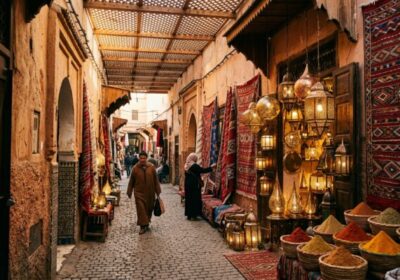
| Marrakech and surroundings | Medina, souks, palaces, gardens, day trips to the Atlas and Agafay | 2 to 4 |
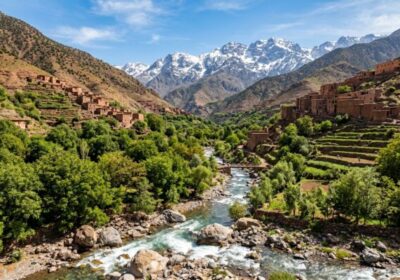
| High Atlas | Berber villages, hiking, Toubkal, Imlil, the Ourika Valley | 1 to 3 |
| The south and the kasbahs | Ait Benhaddou, Ouarzazate, Skoura, Dades and Todra gorges | 1 to 2, usually on the way to the desert |
| The Sahara | Erg Chebbi dunes at Merzouga, or Zagora and Erg Chigaga | 1 to 2 nights |
| Fes and the imperial cities | Fes medina, Meknes, Volubilis | 2 to 3 |
| The north | Chefchaouen, the Rif Mountains, Tangier | 1 to 3 |
| The Atlantic coast | Essaouira, Rabat, Casablanca, Agadir | 1 to 3 |
How the regions connect
The classic route links these regions in a loop or a line. From Marrakech, the road crosses the High Atlas to the kasbahs, then runs east to the desert. From the desert, it turns north to Fes, then continues to Chefchaouen and the north, or west to Rabat and Casablanca. Essaouira sits on its own to the west of Marrakech and works best at the beginning or end of a trip.
The question of the desert
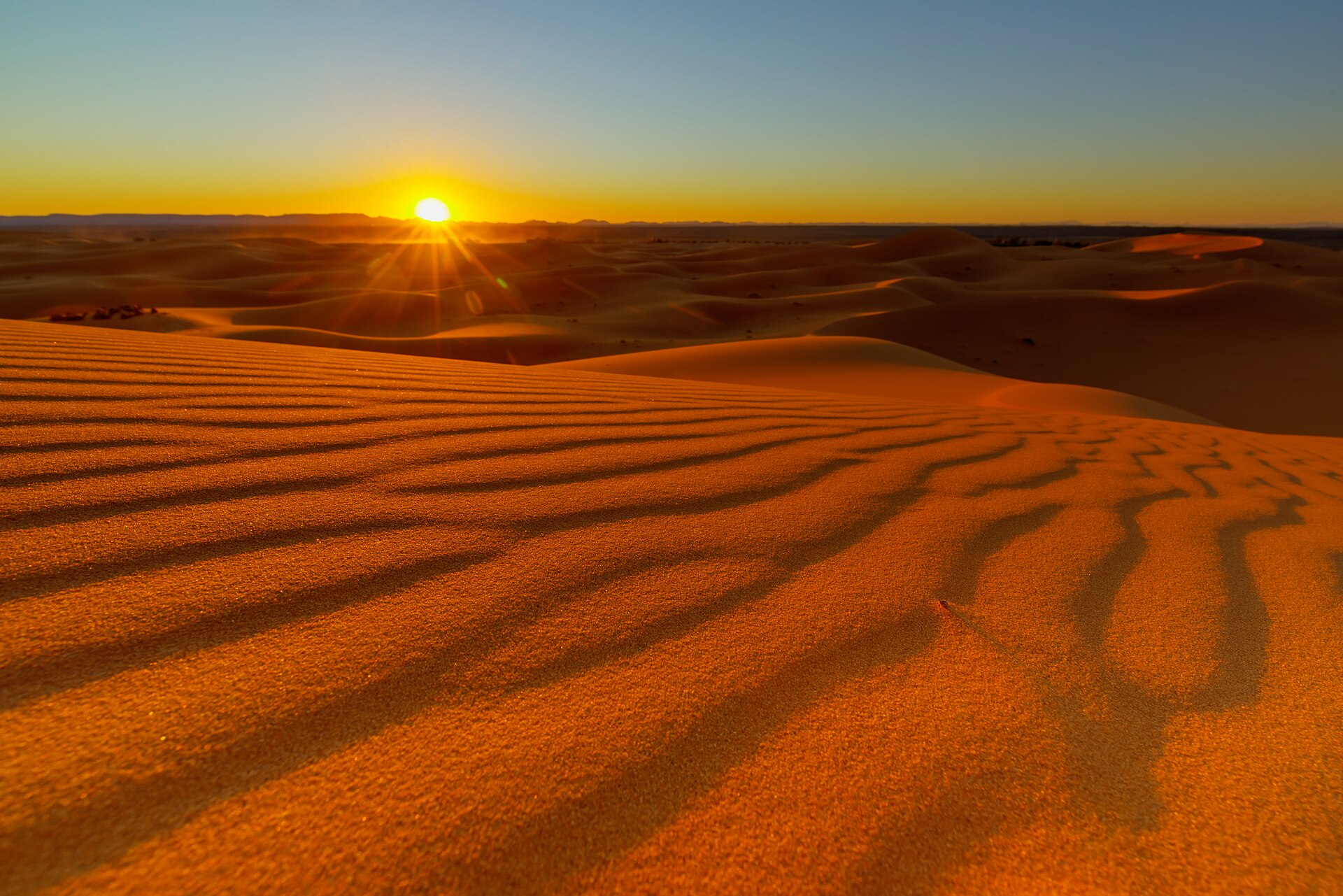
The Sahara is the highlight of many trips, but it is also the most time-consuming. From Marrakech, the Erg Chebbi dunes at Merzouga take a full day to reach, and the nearest dunes at Zagora take most of a day. If you have fewer than seven days, consider whether the desert is worth the driving, or whether the Agafay plateau near Marrakech gives you enough of a desert feeling. Our Marrakech to Fes in 4 days guide shows how a well-paced desert crossing works.
7 Days in Morocco: Two Routes That Work
Seven days is enough for a rich trip, but not for everything. With 7 days in Morocco, you need to choose between the desert and a slower trip around Marrakech. Here are two routes that work well.
Route A: Marrakech, the desert and Fes
This is the most popular first-time route, crossing the country from Marrakech to Fes through the Sahara.
- Arrive in Marrakech; settle in and explore the medina
- A full day in Marrakech: souks, palaces, gardens
- Marrakech to the Dades Valley over the High Atlas, via Ait Benhaddou
- Dades Valley to Merzouga through the Todra Gorge; night in the desert
- Merzouga to Fes through the Ziz Valley and the Middle Atlas
- A full day in Fes with a licensed local guide
- Departure from Fes, or an early train to Casablanca
This route suits travelers whose priority is the desert. It is full but balanced, with two nights in both Marrakech and Fes. Fly into Marrakech and out of Fes to avoid backtracking.
Route B: Marrakech, the Atlas and the coast
For travelers who prefer a slower pace and less driving, this route skips the deep desert.
- Arrive in Marrakech
- A full day in the medina
- Day trip to the High Atlas, Imlil or the Ourika Valley
- Marrakech to Essaouira, via an argan cooperative
- A full day in Essaouira
- Back to Marrakech, with an evening at Agafay for sunset
- Departure from Marrakech
This route has no long driving days and works well in summer, when Essaouira’s ocean breeze is welcome. Our day trips from Marrakech guide covers the options for days three and six.
Which 7-day route to choose
Choose Route A if the Sahara is your top priority and you do not mind three long days on the road. Choose Route B if you prefer to unpack once or twice, travel with young children, or are visiting in the heat of summer.
10 Days in Morocco: The Classic Loop
Ten days is the sweet spot for a first trip. With 10 days in Morocco, you can combine the imperial cities, the desert and the north at a comfortable pace.
Day-by-day route
- Arrive in Marrakech
- A full day in Marrakech
- Marrakech to the Dades Valley via the Tizi n’Tichka pass and Ait Benhaddou
- Dades Valley to Merzouga through the Todra Gorge
- A free day around the Erg Chebbi dunes, with a second night in the desert
- Merzouga to Fes through the Ziz Valley and the cedar forests
- A full day in Fes
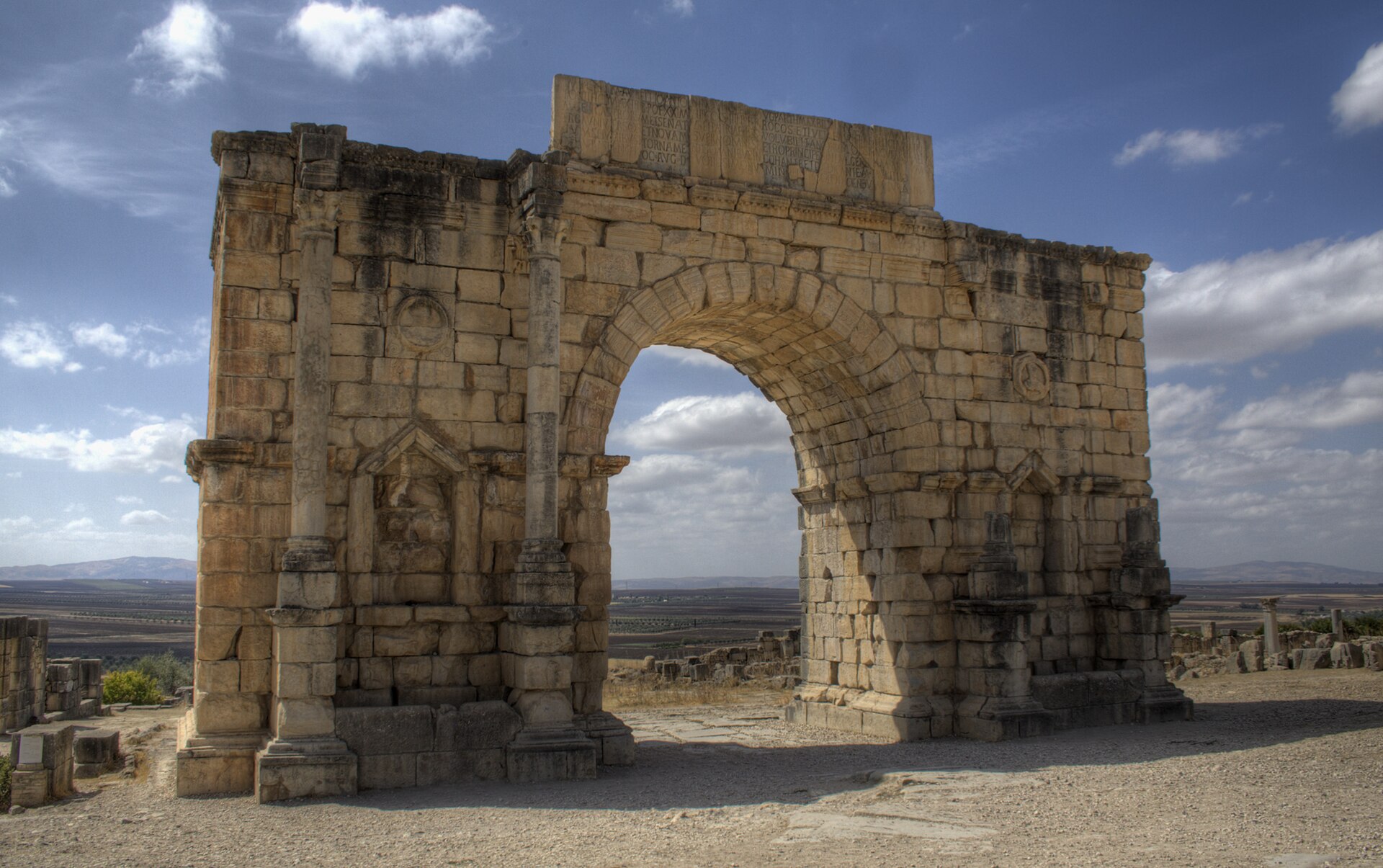
- Fes to Chefchaouen via Volubilis and Meknes
- A full day in Chefchaouen and the Rif Mountains
- Chefchaouen to Tangier or Fes for your flight
Why this loop works
The route never doubles back. It starts in the energy of Marrakech, slows down in the desert, picks up again in Fes, and ends in the calm blue streets of Chefchaouen. The second desert night on day five turns the Sahara from a quick stop into a real experience.
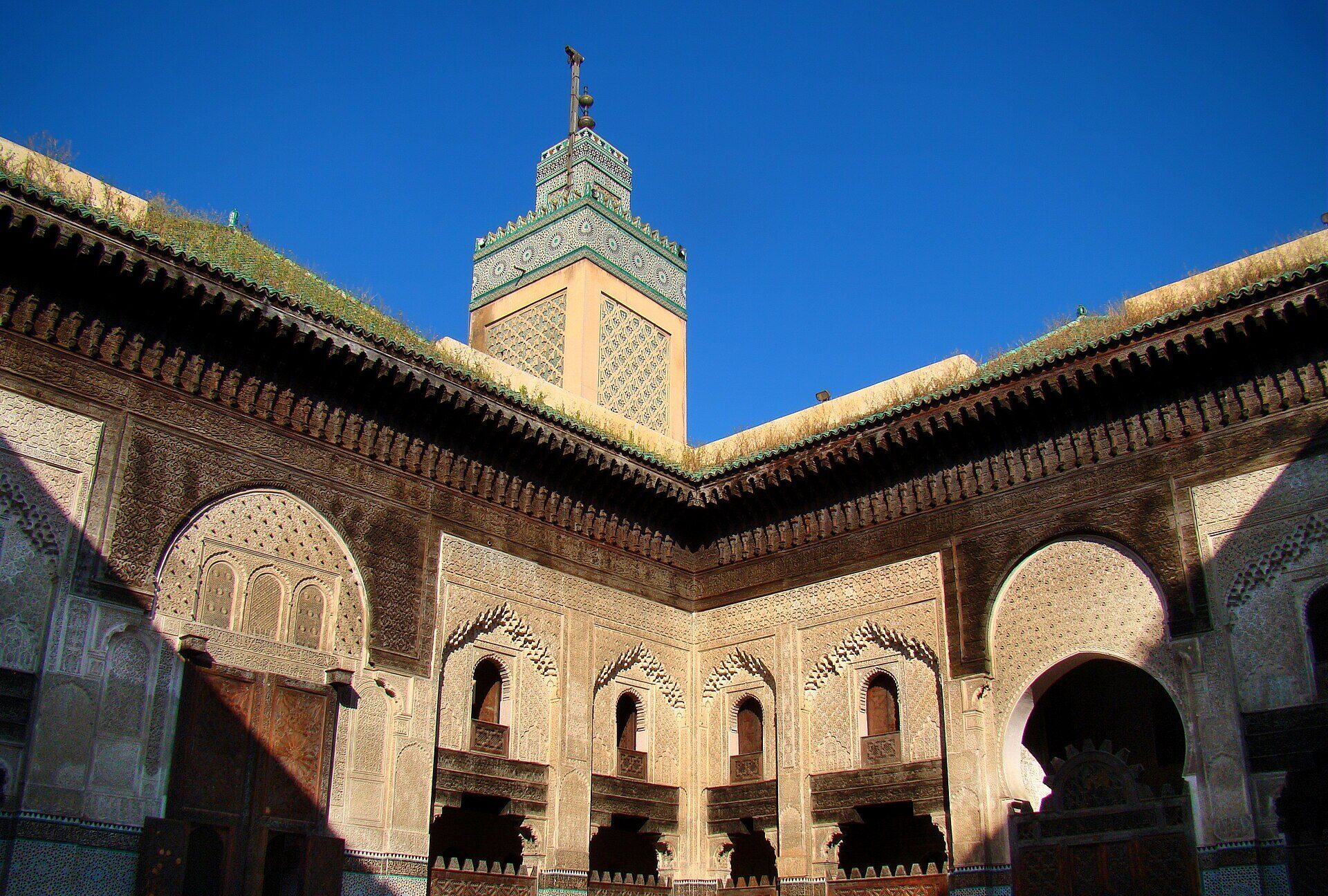
The Fes medina, one of the largest car-free urban areas in the world, deserves a full day. It is listed by UNESCO as a World Heritage Site, and a licensed local guide makes the maze of lanes far easier to understand.
Variations on the 10-day loop
- Swap Chefchaouen for Essaouira: start with two days in Essaouira, then follow the desert route to Fes
- Add the Atlas: replace the second desert night with a night in Imlil and a mountain walk
- End in Casablanca: after Fes, drive to Rabat and Casablanca instead of going north
Our Marrakech to Chefchaouen via the Sahara guide covers the desert-to-north section of this route in more detail.
14 Days in Morocco: The Full Country
With two weeks, you can see almost all of Morocco’s main regions without rushing. A 14 days in Morocco itinerary can include the coast, the mountains, the desert and the north, with several free days.
Day-by-day route
- Arrive in Casablanca; see the Hassan II Mosque
- Casablanca to Rabat, then on to Fes
- A full day in Fes
- Day trip to Meknes and Volubilis, or a free day in Fes
- Fes to Chefchaouen
- A full day in Chefchaouen
- Chefchaouen back to Fes, or on to the Middle Atlas
- Fes to Merzouga through the cedar forests and the Ziz Valley
- A free day in the desert
- Merzouga to the Dades Valley through the Todra Gorge
- Dades Valley to Marrakech via Skoura and Ait Benhaddou
- A full day in Marrakech
- Marrakech to Essaouira
- A full day in Essaouira, then back to Marrakech for your flight, or fly from Essaouira
What two weeks adds
The extra days do not just add places; they add rest. On a 14-day trip, you can spend two nights in most places, take a free afternoon in the desert, and end on the coast. Many travelers say this is the version of Morocco they remember most fondly, because they had time to sit in a cafe and watch daily life.
Starting in Casablanca
Many long-haul flights arrive in Casablanca, which makes it a natural start for a two-week trip. The city is modern and busy, so most travelers spend only an afternoon there, visiting the Hassan II Mosque on the Atlantic shore before heading north to Rabat and Fes. Ending the trip in Marrakech or Essaouira then gives the journey a gentle, warm finish. Our desert tour from Casablanca guide covers the first part of this route, from Casablanca through Fes to the desert.
Travel Times Between Major Cities
Realistic drive times are the backbone of any Morocco itinerary. The table below shows typical times by private vehicle, without long stops. Add time for photos, lunch and visits.
| Route | Distance | Typical drive time |
|---|---|---|
| Marrakech to Essaouira | About 190 km | 2.5 to 3 hours |
| Marrakech to Ouarzazate | About 200 km | 4 hours |
| Marrakech to Merzouga | About 560 km | 9 to 10 hours |
| Marrakech to Zagora | About 360 km | 6 to 7 hours |
| Merzouga to Fes | About 460 km | 7 hours |
| Fes to Chefchaouen | About 200 km | 4 hours |
| Fes to Casablanca | About 300 km | 3.5 hours |
| Casablanca to Marrakech | About 240 km | 3 hours |
| Chefchaouen to Tangier | About 110 km | 2 hours |
Why mountain roads take longer
Distance alone is misleading. Routes that cross the High Atlas, such as Marrakech to Ouarzazate, are slow because of tight bends, trucks and village traffic. The motorways between Casablanca, Rabat, Fes, Marrakech and Tangier are much faster. A 200-kilometer mountain road can take longer than a 300-kilometer motorway.
Trains for the northern cities
Trains link Marrakech, Casablanca, Rabat, Fes, Meknes and Tangier, and the high-speed line between Tangier and Casablanca is fast and comfortable. Combining trains between the northern cities with a private driver for the desert and mountains can work well on longer trips.
Short on Time: 4 or 5 Days
Not every trip allows a week. With four or five days, the best Morocco itinerary is usually built around one base, with day trips, rather than a long route.
Four or five days from Marrakech
- Arrive in Marrakech and explore the medina in the evening
- A full day in Marrakech: palaces, gardens and the souks
- Day trip to the High Atlas, Imlil or the Ourika Valley
- Day trip to Essaouira, or a slow morning and Agafay at sunset
- Departure, or a final morning in the city
This plan avoids long drives and gives a real sense of the country: city, mountains and either the coast or the desert plateau.
Can you see the Sahara in five days?
It is possible with a three-day desert trip from Marrakech, but it leaves only one full day in the city. If the dunes matter most, do it; otherwise, the shorter plan above is more relaxing and still varied.
Itineraries for Different Kinds of Travelers
The same country can feel very different depending on who is traveling. These adjustments help shape a route for your group.
Families with children
Children enjoy the desert, camels, the macaques of the Middle Atlas and the beach at Essaouira, but they struggle with long days in a vehicle. For families, we suggest no more than five hours of driving on any day, two nights in most places and a pool at least every few nights. A 10 days in Morocco trip with two desert nights and a slower pace often works better for families than a fast 14-day route.
Couples and honeymooners
Couples often look for atmosphere rather than a long list: a beautiful riad in Marrakech, a comfort camp in the dunes, a sunset in Essaouira. Fewer stops and better accommodation usually make a more memorable trip than covering more ground.
Hikers and active travelers
For walkers, the High Atlas is the heart of the trip. Add two or three days around Imlil, a climb of Mount Toubkal or a trek through the valleys, and combine it with the desert. Our Toubkal trek guide explains how to fit the climb into a wider route.
Food lovers
Morocco is a wonderful food destination. Spend extra time in Marrakech and Fes, book a cooking class, visit markets with a local guide and leave space for long lunches on the road. A food-focused trip works well at a slower pace, with fewer regions and more time at the table.
Photographers
Light matters most: sunrise and sunset in the dunes, morning in the Todra Gorge, evening on the Essaouira ramparts and the blue lanes of Chefchaouen early in the day. Photographers benefit from a second desert night and from a private vehicle that can stop whenever the light is right.
Where to Stay on Each Route
Where you sleep shapes the experience as much as where you go. These are the main types of accommodation on a typical route.
Riads in the medinas
In Marrakech, Fes and Chefchaouen, a riad, a traditional house built around a courtyard, is the classic choice. Riads range from simple guesthouses to luxurious boutique hotels. They put you in the heart of the old city, but cars cannot reach most of them, so expect a short walk from the nearest gate.
Kasbah hotels in the south
In the Dades Valley, Skoura and around Ait Benhaddou, many hotels are built in the style of traditional kasbahs, with earthen walls, courtyards and terraces facing the mountains. They are a highlight of the drive south.
Desert camps and hotels
At Merzouga, you can sleep in a camp inside the dunes or a hotel at their edge. Camps range from simple tents to comfort camps with private bathrooms. On a 14 days in Morocco trip, many travelers spend one night in a camp and one in a hotel.
Coastal hotels
In Essaouira, riads inside the medina sit close to the ramparts and the port, while hotels along the beach offer more space and sea views.
Budgeting Your Morocco Trip
Costs vary widely depending on your style, so it helps to know where the money goes before you plan.
The main budget lines
- Accommodation: the largest variable, from simple guesthouses to luxury riads and camps
- Transport: private driver, trains, buses or a rental car
- Food: very affordable in local restaurants, more expensive in upscale riads and hotels
- Entrance fees and guides: monuments, museums and licensed local guides in the medinas
- Activities: camel rides, cooking classes, hammams and quad biking
- Tips: for drivers, guides, porters and restaurant staff
Where to spend and where to save
If the budget is limited, save on transport by using trains between the northern cities, and spend on a well-located riad in each medina. If you want to splurge, the desert camp is often the place where a higher budget makes the biggest difference to the experience.
Getting a quote for a tailor-made route
For a private route, the transport quote depends on the number of days, the distance, the vehicle and the season. Send your plans for a tailor-made quote, and you can then choose accommodation to match your budget.
Comparing the Three Routes
If you are deciding between trip lengths, this side-by-side view shows what each one includes and what it leaves out.
| Trip length | Regions covered | Nights in the desert | Long driving days | Best for |
|---|---|---|---|---|
| 7 days in Morocco (Route A) | Marrakech, kasbahs, Sahara, Fes | 1 | 3 | First-timers who want the dunes |
| 7 days in Morocco (Route B) | Marrakech, Atlas, Essaouira | 0 | 0 | Slow travelers, summer trips, young families |
| 10 days in Morocco | Marrakech, kasbahs, Sahara, Fes, Chefchaouen | 2 | 3 | The classic first trip |
| 14 days in Morocco | Casablanca, Rabat, Fes, the north, Sahara, Marrakech, Essaouira | 2 | 4 | Seeing most of the country at a calm pace |
Reading the comparison
The number of long driving days barely changes between the 10 days in Morocco route and the 14 days in Morocco route. What changes is the space around them: more free days, more two-night stays and time on the coast at the end. That is why many travelers who can stretch from ten days to two weeks find the longer trip far more relaxing, not just bigger.
Getting Around on Your Morocco Itinerary
How you travel between regions shapes the whole trip. Most good routes combine more than one way of getting around.
A private driver for the desert and mountains
The desert, the High Atlas, the kasbah valleys and Essaouira are poorly served by trains and slow by bus. A private driver turns these legs into comfortable days with stops wherever you want. Our private chauffeur service can cover the whole route or only the parts that need it.
Trains between the northern cities
Between Marrakech, Casablanca, Rabat, Fes and Tangier, trains are comfortable and affordable. On a 14 days in Morocco trip, taking the train between Casablanca, Rabat and Fes and switching to a private driver for the desert can keep costs down without losing comfort.
Walking in the medinas
Inside the old cities, you walk. The medinas of Marrakech, Fes and Chefchaouen are best explored on foot, ideally with a licensed local guide for the first visit. Plan your days in these cities without any driving at all.
Packing for a Multi-Region Trip
A Morocco itinerary that covers the desert, the mountains and the coast crosses several climates in a few days. Pack in layers:
- A warm jacket or fleece for desert nights and mountain passes, even in spring and autumn
- Light, breathable clothes that cover shoulders and knees for the cities and villages
- Comfortable walking shoes for the medinas and the gorges
- A scarf for sun, dust and visits to religious sites
- Sunscreen, sunglasses and a hat
- A small overnight bag for desert camps, so your main luggage can stay in the vehicle
Common Mistakes When Planning a Morocco Itinerary
After planning many tailor-made circuits, we see the same planning mistakes again and again. Avoiding them makes a bigger difference than adding any single place.
Trying to see everything in a week
The most common mistake is fitting Marrakech, the desert, Fes, Chefchaouen and Essaouira into seven days. On paper it works; in practice it means a long drive almost every day. With a week, choose either the desert or the coast, not both.
One night everywhere
Changing hotels every night is tiring, especially with children. Plan two nights in at least two or three places, and ideally in the desert.
Underestimating the desert drive
The desert looks close on a map but is a long day’s drive from Marrakech or Fes. A Sahara trip with only one night in the dunes and two long driving days on either side is intense. If you can, add a second desert night.
Backtracking to the same airport
Flying in and out of Marrakech forces you to loop back across the High Atlas. Check flights into one city and out of another; the saving in driving time is often worth a small difference in fare.
Ignoring the season
Planning the desert in July without considering the heat, or the High Atlas in January without considering snow, can upset a trip. Match the route to the season, as described below.
Leaving no free time
A Morocco itinerary packed from morning to night leaves no room for the unexpected: a long lunch in a village, a conversation with a craftsman, a sunset that deserves another hour. Build in at least one free half day for every four or five days of travel.
Best Time of Year for Each Route
Morocco can be visited all year, but each season favors different regions.
| Season | Best for | Watch out for |
|---|---|---|
| Spring (March to May) | Almost every route; green valleys, roses in the Dades | Busy at Easter |
| Summer (June to August) | The coast, the mountains, early and late desert visits | Very hot cities and desert at midday |
| Autumn (September to November) | Every route; date harvest, clear skies | Busy in October |
| Winter (December to February) | Cities, the coast, sunny desert days | Cold desert nights, snow on mountain passes |
Ramadan
During Ramadan, which moves earlier each year, the rhythm of daily life changes. Some restaurants close during the day, and the evenings become lively after sunset. Travel is still very possible, but plan meals and expect quieter days.
School holidays and long weekends
European school holidays, especially at Easter, in late October and over Christmas and New Year, bring many more visitors to Marrakech, the desert and Essaouira. Moroccan families also travel during national holidays and the summer break. If your dates fall in these periods, book accommodation and transport well ahead, and expect busier roads and sites. Shoulder weeks just before or after the peaks often give the same weather with far fewer crowds.
Festivals and events
Morocco hosts several well-known festivals, including music festivals in Essaouira and Fes. They are wonderful to experience but fill hotels quickly. If your dates overlap with a festival, book early.
Tailor-Made Circuits: Planning With Local Help
Many travelers plan their own route; many others prefer local help. A tailor-made circuit gives you a private route built around your dates, interests and pace, with your own vehicle and driver-guide.
How we build a tailor-made route
With Morocco Trip Lines, the process is simple:
- You send your dates, arrival and departure airports, group size and interests
- We suggest a route with realistic daily drive times and stops
- You adjust it until it fits: more time here, less there, a new stop or a free day
- We confirm the route and the vehicle in writing
- You book the hotels, riads and camps you prefer, and we plan each day around them
What is included
Our tailor-made circuits are private transport only: your vehicle, fuel, tolls and dedicated driver-guide. You choose and book your own accommodation and activities, which gives you full control of your budget and style. Our guide to hiring a private driver in Morocco explains this model in more detail.
When a tailor-made circuit makes sense
A tailor-made route suits families, small groups, travelers with specific interests such as hiking, food or photography, and anyone who wants a route that does not fit a standard tour. It also helps when you have an unusual combination of airports or dates.
Building Your Own Route: A Simple Method
If you prefer to plan the route yourself, this simple method works well.
Start with the fixed points
Write down your arrival city, departure city, number of full days and your top three priorities. These are your fixed points. Everything else fits around them.
Place the long drives
Next, place the long driving days, such as Marrakech to the desert or the desert to Fes. Make sure no two long days fall back to back, and that each long day ends somewhere worth arriving.
Add the slow days
Then add the places where you will stay two nights: usually Marrakech, Fes and the desert, and perhaps Chefchaouen or Essaouira. These slow days are where the trip is enjoyed rather than just traveled.
Check it against reality
Finally, check each day’s drive time against the table above, adding time for stops. If a day looks too long, remove a stop or split the day. If the whole trip feels too full, remove a region rather than squeezing everything in. Morocco rewards a second visit, and the places you leave out this time will still be there next time.
Morocco Itinerary FAQ
How many days do you need in Morocco?
Seven days is enough for a focused trip, ten days for the classic loop of cities and desert, and fourteen days to see most of the country at a comfortable pace.
Is 7 days in Morocco enough?
Yes, if you choose a focus. With 7 days in Morocco, either combine Marrakech, the desert and Fes, or stay closer to Marrakech with the Atlas and the coast. Trying to do both makes the week rushed.
What is the best route for 10 days in Morocco?
The classic loop of Marrakech, the kasbahs, the desert, Fes and Chefchaouen works best for most first-time travelers, with two nights in the desert.
Should I fly into Marrakech or Casablanca?
Both work. Marrakech is the best start for the desert and the south; Casablanca often has more long-haul flights. Ideally, fly into one city and out of another to avoid backtracking.
Can I see the Sahara on a short trip?
Yes, but it takes at least three days from Marrakech for the big dunes. For a shorter taste of the desert, the Agafay plateau near Marrakech is a half-day trip.
Is it better to use trains or a private driver?
Trains are excellent between the northern cities. For the desert, the mountains and Essaouira, a private driver is far more practical. Many travelers combine both.
When is the best time to visit Morocco?
Spring and autumn are the best seasons for most routes. Summer suits the coast and the mountains, and winter suits the cities and sunny desert days.
Can you plan a tailor-made route for us?
Yes. Send your dates, airports, group size and interests through our tailor-made circuits page, and we will suggest a route with realistic drive times.
How much driving is involved in a 10-day route?
On the classic loop, expect three long driving days of six to nine hours with stops, and several days with little or no driving. Planning two nights in the desert and in Fes keeps the balance comfortable.
Can a tailor-made route start and end in different cities?
Yes. Many of our tailor-made circuits start in Marrakech and end in Fes, Tangier or Casablanca, which avoids backtracking and makes better use of your days.
Building the Right Morocco Itinerary for You
The best Morocco itinerary is not the one with the most places; it is the one that fits your time, your season and the way you like to travel. Settle the five decisions first, choose a focus, place the long drives carefully and give yourself time to slow down in the places that matter most.
Whether you plan 7 days in Morocco around Marrakech and the desert, 10 days on the classic loop, or 14 days across the whole country, the same rule applies: fewer places, done well, beat a long list done in a hurry.
If you would like help shaping your route, send us your dates, airports, group size and interests through our tailor-made circuits page. We will reply with a suggested route, realistic drive times and a private quote, and adjust it with you until it feels right, however many changes that takes.