

Most travelers who cross Morocco from Marrakech to Fes through the Sahara spend about 17 hours in a vehicle, and on the classic three-day version almost all of that driving is squeezed into two long days. Doing Marrakech to Fes in 4 days keeps the same road and the same highlights but adds one full day in the Erg Chebbi dunes where the car barely moves. That single change reshapes the whole trip: shorter days at the wheel, a proper first night in the Dades Valley, and time to actually sit in the desert instead of passing through it.
This guide is written by the Morocco Trip Lines team, the driver-guides who run this route every week. It follows the four days in order, with realistic drive times, the stops worth leaving the car for, and the decisions you need to make before you go. It also explains how our transport-only model works, because on this route you choose and book your own hotels, riads and desert camp.
If you are still choosing between the fast and the slow version, the first section compares them side by side. If you already know you want the extra day, skip ahead to the day-by-day breakdown.
The question we hear most from travelers planning this trip is not “what will I see?” but “how tired will I be?” The three-day route answers that honestly: tired. You leave Marrakech at dawn, cross the High Atlas, stop at Ait Benhaddou, pass the Dades and Todra valleys, and reach Merzouga close to sunset after nine or ten hours on the road. You sleep in the dunes, then drive seven hours north to Fes the next morning.
Nothing about that schedule is wrong. It works well for travelers with a tight window who mainly want to see the dunes once. But it treats the Sahara as a single night, and it leaves very little room for the places in between. The Todra Gorge becomes a 20-minute photo stop. Skoura becomes a view from the window. The desert becomes one sunset and one sunrise, separated by a short night.
Taking Marrakech to Fes in 4 days solves that problem without adding a single kilometer. You still drive the same one-way route with no backtracking. What changes is where the nights fall. Day one ends in the Dades Valley instead of pushing on. Day two is a short drive with a long walk in the Todra Gorge. Day three is spent in and around the Erg Chebbi dunes. Day four is the long drive north to Fes, which nobody can shorten, but you start it rested.
In the sections below we cover:
- How the four-day and three-day versions compare on driving time, stops and cost
- What each of the four days looks like, hour by hour, with the stops we recommend
- How to use the free day in the desert well, including Khamlia village and the dunes
- How to book your own nights in the Dades Valley, Merzouga and Fes
- When to go, what to pack and what catches first-time travelers out
The aim is simple: by the end you should know whether this pace suits you, and you should be able to plan the trip without guessing.
Marrakech to Fes in 4 Days vs 3 Days: What the Extra Day Changes
Both versions follow the same road. You leave Marrakech on the N9, cross the High Atlas over the Tizi n’Tichka pass, drop down to Ouarzazate, follow the Road of a Thousand Kasbahs east through Skoura and the Dades Valley, pass Tinghir and the Todra Gorge, and reach Merzouga at the edge of Erg Chebbi. From there the road turns north through the Ziz Valley, Midelt and the Middle Atlas to Fes.
The difference is entirely in the pacing. Here is how the two compare on a typical departure.
| 3-day route | 4-day route | |
|---|---|---|
| Night 1 | Merzouga (desert) | Dades Valley |
| Night 2 | Merzouga or on to Fes | Merzouga |
| Night 3 | None | Merzouga |
| Longest driving day | 9 to 10 hours | About 7 hours |
| Time in the dunes | One evening, one morning | Two evenings, two mornings, one full day |
| Todra Gorge | Short photo stop | Walk into the gorge |
| Skoura oasis | Usually from the window | Stop at Kasbah Amridil |
Total driving time stays the same
The total driving time is roughly 17 hours on both versions. What the fourth day does is break the first leg in two. On the three-day route, day one runs from Marrakech all the way to Merzouga, around 560 kilometers on mountain and desert roads. On the four-day route, that leg becomes two days of about six and four hours.
That matters more than it sounds. The Tizi n’Tichka road climbs to around 2,260 meters with tight bends on both sides, and the first hours of any desert trip tend to go slower than planned because everyone wants to stop for photos. On a three-day schedule, every stop you add on day one pushes your arrival in Merzouga later and cuts into the sunset you came for. On a four-day schedule, the Dades Valley is a comfortable target and stops are not a trade-off.
Who the four-day version suits best
In our experience, the slower version works best for:
- Families with children, who handle six-hour days far better than ten-hour ones
- Photographers, who need more than one light window in the dunes
- Travelers arriving from a long flight, who want a gentler first day
- Anyone who wants the desert as a place, not just a stop
The three-day version still makes sense when time is tight or when the desert is one item on a longer Morocco itinerary. If that sounds like you, our Marrakech to Fes desert route guide covers the faster crossing in the same level of detail.
What it costs to add the day
Because Morocco Trip Lines runs this route as private transport only, the price difference comes down to one extra day of vehicle and driver-guide time, plus one extra night that you book yourself in Merzouga. Many travelers find the extra night costs less than they expect, since Merzouga has accommodation at every level, from simple guesthouses on the edge of the dunes to comfort camps with private bathrooms.
We do not publish fixed prices because every group is different: group size, vehicle type and season all change the quote. The simplest way to compare both versions for your dates is to send an enquiry from the tour page and ask for both.
Day 1: Marrakech to the Dades Valley via Ait Benhaddou and Skoura
Day one is the most varied day of the trip and the longest in scenery, if not in hours. You start in a city, climb into high mountains, walk through a fortified earthen village and finish in a river valley lined with palm groves and kasbahs. Pickup from your Marrakech hotel or riad is usually around 7:30, which gets you over the pass before the midday traffic.
Crossing the High Atlas on the Tizi n’Tichka pass
The first two hours climb steadily out of the Haouz plain. Villages thin out, walnut trees give way to bare slopes, and the road starts to switch back on itself. Your driver-guide will stop at a viewpoint or two before the summit and usually at a small roadside village where the mountain houses are built from the same stone and earth as the slopes around them.
The Tizi n’Tichka is the highest major road pass in Morocco. In winter the summit can see snow, and on rare days the road closes for a few hours until it is cleared. Your driver-guide checks conditions before leaving, so if the pass is slow, the schedule shifts rather than the route.
Ait Benhaddou: the ksar on the old caravan route
Around 30 kilometers before Ouarzazate, a short detour leads to the Ksar of Ait Benhaddou, a fortified village of earthen houses stacked up a hillside above the Ounila River. It sat on the caravan route between the Sahara and Marrakech for centuries, and UNESCO lists it as a World Heritage Site as an outstanding example of southern Moroccan earthen architecture.
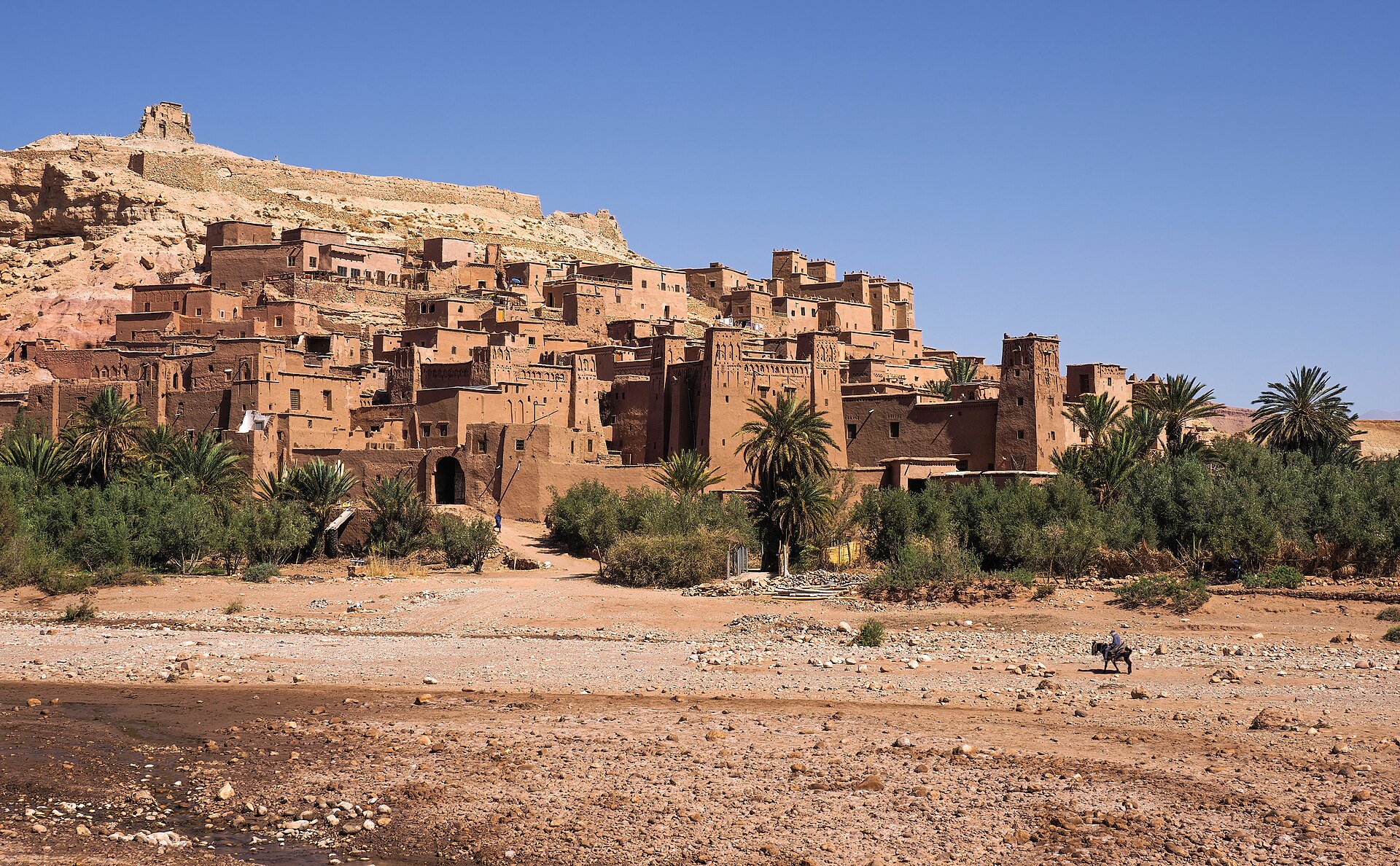
Plan for about an hour here. You cross the river on a footbridge, walk up through the lanes to the granary at the top, and get the view back across the valley. A local guide is optional and paid directly at the site. Many films have used the ksar as a set, which is why some lanes look oddly familiar, but the reason to come is the architecture itself.
Ouarzazate and the Skoura oasis
After Ait Benhaddou the road reaches Ouarzazate, a good place for lunch. If you want to see the film studios, tell your driver-guide in advance so the schedule allows for it. On a four-day trip there is time; on a three-day trip there usually is not.
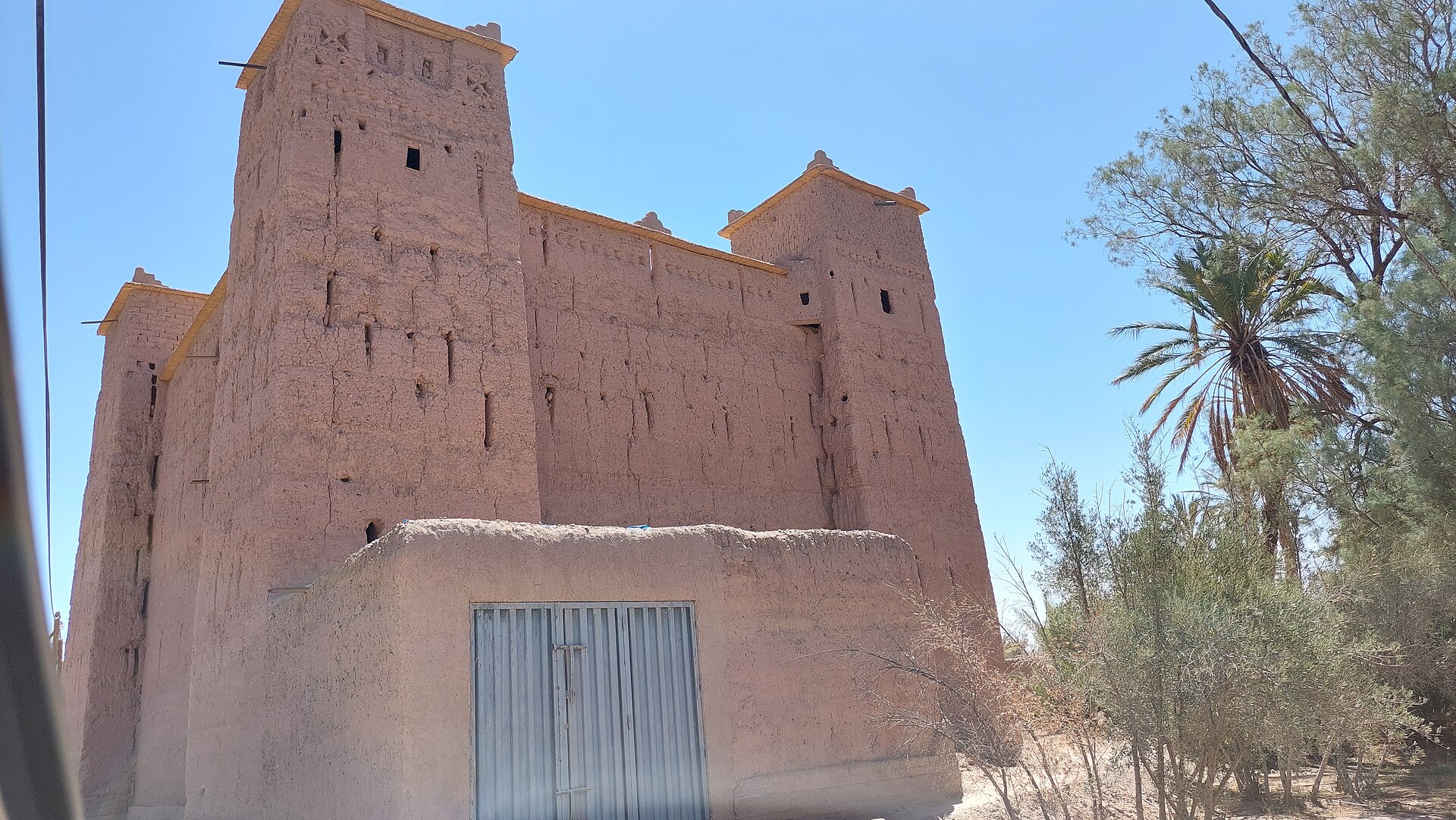
East of Ouarzazate, the Skoura oasis spreads out on both sides of the road. This is where the extra day first pays off. Instead of passing at speed, you stop at Kasbah Amridil, one of the best-preserved kasbahs in the region, with its towers, courtyards and old olive press still in place.
Through the Valley of Roses to the Dades Valley
The last hour follows the Valley of Roses around Kelaat M’Gouna, where small rose fields line the river and rosewater is sold in roadside shops. In spring the harvest fills the air with the scent; the rest of the year the valley is green and quiet. By late afternoon you reach the Dades Valley, where your driver-guide drops you at the accommodation you booked.
The Dades Valley is one of the best places on the whole route to spend a night. The river cuts through red rock formations, the light is soft in the evening, and the valley has a good spread of family-run guesthouses and small hotels. Many travelers say this first night ends up as one of the highlights of the trip, simply because they arrived with energy left.
Day 2: The Todra Gorge, Erfoud and the Road to Merzouga
Day two is the shortest driving day before the desert, about four hours, and it is built around one place: the Todra Gorge. Your driver-guide collects you from your Dades Valley accommodation after breakfast, usually around 8:30, and the road follows the valley east toward Tinghir.
Walking the Tinghir oasis
Before the gorge, you pass above the Tinghir palm grove, a long green ribbon of date palms, olive trees and small fields fed by irrigation channels. From the viewpoints on the road, the contrast between the oasis and the bare hills around it is one of the clearest pictures of how life works in the pre-Saharan south.
If you want to walk through the palm grove itself, your driver-guide can drop you at the edge and meet you on the far side. The paths are flat, shaded and used by local farmers, so walk quietly and ask before photographing people.
Inside the Todra Gorge
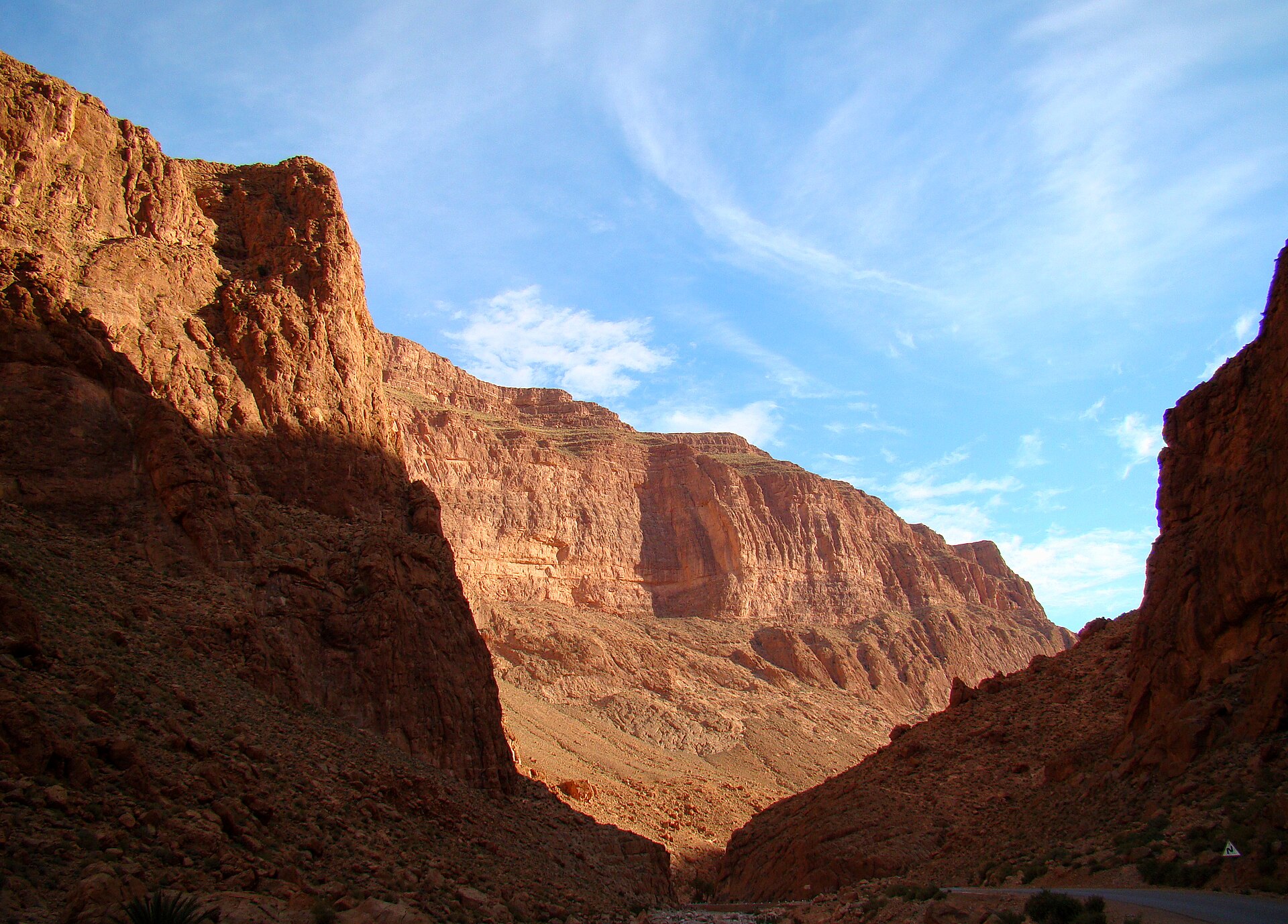
The Todra Gorge is a narrow canyon where the river has cut through limestone, leaving walls that rise around 300 meters above a passage only a few meters wide at its narrowest. Morning is the best time to visit, when the sun reaches the top of the cliffs and the gorge floor is still cool.
On a three-day trip, the Todra Gorge is usually a short stop. On the four-day route there is time to walk in properly: through the narrow section, past the climbing walls and out to where the gorge widens again. Allow an hour or more, and wear shoes that can handle a shallow stream crossing.
Lunch near the gorge, then Erfoud and Rissani
After lunch at one of the restaurants near the Todra Gorge entrance, the road heads east across open desert plains to Erfoud. Erfoud is known for fossils; the hills around it are rich in marine fossils hundreds of millions of years old, and local workshops cut and polish them into everything from tabletops to small souvenirs. A quick workshop stop is interesting even if you do not buy anything.
Rissani, a few kilometers further, was once the gateway to Sijilmassa, a major caravan city on the trans-Saharan trade routes. Today the market is the main attraction, especially the date sellers. If you pass on a market day, the livestock area is worth a look.
Arriving at Erg Chebbi
The last stretch from Rissani to Merzouga is short and flat, and then the dunes of Erg Chebbi appear on the horizon, orange against the sky. Your driver-guide drops you at your Merzouga accommodation in the late afternoon. Because tomorrow is a free day, you do not need to rush out for sunset tonight, but most travelers do anyway.
If you are staying in a desert camp inside the dunes, the camp usually arranges the final transfer by 4×4 or camel from the edge of the sand. Your driver-guide coordinates the handover and your luggage directly with the camp, so you only need to tell us the name of the camp you booked.
Day 3: A Full Day in Erg Chebbi Without the Car
Day three is the reason the four-day route exists. There is almost no driving. You wake up in or beside the dunes, spend the day at your own pace and watch the sunset over Erg Chebbi in the evening. This is the day most of our travelers mention first when they write to us afterwards.
Morning: Khamlia village and Gnawa music
In the morning your driver-guide takes you a few kilometers south of Merzouga to Khamlia, a village whose families have sub-Saharan roots. Khamlia is known for Gnawa music, a spiritual tradition built on deep drums, iron castanets called qraqeb and call-and-response chanting. Musicians perform for visitors in a simple house in the village, and the visit usually ends with mint tea.
It is a short visit, about an hour, but it adds a human layer to the desert that the three-day route rarely has time for. A small contribution to the musicians is customary.
Afternoon: the dunes at your own pace
The afternoon is free, and this is where travelers make very different choices. Some go back to their camp or hotel to rest through the hottest hours. Others walk into the dunes to find a quiet ridge, take photos, or simply sit in the silence. The dunes of Erg Chebbi are among the tallest in Morocco, and climbing the larger ones is harder work than it looks.
Activities in the dunes are not included in the transport, so you book them directly with your accommodation or a local provider. The most popular options are:
- A camel ride to a high dune for sunset, usually one to two hours
- Sandboarding on the steeper faces, often offered by the camps
- Quad biking or a buggy circuit around the edge of the erg
- A 4×4 tour of the wider area, including nomad families and the old mines
Your driver-guide can recommend trusted local operators, but the choice and the booking are yours.
Sunset and the night sky
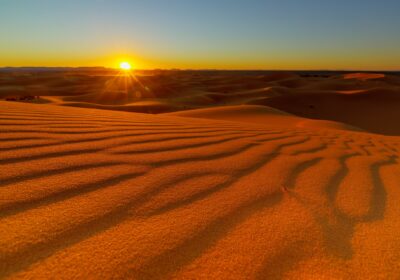
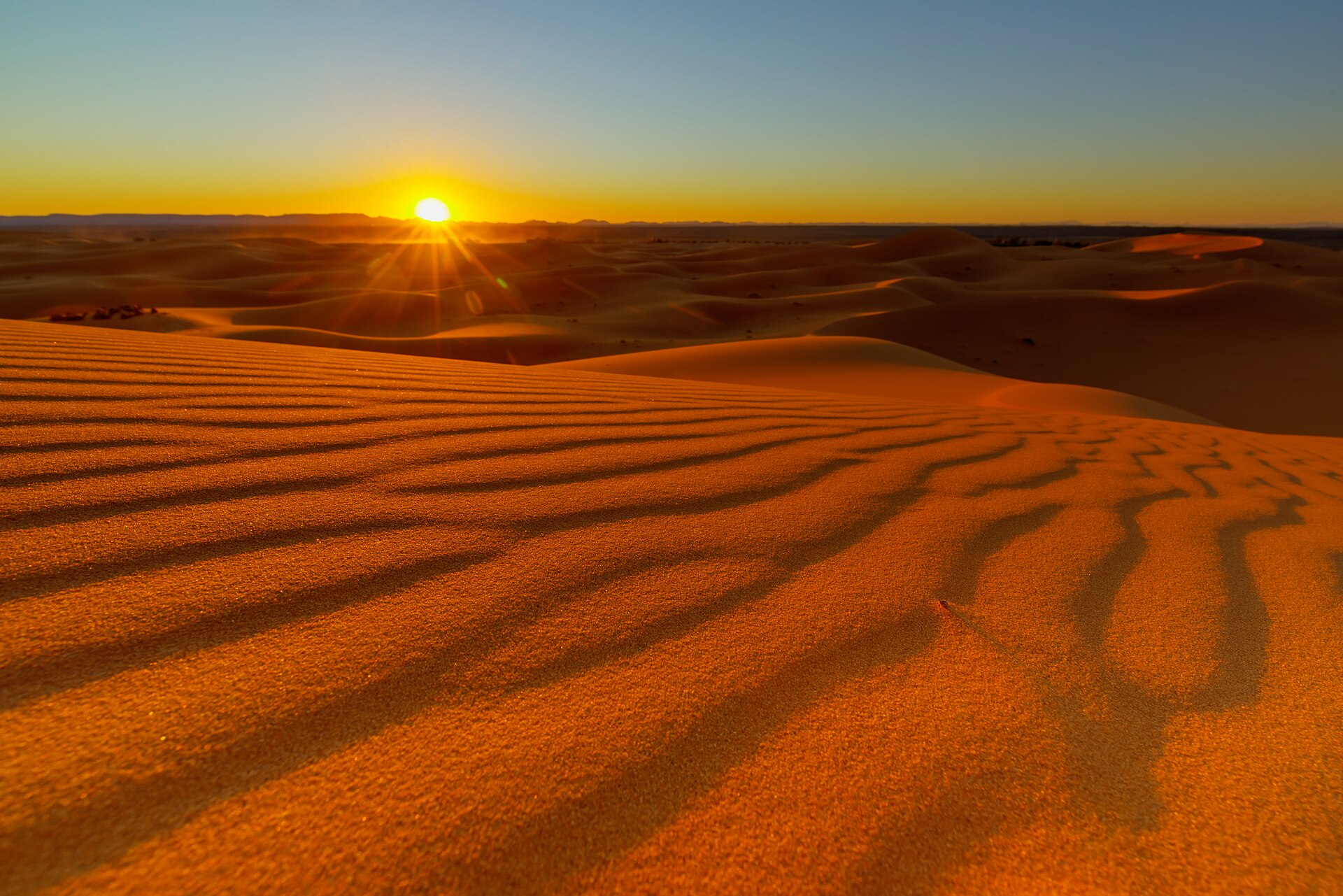
Late in the afternoon, head out for sunset. The color of Erg Chebbi changes every few minutes as the sun drops, from gold to deep orange to red and finally a cool violet. With two evenings in Merzouga instead of one, you can watch from two different dunes, or give the first evening to photos and the second to just watching.
After dark, the sky is the other reason to stay. Away from the camp lights, the Milky Way is clearly visible on most clear nights. If stargazing matters to you, check the moon phase before you book your dates; a new moon makes a huge difference.
Making the most of the free day in the desert
A few practical points make the free day work better:
- Drink more water than you think you need, even in winter
- Climb dunes on the ridges, where the sand is firmer, not straight up the face
- Wear a scarf or buff for sun and wind, and closed shoes if the sand is hot
- Keep your phone and camera in a sealed bag when the wind picks up
Day 4: Merzouga to Fes Through the Ziz Valley and Cedar Forests
The last day is the longest drive of the trip, about seven hours, but it is a beautiful one, and you start it after two nights in the same place. If you want to see the sunrise over Erg Chebbi one more time, get up early; your driver-guide collects you from your accommodation after breakfast, usually around 8:00.
The Ziz Valley and the Ziz Gorge
North of Erfoud, the road follows the Ziz River through one of the longest palm groves in Morocco. Small villages and ksour sit along the edge of the green, and the views from the higher sections of road are some of the best of the day.

Beyond Errachidia, the valley narrows into the Ziz Gorge, where the road winds through rock walls and tunnels. Your driver-guide will stop at the viewpoint above the dam and at the famous S-shaped bend, which makes a good photo when the light is right.
Midelt and the climb into the Middle Atlas
Midelt, roughly halfway, is the usual lunch stop. The town sits on a high plateau between the High and Middle Atlas, with snow-capped peaks visible to the south for much of the year, and it is known for its apple orchards. After lunch, the road climbs over the Col du Zad, a pass a little over 2,000 meters, and the landscape changes again: pasture, rocky hills and then the first trees.
Cedar forests and Barbary macaques near Azrou

Near Azrou, you enter the cedar forests of the Middle Atlas. Atlas cedars are tall, old and dark green, and the forest floor smells of resin after rain. The forests are home to Barbary macaques, an endangered monkey found only in the mountains of Morocco and Algeria. Your driver-guide knows the spots where the macaques often come close to the road.
Please do not feed them, even if others are doing it. Human food makes the monkeys sick and changes their behavior. Watching them from a short distance is the whole point.
Ifrane and the last hour to Fes
Ifrane, a short drive further, surprises most travelers. With its sloping roofs, gardens and clean streets, it looks more like an Alpine resort than a Moroccan town, and a short stop for coffee is a good way to stretch your legs before the final hour.
From Ifrane, Fes is about 60 kilometers away. You arrive in the late afternoon, and your driver-guide drops you at your hotel or riad. If your riad is deep inside the medina, where cars cannot enter, the driver-guide takes you to the nearest gate and arranges a porter for your luggage.
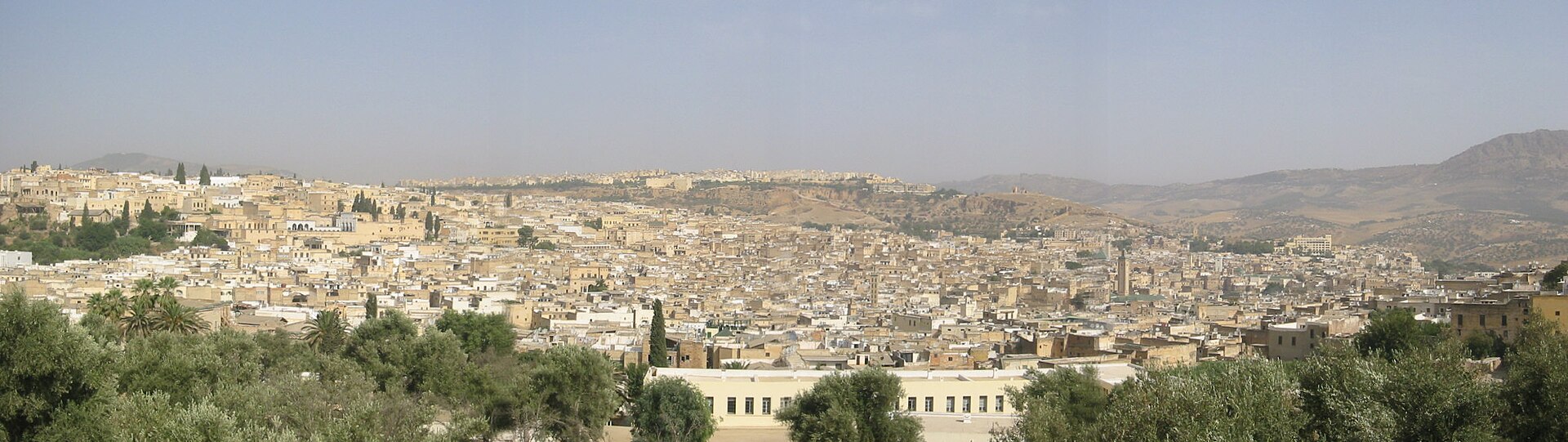
Fes el Bali, the old medina, is itself a UNESCO World Heritage Site and one of the largest car-free urban areas in the world. Ending the trip here gives you a completely different Morocco from the one you started in.
Booking Your Nights in the Dades Valley, Merzouga and Fes
Morocco Trip Lines works on a transport-only model. Your private vehicle, fuel, tolls and dedicated driver-guide are covered; accommodation, meals and activities are not. This section explains how that works on this route and how to choose your three nights.
Why transport only
The main advantage is choice. Instead of a package camp chosen for you, you pick each night to match your budget and taste, and you pay the property directly with no middleman markup. A family on a tight budget and a couple on a honeymoon can travel the same route with the same vehicle and completely different nights.
The other advantage is flexibility. Because nothing is pre-booked through us, you can change a hotel, upgrade a camp or extend a night without renegotiating a package. Your driver-guide simply drops you wherever you are staying.
Choosing a night in the Dades Valley
The Dades Valley has guesthouses, small hotels and a few higher-end properties with pool and gorge views. We suggest choosing somewhere along the valley road rather than in the town of Boumalne, so you wake up to the scenery. Look for properties with good reviews for dinner, because most travelers eat where they sleep on this first night.
Choosing your two nights in Merzouga
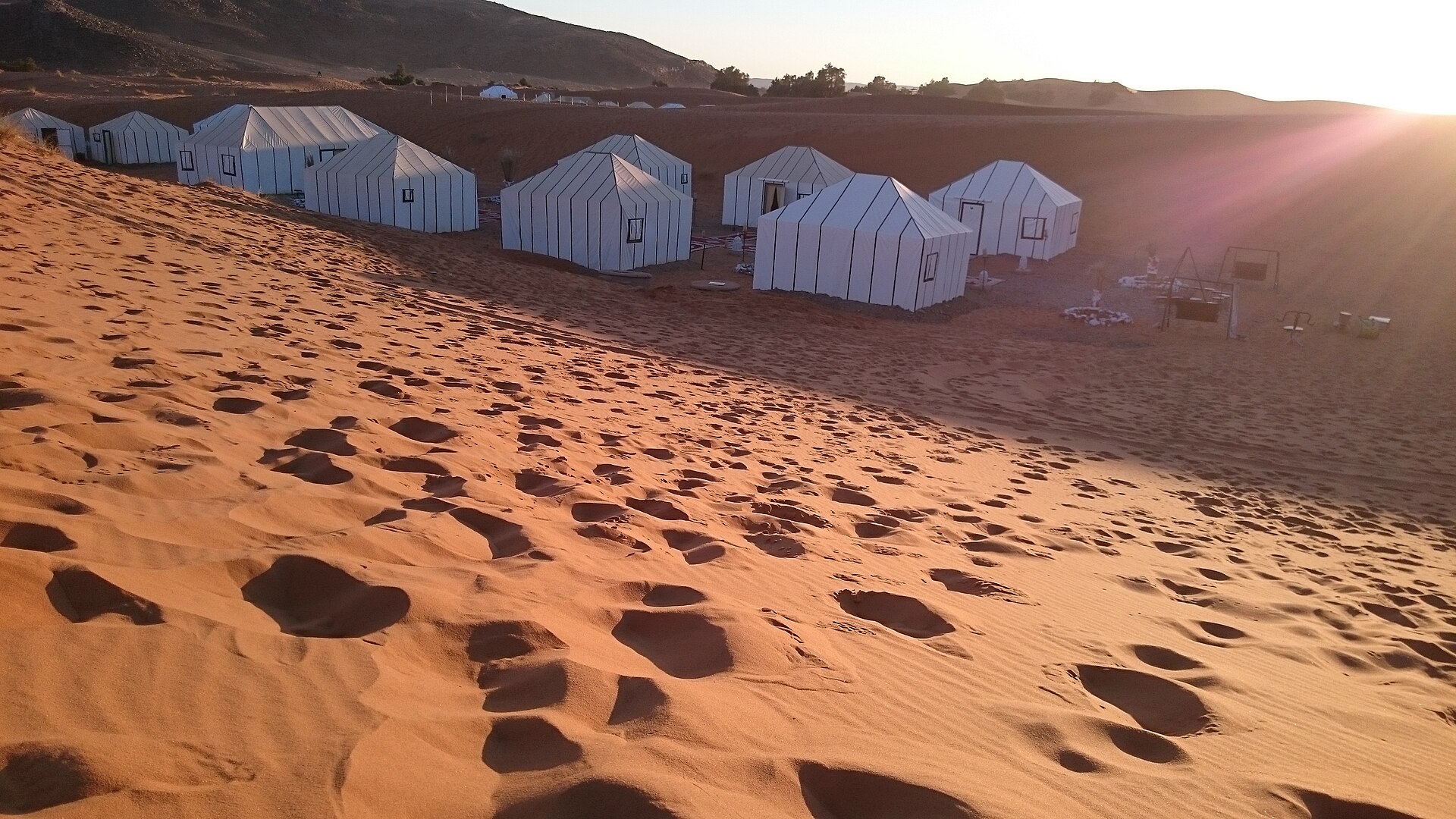
This is the most important decision on the trip. In Merzouga, you have three broad choices:
- Hotels and guesthouses at the edge of the dunes, with rooms, a pool and the dunes a short walk away
- Standard desert camps inside Erg Chebbi, with shared facilities and a traditional feel
- Comfort or luxury camps inside the dunes, with private bathrooms, hot showers and proper beds
With two nights, many travelers split them: one night in a hotel at the edge, one in a camp inside the dunes. That way you get a real desert night without spending both nights away from a hot shower. Book camps early in spring and autumn, when the best ones fill up.
Choosing your riad or hotel in Fes
In Fes, the classic choice is a riad inside the medina: a traditional house built around a courtyard, often beautifully restored. Riads near Bab Boujloud or Bab Rcif are easier to reach with luggage. If you prefer a car-friendly hotel, the Ville Nouvelle has modern options.
Whatever you book, send us the names and addresses of all three properties before you travel. Your driver-guide plans the day around them, and for Merzouga camps, coordinates the dune transfer directly.
Best Time to Go and Practical Tips for the Route
The four-day route runs year-round, but the season changes the experience more than most travelers expect. The desert is not always hot, and the High Atlas is not always mild.
Season by season
| Season | What to expect |
|---|---|
| Spring (March to May) | Best overall: warm days, cool nights, roses in bloom in the Valley of Roses |
| Summer (June to August) | Very hot in the desert, often over 40°C at midday; plan dune time early and late |
| Autumn (September to November) | Excellent: warm days, clear skies, date harvest in the oases |
| Winter (December to February) | Cold nights in the desert, possible snow on the Tizi n’Tichka and Middle Atlas passes |
Spring and autumn are the most popular months, so book accommodation early. In summer, the free day in the desert becomes even more valuable, because you can rest through the heat and still have both sunset and sunrise.
What to pack
Pack in layers. Even in spring, you can go from a cold morning on the pass to a hot afternoon in the Todra Gorge to a chilly night in the dunes. A practical list:
- A warm layer for desert nights and mountain passes
- Sunglasses, sunscreen and a hat or scarf
- Comfortable walking shoes for the gorge and the ksar
- A small daypack for water, snacks and your camera
- Cash in dirhams for entrance fees, local guides and tips
Money, connectivity and health
Card payments are common in cities and larger hotels but not in small villages or at entrance points. ATMs are available in Ouarzazate, Tinghir, Erfoud and Midelt, so you can top up along the way. Mobile coverage is good on most of the route, though it drops in parts of the gorges and deep in the dunes.
Bring any medication you need, and if you are sensitive to motion, sit in the front and take something before the Tizi n’Tichka. Travel insurance is strongly recommended.
Mistakes first-time travelers make on this route
After many departures on this road, our driver-guides see the same handful of mistakes again and again. None of them ruin a trip, but each one is easy to avoid if you know about it before you go.
- Booking a Merzouga camp far from the road without checking the transfer. Some camps sit an hour into the dunes by camel. That is wonderful for one night but tiring for two, especially with luggage. Ask the camp how guests arrive and leave.
- Packing for heat only. Travelers in shorts at the Tizi n’Tichka summit in March are a common sight. Keep a warm layer in the vehicle, not in the bottom of your suitcase.
- Planning a flight out of Fes on the evening of day four. The drive from Merzouga takes around seven hours before stops. Book your flight for the following day, or at least leave a wide margin.
- Skipping breakfast before the Todra Gorge. Day two feels short, but the walk into the gorge and the drive to Merzouga still fill most of the day.
Is one free day in the desert enough?
For most travelers, yes. One full day around Erg Chebbi gives you two sunsets, two sunrises, the Khamlia visit and an afternoon in the dunes. If you want a longer stay, for example to add a night in a remote camp or a day trip toward the nomad areas south of Merzouga, the route can be extended to five days. Tell us when you send your enquiry, and we will adjust the plan so the final drive to Fes still starts in the morning.
The same logic applies at the other end. If Fes is your first visit to an old medina, consider adding a full day there after the tour. Arriving in the late afternoon after seven hours on the road is not the moment to start exploring the souks.
Traveling with children
The route works well for families on the four-day schedule. Child seats can be provided if you ask in advance. Children usually love the dunes, the camels and the macaques, and shorter driving days make a big difference to everyone’s mood. Choose camps with family tents or connected rooms in Merzouga.
Marrakech to Fes in 4 Days FAQ
Is Marrakech to Fes in 4 days better than 3?
It depends on your time and energy. The four-day route keeps the same road but adds a full day in the Erg Chebbi dunes and splits the long first day in two. If you can spare the day, most travelers find it far more relaxed.
How much driving is there each day?
About six hours on day one to the Dades Valley, four on day two to Merzouga, almost none on day three and around seven on day four to Fes. Your driver-guide adds frequent stops, so the actual days are longer than the driving time.
Do I see the Todra Gorge properly on this route?
Yes. Day two is short enough to walk into the Todra Gorge rather than just stop at the entrance. Morning is the best time, with cool air and good light on the cliffs.
Are hotels, camps and meals included?
No. Morocco Trip Lines provides private transport only: the vehicle, fuel, tolls and a dedicated driver-guide. You book your own hotels, riads and desert camp, and your driver-guide drops you off and picks you up at each one.
Can I sleep in a desert camp both nights in Erg Chebbi?
Yes, and some travelers do. Others split their two nights between a camp inside the dunes and a hotel at the edge. Your driver-guide coordinates the transfers with whatever you book.
What is there to do on the free day in the desert?
The morning includes a visit to Khamlia village for Gnawa music. The afternoon is free for walking in the dunes, a camel ride, sandboarding or a 4×4 tour, booked directly with local providers, followed by sunset over the dunes.
Can I do the route in reverse, from Fes to Marrakech?
Yes. The same four days work in reverse, with the long drive on the first day instead of the last. Ask for the reverse route when you send your enquiry.
Is the Dades Valley worth staying in?
Yes. The Dades Valley is one of the most scenic stops on the route, with red rock formations and good family-run guesthouses. Spending the night there means you see it in evening light instead of from the car.
Is Marrakech to Fes in 4 Days Right for You?
The Sahara crossing from Marrakech to Fes is one of the great road journeys in North Africa, and the difference between doing it well and doing it fast is mostly one day. The four-day route does not add new places. It adds time in the right ones: an evening in the Dades Valley, a real walk through the Todra Gorge and a full day in the Erg Chebbi dunes when you are not watching the clock.
If you travel with children, care about photography or simply want to remember the desert as more than one tired night, Marrakech to Fes in 4 days is the version we recommend. If you only have three days, the faster route still delivers the highlights, and our 3-day Marrakech to Fes tour is built for exactly that.
For other routes into the Sahara, compare the loop in our Marrakech via Zagora to Merzouga guide, the return trip in the Marrakech to Merzouga in 3 days guide, or the longer journey north in Marrakech to Chefchaouen via the Sahara.
The next step is simple: pick your dates, then send us an enquiry for the 4-day tour. Tell us your group size and where you plan to stay, and we will come back with a private quote and a plan for each day.