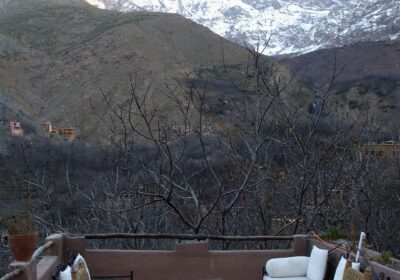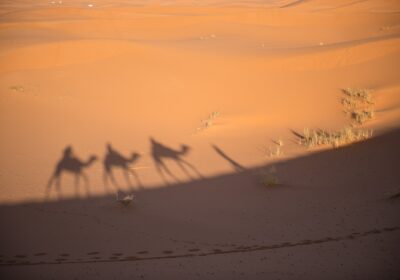

Chefchaouen was founded in 1471 as a small mountain fortress, and today its blue lanes are among the most photographed streets in North Africa. A Marrakech to Chefchaouen tour gets you there the long way: over the High Atlas, into the Sahara for a night in the dunes, through the medina of Fes and past the Roman ruins of Volubilis. Six days, four completely different Moroccos, and you never retrace a single road.
Prefer a dedicated driver-guide for this route?
- Private air-conditioned vehicle + professional licensed driver-guide
- Flexible pace with customized stops along the mountain passes and valleys
- You choose and book your own preferred hotels and desert camps
- Instant quote requests via WhatsApp and Email
This Marrakech to Chefchaouen tour guide is for travelers with about a week who want to see the country’s greatest hits without spending half their holiday on logistics. You might be flying into Marrakech and wondering how to fit in the desert, Fes and the blue city. Or you may have seen a dozen itineraries and cannot tell which order makes sense.
We will walk you through the route day by day, explain why the order matters, and cover the practical details: where you sleep, how long each drive takes, what the guided day in Fes includes and how to get home from Chefchaouen at the end.
Why a Marrakech to Chefchaouen Tour Is the Ideal First Week in Morocco
Most first-time visitors planning a 6 day Morocco itinerary want the same four things: the energy of Marrakech, a night in the Sahara, the medieval medina of Fes and the blue streets of Chefchaouen. The problem is that they are spread across the country, from the south to the Rif mountains in the north. A one-way route that strings them together is the most efficient way to see all four.
A Marrakech to Chefchaouen tour does exactly that. It starts in the south, crosses the High Atlas to the desert, then turns north through the Middle Atlas to Fes and the Rif. Each day moves you forward, and each night is somewhere new.
Adventure first, culture second
The order of this route is not an accident. You reach the dunes on day two, while you are fresh and excited, and the long drives come early in the trip. The second half slows down: a full day exploring Fes on foot, a shorter drive to Chefchaouen, and a relaxed final morning in the blue medina.
Many guests tell us this rhythm is what makes the trip work. By the time you reach Chefchaouen, you have earned a slow coffee in the square rather than another long day in the car.
What you see in six days
- The High Atlas and the Tizi n’Tichka pass
- The UNESCO-listed fortified village of Aït Benhaddou
- The Dades Valley, Todra Gorge and Tinghir oasis
- A camel ride and a night in the Erg Chebbi dunes
- The Ziz Valley, the cedar forests of the Middle Atlas and Ifrane
- A full guided day in the Fes medina
- The Roman city of Volubilis
- The blue town of Chefchaouen in the Rif mountains
Who this route suits
This 6 day Morocco itinerary suits travelers who want variety above all: landscapes, history, cities and villages, all in one week. It works for couples, friends and families with older children, and it is ideal if you are flying into Marrakech and want to see the north before heading home.
The 6 Day Morocco Itinerary at a Glance
Here is the full Marrakech to Chefchaouen tour in one view. Driving times include short stops for photos, coffee and lunch.
| Day | Route | Driving time (approx.) | Night |
|---|---|---|---|
| 1 | Marrakech, Tizi n’Tichka, Aït Benhaddou, Ouarzazate, Valley of Roses, Dades | About 6 hours | Hotel in the Dades Valley |
| 2 | Tinghir, Todra Gorge, Rissani, Merzouga, camel trek | About 5 hours | Luxury desert camp in Erg Chebbi |
| 3 | Sunrise ride, Ziz Valley, Midelt, Azrou, Ifrane, Fes | About 7 hours | Riad in the Fes medina |
| 4 | Full-day guided tour of the Fes medina | On foot | Riad in the Fes medina |
| 5 | Volubilis, the Rif Mountains, Chefchaouen | About 4 hours | Riad in Chefchaouen |
| 6 | Morning in Chefchaouen, tour ends | Optional transfer onward | Your choice |
How the pace changes
On this 6 day Morocco itinerary, the first three days carry most of the driving, as you cross from Marrakech to the Sahara and on to Fes. Day four of the Marrakech to Chefchaouen tour has no driving at all. Day five is short and full of interest, and day six is yours to enjoy at an easy pace. It is a front-loaded trip, which is exactly what you want after a long flight and before a long flight home.
Where you sleep
Every night is in a different kind of place: a hotel above a canyon, a tent in the dunes, two nights in a traditional riad in Fes and a final night in a riad in Chefchaouen. Accommodations along this route typically offer dinner and breakfast, with the second night in Fes left free so you can explore independent restaurants in the medina.
What a Typical Day Looks Like on a Marrakech to Chefchaouen Tour
Six days on the road can sound tiring, so it helps to know how a normal day on a 6 day Morocco itinerary runs. On a private Marrakech to Chefchaouen tour, the rhythm is set by you and your driver-guide rather than by a bus timetable.
Mornings
Breakfast is at your hotel, camp or riad, usually between seven and eight. On driving days, you leave soon after, so you cover the longest stretches in the cool of the morning. Your bags go in the vehicle, and you keep a small day bag with water, a layer, sunscreen and your camera.
On the road
Your driver-guide stops roughly every two hours: a viewpoint, a coffee, a village, a short walk. Lunch is usually somewhere simple and local, chosen for good food rather than for tour groups. If something catches your eye, ask to stop. On a private trip, that is the whole point.
Evenings
You arrive at each night’s stop in the late afternoon, with time to rest before dinner. Dinners are arranged directly with your chosen hotel, camp, or riad, with the second evening in Fes ideal for exploring local medina dining. Early nights are common on the desert days, and evenings in Fes and Chefchaouen are perfect for a slow walk through the lanes.
Your driver-guide
The same driver-guide stays with you from Marrakech to Chefchaouen. Over six days, they become your translator, local expert and problem solver. Many guests say the conversations in the car, about family, food, religion and daily life, were one of the best parts of their trip.
Days 1–3: Marrakech to the Sahara and on to Fes
The first half of the tour follows the same road as our three-day desert trips, so we will keep it brief here and point you to the full details. For a stop-by-stop description of the first two days, see our 3 Day Desert Tour From Marrakech guide. For day three, see the Middle Atlas section of our Marrakech to Fes Desert Tour guide.
Day 1: over the High Atlas to the Dades Valley
Your driver-guide collects you from your Marrakech riad, hotel or the airport at around 7:30. The road climbs over the Tizi n’Tichka pass, whose summit sign says 2,260 meters even though a 2022 GPS survey measured 2,205. At midday you explore Aït Benhaddou, the earthen ksar UNESCO listed in 1987, with time to climb to the viewpoint at the top.
In the afternoon you pass Ouarzazate and its film studios, the palm oasis of Skoura, and the Valley of Roses before reaching the Dades Valley. The night is spent in your chosen hotel above the gorge, where dinner and breakfast are arranged directly with your hosts.
Day 2: gorges, oasis and the dunes
The Road of a Thousand Kasbahs leads to Tinghir, where you walk through the palm oasis before stepping into the Todra Gorge. Its walls rise up to about 400 meters. After lunch near the entrance, you continue through Rissani and Erfoud to Merzouga.
In the late afternoon you meet your camel guide and ride into Erg Chebbi for sunset. The night is spent in a luxury desert camp with a private ensuite tent and hot shower, dinner, Berber drumming and a campfire under the stars.
Day 3: from the desert to Fes
A pre-dawn camel ride takes you to a high dune for sunrise, then back to camp for breakfast. The drive north follows the palm-lined Ziz Valley, climbs to Midelt for lunch, and crosses the Middle Atlas through the cedar forests near Azrou, home to endangered Barbary macaques. After a coffee in alpine-style Ifrane, you arrive in Fes in the late afternoon and check in to a riad in the medina.
Day 4: A Full Guided Day in the Fes Medina
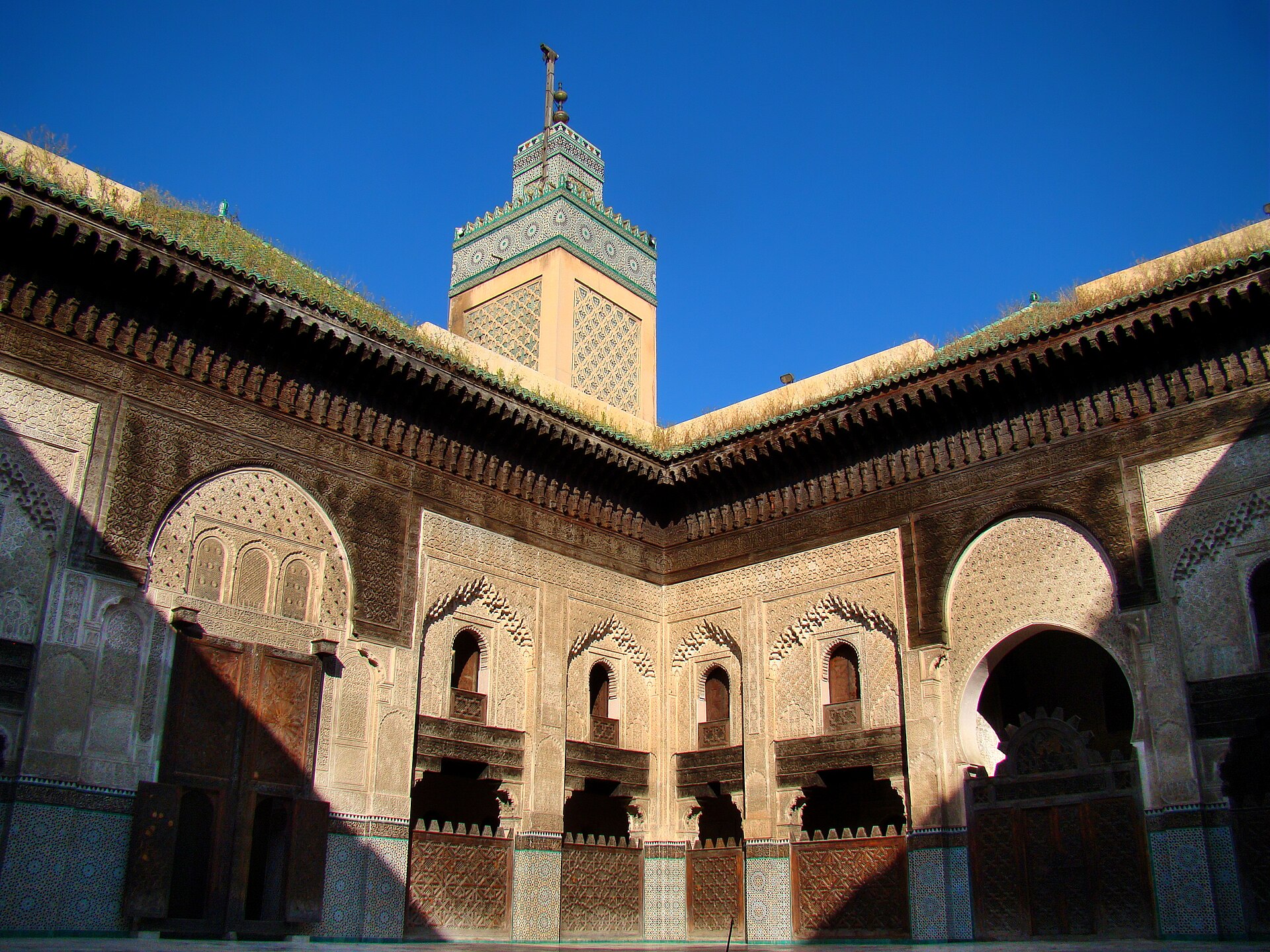
Day four is the cultural heart of the Marrakech to Chefchaouen tour. After three days on the road, you put the car aside and spend the whole day on foot with a licensed local guide. This is what sets a Marrakech to Chefchaouen tour apart from shorter desert trips: you are not just dropped in Fes, you are shown it properly.
The Medina of Fez has been on the UNESCO World Heritage List since 1981. Founded in 789, it is a vast maze of lanes, workshops, mosques and markets, much of it closed to cars. Without a guide, it is easy to spend the day lost. With one, you see the best of it and understand what you are looking at.
The morning: palaces and panoramas
Many guided days begin outside the old walls. The ornate gates of the Royal Palace, built between 1969 and 1971, stand in Fes Jdid, the “new” city founded by the Marinid sultans in 1276. The palace itself is closed to visitors because the King uses it when in Fes, but the gates are one of the most photographed sights in the city.
From there, a short drive takes you up to Borj Sud, a late 16th-century bastion on the hill above the medina. The panorama over the rooftops, minarets and green tiles of Fes el Bali is the best way to grasp the size of the old city before you plunge into it.
The afternoon: inside the medina
Inside the walls, your guide leads you through the lanes to the highlights:
- Al-Qarawiyyin: traditionally founded in 859 by Fatima al-Fihri and considered the oldest continuously operating university in the world
- Bou Inania Madrasa: a masterpiece of Marinid architecture, with carved cedar, plaster and zellij tilework
- The Chouara tannery: the famous dye pits, seen from a terrace above
- The souks: coppersmiths, weavers and leatherworkers, each trade in its own lanes
- Nejjarine Square: a small square with a beautiful fountain, close to the carpenters’ souk
Lunch is in the medina, at a place your guide recommends. The rest of the afternoon is for the artisan souks and any workshops that caught your eye.
Dinner at leisure
Dinner on day four is not included, on purpose. Fes has some excellent restaurants, from riad dining rooms to rooftop terraces, and this is your chance to choose one. Ask your riad for a recommendation and, if it is inside the medina, for someone to walk you there and back after dark.
Tips for your day in Fes
- Wear comfortable shoes; the lanes are steep in places and paved with uneven stone.
- Carry small change for entry fees, tips and snacks; site entrance fees are not included.
- Ask before photographing people or shopfronts.
- Agree with your guide in the morning if you want to skip shopping stops or spend longer at a particular site.
Day 5: From Fes to Chefchaouen via Volubilis
Day five is one of the most enjoyable days of the trip. The drive from Fes to Chefchaouen is only about four hours, and it includes a visit to the most impressive Roman site in Morocco. You arrive in the blue city in time for an evening stroll.
Volubilis, Rome’s frontier city
About an hour from Fes, the ruins of Volubilis spread across a gentle slope above the plain. This was a Roman city on the south-western edge of the empire, and UNESCO listed Volubilis as a World Heritage Site in 1997. Rome withdrew from the area around 285, and the city was never retaken.
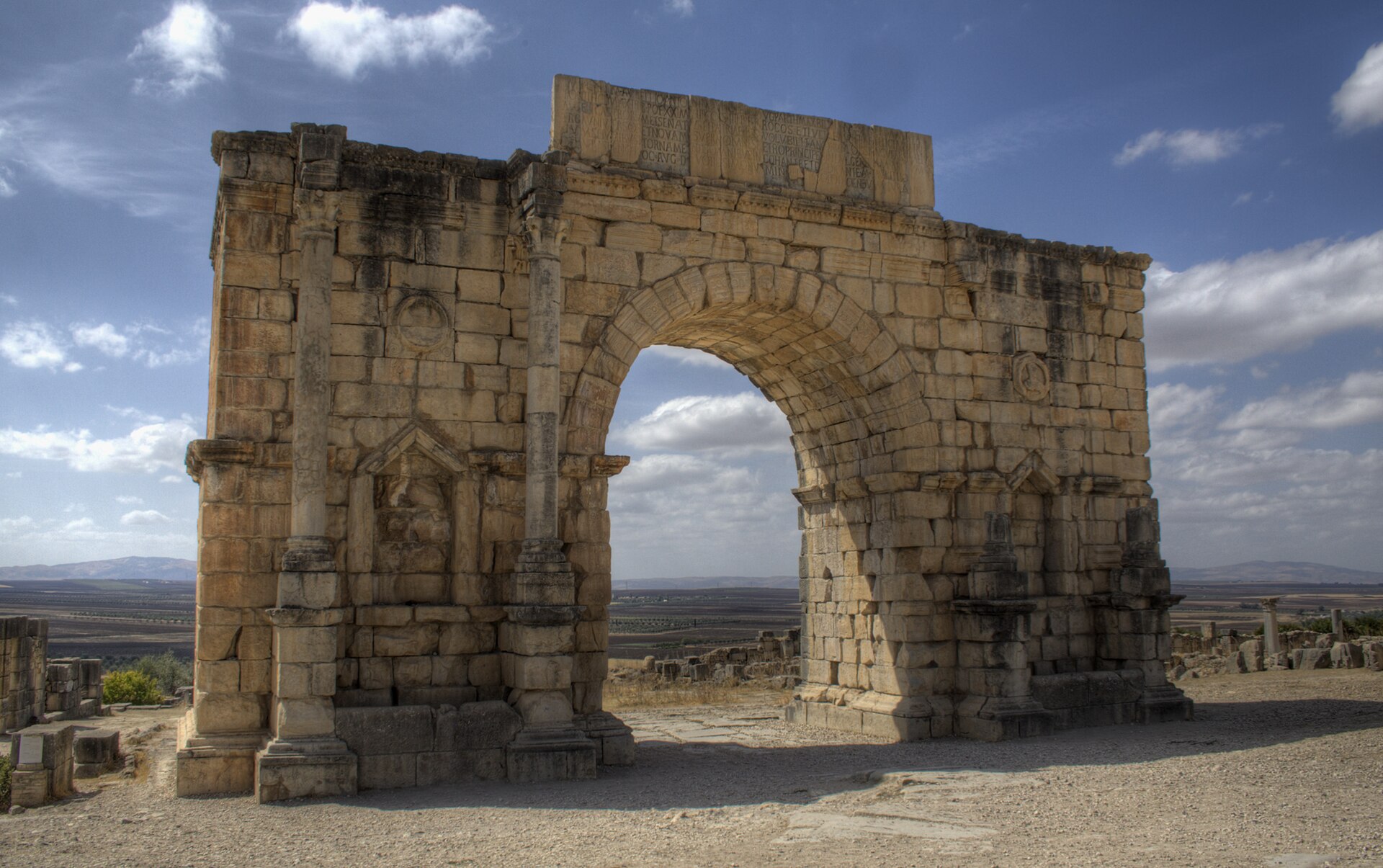
The highlights are easy to see in an hour or so:
- The Arch of Caracalla: built in 217 by the local governor to honor the emperor Caracalla and his mother, Julia Domna
- The Basilica and Capitoline Temple: the civic and religious heart of the Roman city, both partly restored in the 20th century
- The mosaics: still in place on the floors of the old houses, including the Labours of Hercules and the scene of Diana and Actaeon in the House of Venus
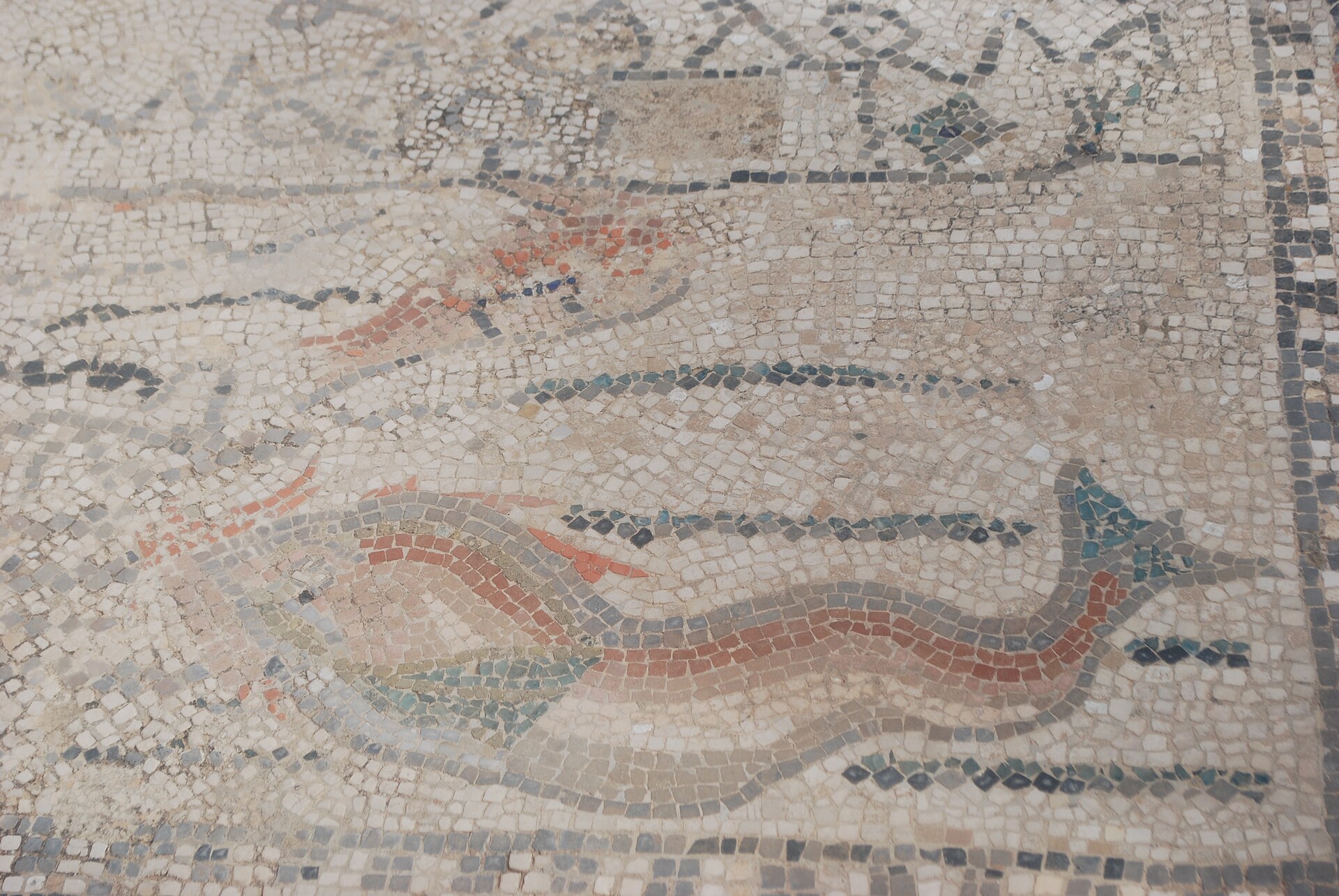
The site has suffered over the centuries. Sultan Moulay Ismail took stone from the ruins to build his new capital at Meknes, and the 1755 earthquake caused further damage. Even so, standing among the columns with the hills of the Zerhoun behind you is a memorable moment. The holy town of Moulay Idriss, where Idris I is buried, sits just a few kilometers away, an easy glimpse on the road from Fes to Chefchaouen.
Through the Rif Mountains
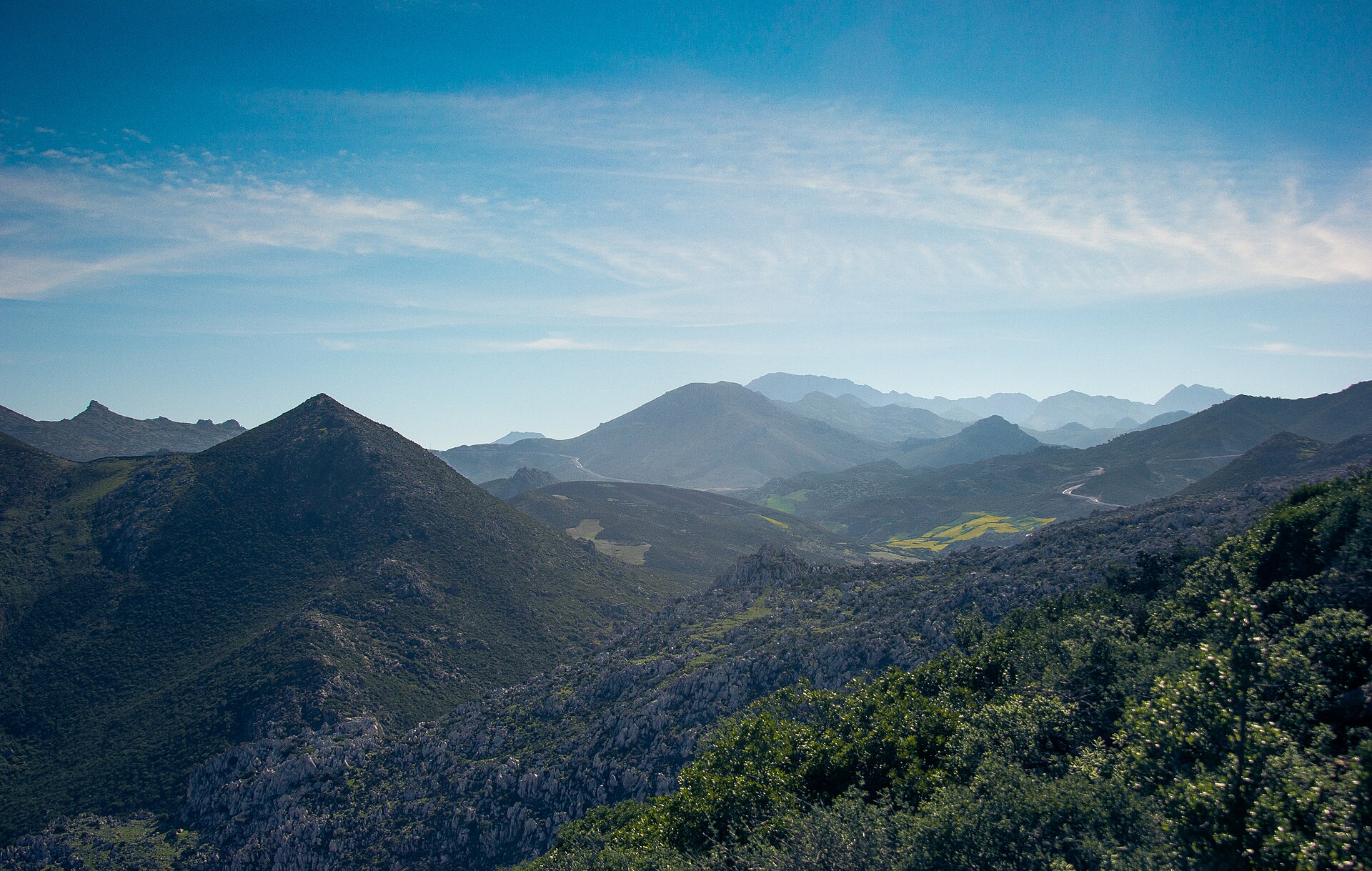
From Volubilis, the road from Fes to Chefchaouen heads north-west into the Rif. The landscape turns green and hilly, with olive groves, small farms and villages clinging to the slopes. You stop for lunch along the way and arrive in Chefchaouen in the afternoon.
Your first evening in the blue city
At the end of the drive from Fes to Chefchaouen, your riad is inside or close to the medina. After checking in, take an evening walk through the blue lanes as the day-trippers leave and the light softens. Dinner and breakfast can be booked directly with your chosen riad.
Day 6: A Morning in Chefchaouen and the End of Your Tour
The last day of your Marrakech to Chefchaouen tour is gentle by design. You have the morning to explore the blue medina at your own pace before the tour ends.
A short history of Chefchaouen
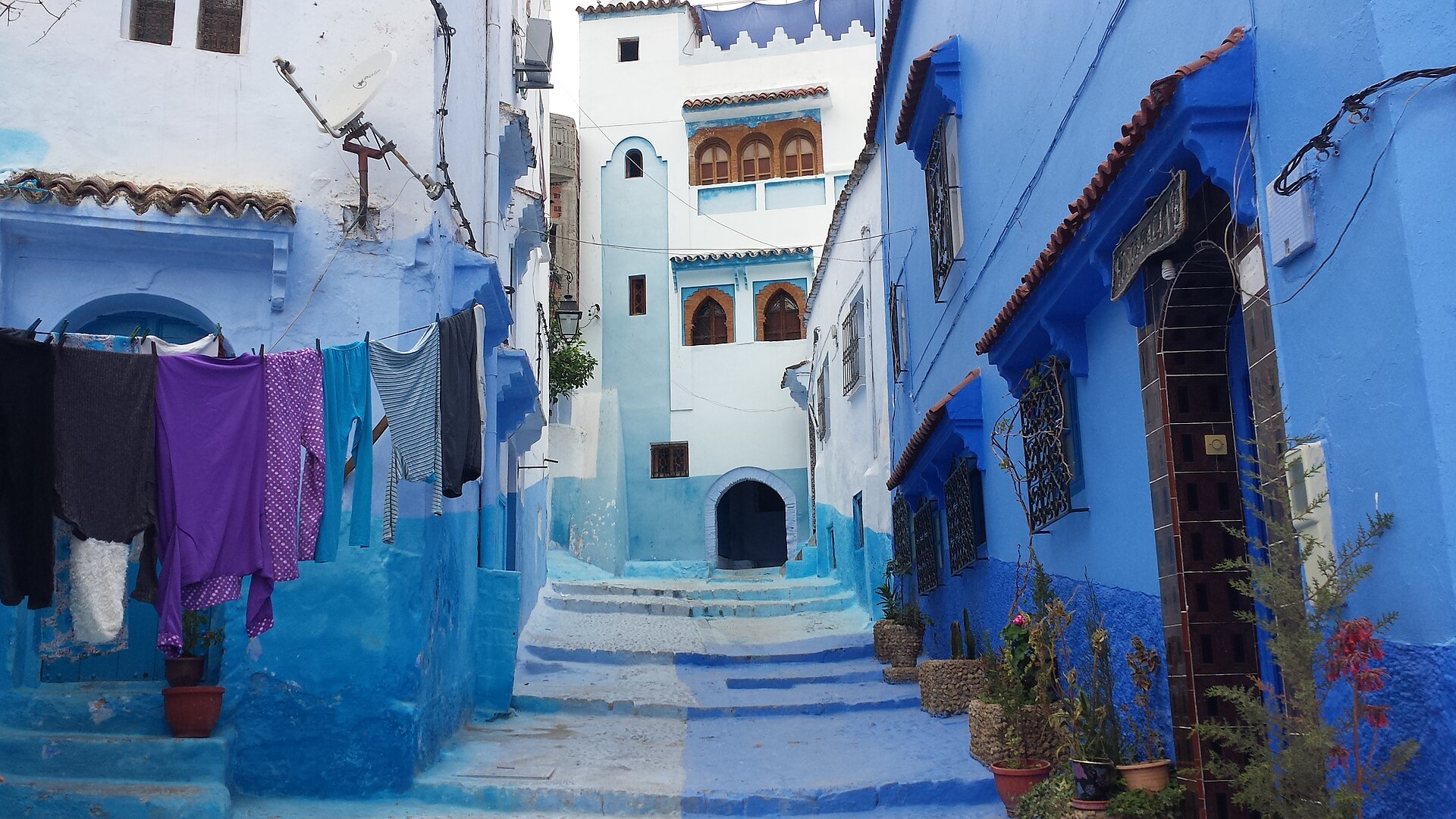
Chefchaouen was founded in 1471 by Ali ibn Rashid al-Alami as a fortress to defend the region against Portuguese attacks. After the fall of Granada in 1492, Muslim and Jewish refugees from Andalusia settled here and built their quarters in the Andalusian style. That heritage still shapes the town’s whitewashed walls, tiled roofs and narrow lanes.
Why is Chefchaouen blue?
Nobody can say for certain. Some say the blue keeps mosquitoes away, others that it represents the sky and heaven as a reminder of spiritual life. Some locals will tell you the blue walls became widespread more recently, encouraged in the 1970s to attract visitors. Whatever the reason, the effect is unforgettable.
What to see on your last morning
- Plaza Outa el Hammam: the main square, with cafés, the Great Mosque and the old Kasbah
- The Kasbah: the 15th-century fortress at the heart of the town, now a small museum with a garden courtyard
- Ras El Maa: the spring just outside the medina walls that was the town’s original water source
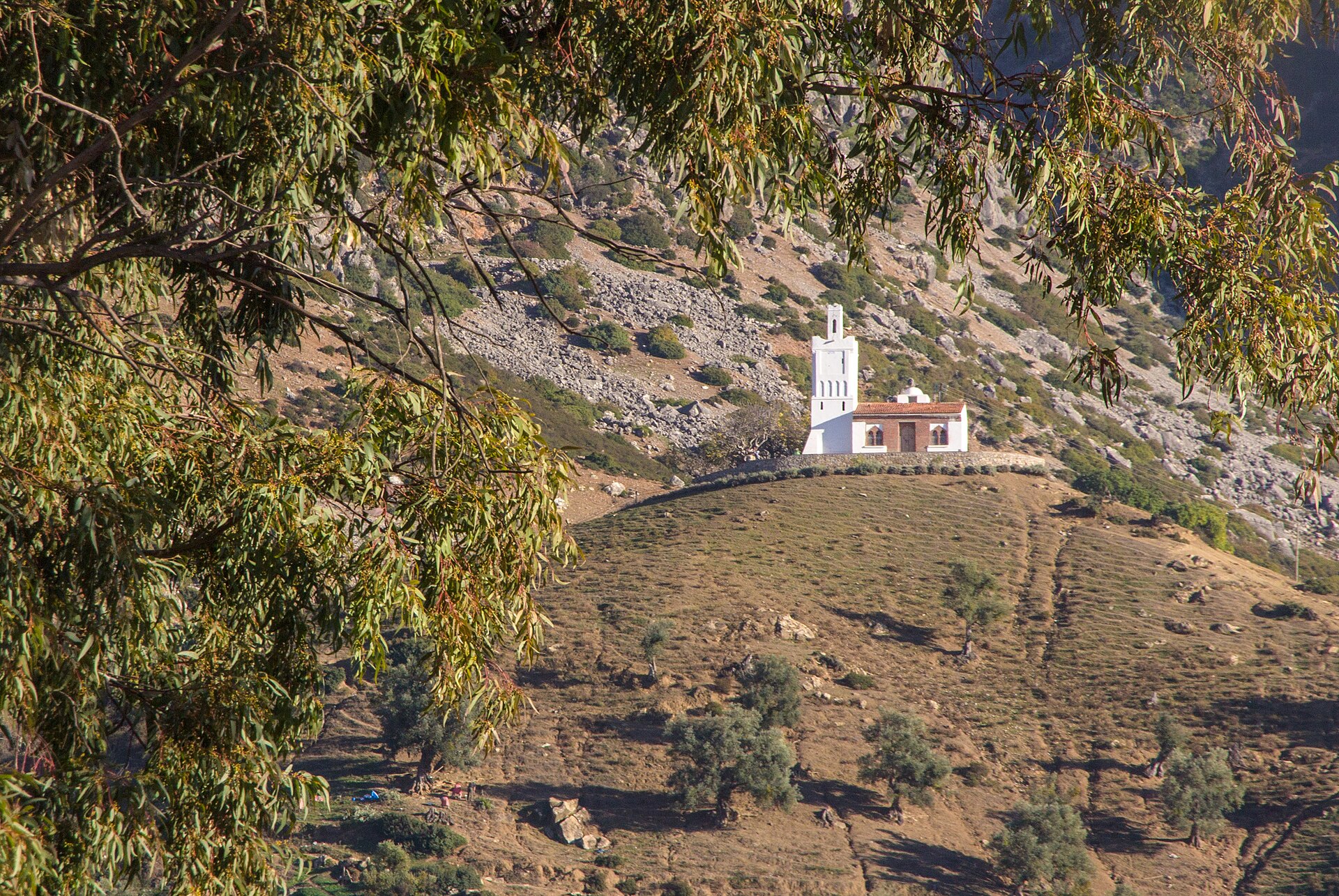
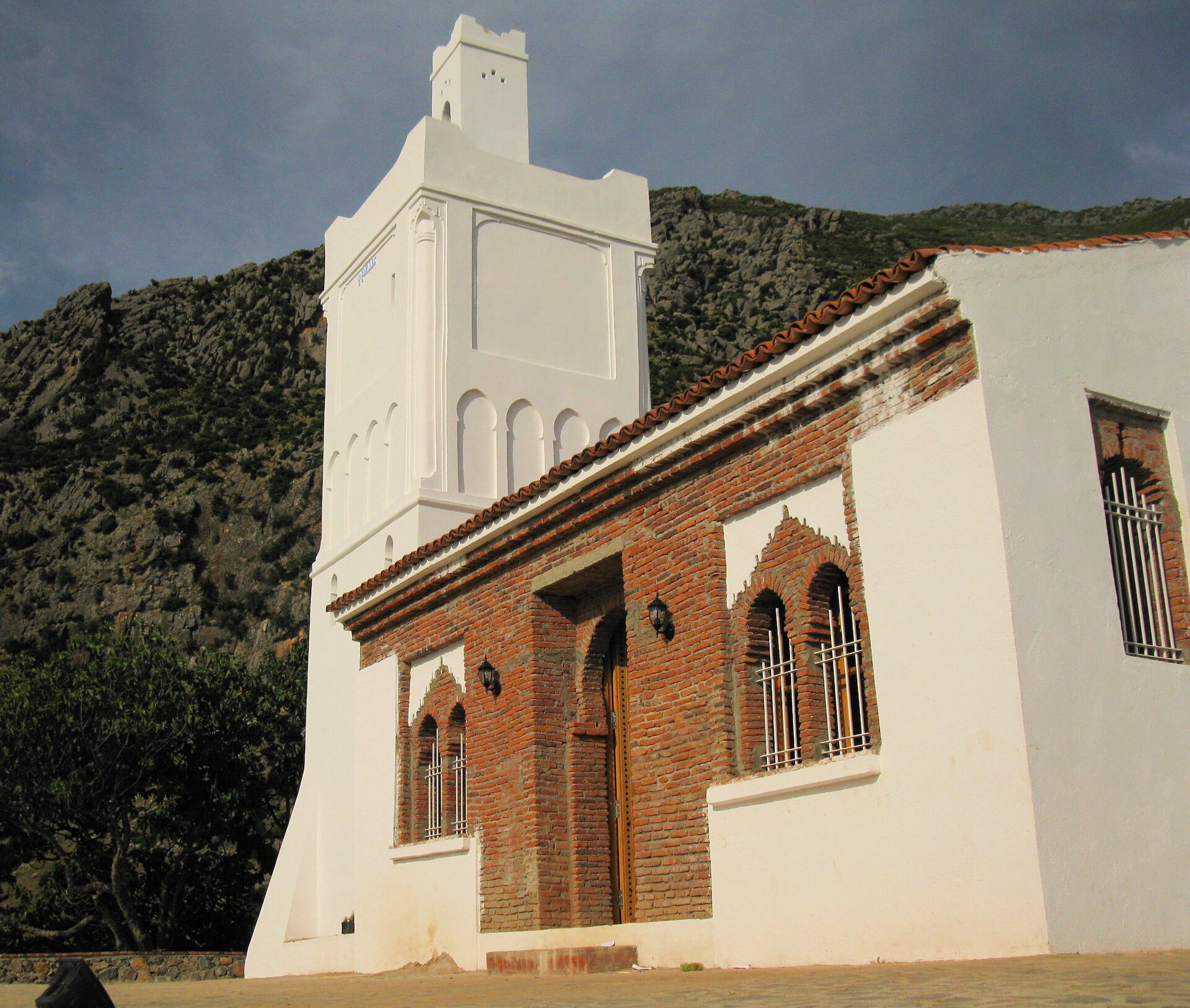
- The Spanish Mosque: a short walk of about 20 minutes uphill to a 1920s mosque, now a lookout with the best view over the town
How the tour ends
The tour officially ends in Chefchaouen on day six. Many guests choose to stay an extra night in the blue city, which we can arrange. If you need to head home or continue your trip, an optional same-day transfer can take you back to Marrakech, including the airport, or to Casablanca.
Riads Explained: Where You Sleep in Fes and Chefchaouen
Three of the five nights on this 6 day Morocco itinerary are in riads, so it is worth knowing what to expect. A riad is a traditional townhouse built around an inner courtyard, often with a fountain or garden at its center. From the lane outside, most riads look like a plain wall and a wooden door. Inside, they open into a calm, tiled courtyard with rooms on two or three floors.
What makes a riad special
- Quiet: thick walls keep out the noise of the medina
- Character: carved plaster, painted wood and zellij tilework in many of them
- Rooftop terraces: perfect for breakfast or a sunset view over the city
- Hospitality: small, family-style service, often with home-cooked dinners
Practical points
Riads are inside the car-free medina, so the vehicle stops at the nearest gate and a porter or member of staff carries your bags the last few hundred meters. Rooms are reached by stairs, and few riads have lifts. If anyone in your group has limited mobility, tell us in advance and we will choose a riad with ground-floor rooms or easy access.
Riads in Chefchaouen
Chefchaouen’s riads are usually smaller and simpler than those in Fes, with blue-painted walls, cozy rooms and views over the town or the Rif. Evenings can be cool, even in spring, so most provide blankets and some have fireplaces in winter.
Food Along a 6 Day Morocco Itinerary
Six days across Morocco means six days of very different food. Breakfasts and dinners are arranged directly with your chosen accommodations, and lunch stops are chosen locally.
In the south and the desert
Day one usually brings a tagine with a view of Aït Benhaddou. In the Dades Valley and the desert camp, dinner is typically soup, salads and a slow-cooked tagine or couscous. Around Rissani and Merzouga, look for madfouna, a stuffed flatbread baked in the ashes and often called Berber pizza.
In Fes
Fes is one of Morocco’s great food cities. Pastilla, a sweet and savory pie dusted with cinnamon, is a local classic, and the medina is full of bakeries, olive stalls and spice shops. Your free evening on day four is the moment to try a medina restaurant.
In Chefchaouen
In the Rif, breakfast often includes fresh bread, olive oil, honey and soft cheese from the surrounding hills. Cafés around Plaza Outa el Hammam serve mint tea all day, and many restaurants offer simple local dishes at relaxed prices.
Dietary needs
Vegetarian meals are easy to find across the route, and most riads and camps can adapt dishes if you let them know in advance. Tell us about allergies or dietary needs when you book, so we can pass the information on to every place you stay.
Sahara and Chefchaouen: Why This Order Works Best
Several companies run a similar six-day Sahara and Chefchaouen route in the opposite direction, starting in Casablanca or Tangier and ending in Marrakech. Both work, but for most travelers flying into Marrakech, going from the Sahara to Chefchaouen has real advantages.
The case for south to north
- The desert comes early. You reach the dunes on day two, when you have the most energy.
- The long drives are front-loaded. Days one to three carry the driving; days four to six are slower.
- You end somewhere calm. Chefchaouen is a peaceful place to finish, with a slow morning before you travel on.
- You arrive in the north rested. By day four, you are ready to explore Fes on foot rather than recovering from a drive.
When the reverse makes more sense
If you are flying into Casablanca or Tangier, or arriving by ferry from Spain, the reverse route avoids a long transfer at the start. It also suits travelers who want to finish their trip in Marrakech, with its gardens and restaurants, before flying home. Choose the direction that fits your flights.
Combining the Sahara and Chefchaouen in fewer days
It is possible to shorten this Marrakech to Chefchaouen tour to five days by spending less time in Fes, but you lose the guided day that makes the trip special. If you only have three days, our 3-day Marrakech to Fes desert tour covers the desert and Fes, and you can add Chefchaouen independently. For a slower pace, the 4-day version adds a full day in the dunes.
Private Transport Details & Clear Booking Model
Morocco Trip Lines provides private door-to-door transport with a dedicated professional driver-guide. Accommodation, desert camps, meals, and local site guides are arranged and booked directly by travelers, giving you complete flexibility and transparent pricing.
What Morocco Trip Lines Provides
- Private air-conditioned vehicle with dedicated English-speaking driver-guide for all six days
- Door-to-door pickup in Marrakech and drop-off at your Chefchaouen accommodation
- All fuel costs, highway tolls, and parking fees throughout the itinerary
- Flexible schedule with stops at Kasbahs, Todra Gorge, Ziz Valley, and Volubilis
Arranged Directly by Travelers
- Accommodations: Dades Valley hotel, Erg Chebbi desert camp, Fes riad, and Chefchaouen riad
- Meals, dinners, and breakfasts (enjoy complete culinary freedom across local riads and restaurants)
- Camel treks or desert activities (arranged directly with your camp)
- Site entrance tickets and optional local licensed medina guides
- Personal travel insurance and driver gratuities
Planning Your Marrakech to Chefchaouen Tour
A Marrakech to Chefchaouen tour has more moving parts than a short desert tour, so a little planning goes a long way.
Best time of year
Spring (March to May) and autumn (September to November) are ideal for the Sahara and Chefchaouen alike: comfortable in the desert, pleasant in Fes and green in the Rif. Summer is hot in the Sahara and in Fes, though Chefchaouen stays milder. Winter brings cold desert nights and occasional snow in the Middle Atlas and the Rif, but also clear skies and fewer visitors.
Packing for four climates
In six days you will see desert heat, cold desert nights, mountain air in the Middle Atlas and the cooler, damper climate of the Rif. Pack in layers:
- A warm jacket or fleece for the desert night and the mountains
- Light, breathable clothes for daytime in the south
- A scarf for sun, sand and modest dress in religious sites
- Comfortable walking shoes for the medinas of Fes and Chefchaouen
- A light rain jacket in winter and early spring for the Rif
- A small overnight bag for the camp night
Flights and getting home
Most guests fly into Marrakech and out of Marrakech or Casablanca. The optional transfer at the end of the tour covers both. If you prefer to fly from Fes or Tangier, both are within reach of Chefchaouen, and we can help you plan the final leg.
Travelling with children
Children on a Marrakech to Chefchaouen tour usually love the camels, the dunes, the macaques and the blue streets. The long drives on days one and three can be tiring for younger kids, so we can add an extra night along the way if needed.
Fes to Chefchaouen and Beyond: Extending Your Trip
The Marrakech to Chefchaouen tour ends in the blue city, but it does not have to end your trip. The north of Morocco has plenty more to offer if you have a few extra days.
An extra night in Chefchaouen
The most popular extension is simply another night in the blue city. It gives you a full day to wander, shop for local crafts and walk up to the Spanish Mosque at sunset rather than in the morning.
Hiking in the Rif
The mountains around Chefchaouen are excellent for walking, from easy trails above the town to longer hikes through the hills. A day of hiking makes a lovely contrast to the cities and the desert.
Onward to Tangier or the coast
From Chefchaouen, Tangier and the Mediterranean coast are a few hours away, with ferry connections to Spain. Some travelers combine this route with a few days in Andalusia. Others head down the Atlantic coast to Rabat and Casablanca. If you are starting in Casablanca, you can do this route in reverse, as described in our desert tour from Casablanca guide.
Photography Tips for the Sahara and Chefchaouen
Few routes give photographers as much variety as a Marrakech to Chefchaouen tour. The light, colors and subjects change almost every day, from red kasbahs to orange dunes and blue lanes.
- Aït Benhaddou: the classic view is from across the river in the late afternoon, when the earthen walls glow.
- Erg Chebbi: shoot the dunes in the first and last hour of daylight, when the ridges throw long shadows.
- Fes: the tannery terraces and the Borj Sud panorama are best in the morning light.
- Volubilis: the columns and arch look their best against a blue sky, and the site is quieter early in the day.
- Chefchaouen: the blue lanes are softest in the early morning, before the day visitors arrive, and the Spanish Mosque viewpoint is beautiful at sunset.
Keep your camera in a zip bag at the desert camp, carry a spare battery for the long days, and always ask before photographing people. In Chefchaouen especially, residents are used to cameras but appreciate being asked, and some doorways are private homes rather than photo sets.
Whatever camera you bring, the Sahara and Chefchaouen together give you two of the most striking color palettes in North Africa within a few days of each other.
Responsible Travel on a Marrakech to Chefchaouen Tour
A route this varied passes through fragile landscapes and small communities. A few simple habits make a real difference.
In the desert and the mountains
- Take your rubbish with you and leave the dunes as you found them.
- Use water carefully at the camp; it is brought in from far away.
- Do not feed the Barbary macaques in the Middle Atlas; human food harms their health.
In the cities and villages
- Dress modestly in medinas and villages, especially near mosques.
- Always ask before photographing people, and respect a “no.”
- Buy crafts directly from workshops when you can, so more of the money stays with the makers.
Tipping
Tips are not included and are always your choice. Many travelers tip their driver-guide at the end of the trip and the Fes guide at the end of the day, in line with how happy they were with the service.
Is a Marrakech to Chefchaouen Tour Right for You?
This 6 day Morocco itinerary is the most complete one-week introduction to the country we know. Still, it is worth being honest about what it involves.
You will love it if
- You want the Sahara, Fes and Chefchaouen in one trip
- You enjoy changing landscapes and moving every day or two
- You like the idea of a guided day in Fes rather than exploring alone
- You want to finish your trip somewhere calm and beautiful
Think twice if
- You prefer to stay in one place and take day trips
- Long drives are hard for you; days one and three are around six to seven hours
- You only have three or four days, in which case a shorter desert trip fits better
When you are ready to plan, see our 6-Day Private Desert Tour from Marrakech to Chefchaouen page or contact our team.
Marrakech to Chefchaouen Tour FAQ
How long is the Marrakech to Chefchaouen tour?
The tour lasts six days and five nights: one night in the Dades Valley, one in the Sahara, two in Fes and one in Chefchaouen.
Where does the tour end?
It ends in Chefchaouen on day six. You can stay longer in the blue city, or take the optional same-day transfer to Marrakech or Casablanca.
Why does the tour visit the desert before Fes and Chefchaouen?
So you reach the Sahara on day two while you are fresh, and the trip moves from adventure toward culture, ending with a relaxed morning in Chefchaouen.
Is there a guided tour of Fes?
Yes. Day four is a full day in the Fes medina with a licensed local guide, including the Royal Palace gates, Al-Qarawiyyin, the tanneries and the souks.
How long is the drive from Fes to Chefchaouen?
About four hours, including a visit to the Roman ruins of Volubilis and a lunch stop in the Rif Mountains.
Is the luxury desert camp included?
No. Morocco Trip Lines operates strictly on a private transport model. Travelers select and book their own preferred desert camp in Erg Chebbi directly based on personal budget, from authentic bivouacs to luxury ensuite tents with hot showers.
Can I be picked up from Marrakech airport?
Yes. Pickup can be arranged from Marrakech airport or any hotel or riad in Marrakech.
Can this 6 day Morocco itinerary be shortened?
It can be shortened to five days by combining the Fes and Chefchaouen days, but you lose the full guided day in Fes. Contact us to discuss the options.
Is Chefchaouen worth visiting on a 6 day Morocco itinerary?
Yes. It is one of the most beautiful towns in Morocco, and after the desert and the busy Fes medina, its calm atmosphere is the perfect way to finish the trip.
Can I extend the tour from Fes to Chefchaouen with an extra night?
Yes. Many guests add a second night in Chefchaouen to enjoy a full day in the blue city or a hike in the Rif Mountains.
Is the Marrakech to Chefchaouen tour private?
Yes. You travel only with your own group, with your own vehicle and driver-guide for all six days.
Plan Your Marrakech to Chefchaouen Tour With Local Hosts
Six days is just enough to see Morocco’s most famous faces without rushing: the High Atlas, the kasbahs, the Sahara, the medina of Fes and the blue lanes of Chefchaouen. The order of the route is what makes it work, with the adventure first and the slower, cultural days at the end. For most first-time visitors with a week to spare, a Marrakech to Chefchaouen tour is the most rewarding way to see the country.
The best next step is to pick your dates and decide how you want to finish: an extra night in Chefchaouen, a transfer back to Marrakech, or onward travel north. Send us those details through our enquiry form, and we will shape the six days around you.