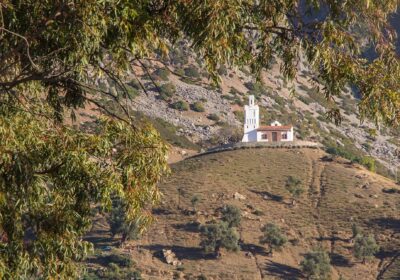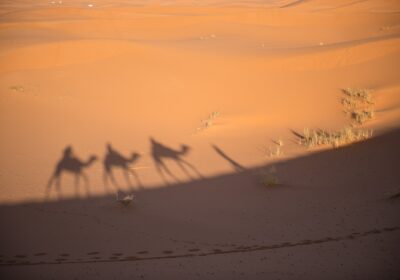

At 4,167 meters, Mount Toubkal is the highest peak in North Africa and the whole Atlas range, and you can stand on its summit two days after leaving Marrakech. A Toubkal trek is usually sold as a mountain trip on its own. This route pairs it with the opposite extreme: three days later, you are sleeping in a tent in the orange dunes of Erg Chebbi.
Prefer a dedicated driver-guide for this route?
- Private air-conditioned vehicle + professional licensed driver-guide
- Flexible pace with customized stops along the mountain passes and valleys
- You choose and book your own preferred hotels and desert camps
- Instant quote requests via WhatsApp and Email
It is one of the most varied five-day trips in Morocco. You hike through Berber villages and walnut groves, sleep in a mountain refuge above 3,200 meters, climb to the roof of North Africa at dawn, then trade boots for sandals and drive over the High Atlas to the Sahara.
This guide is for active travelers who want more than a sightseeing tour. We will cover each day in detail, explain how hard the climb really is, and give honest advice on altitude, gear, the best season and what to expect at the refuge and the desert camp.
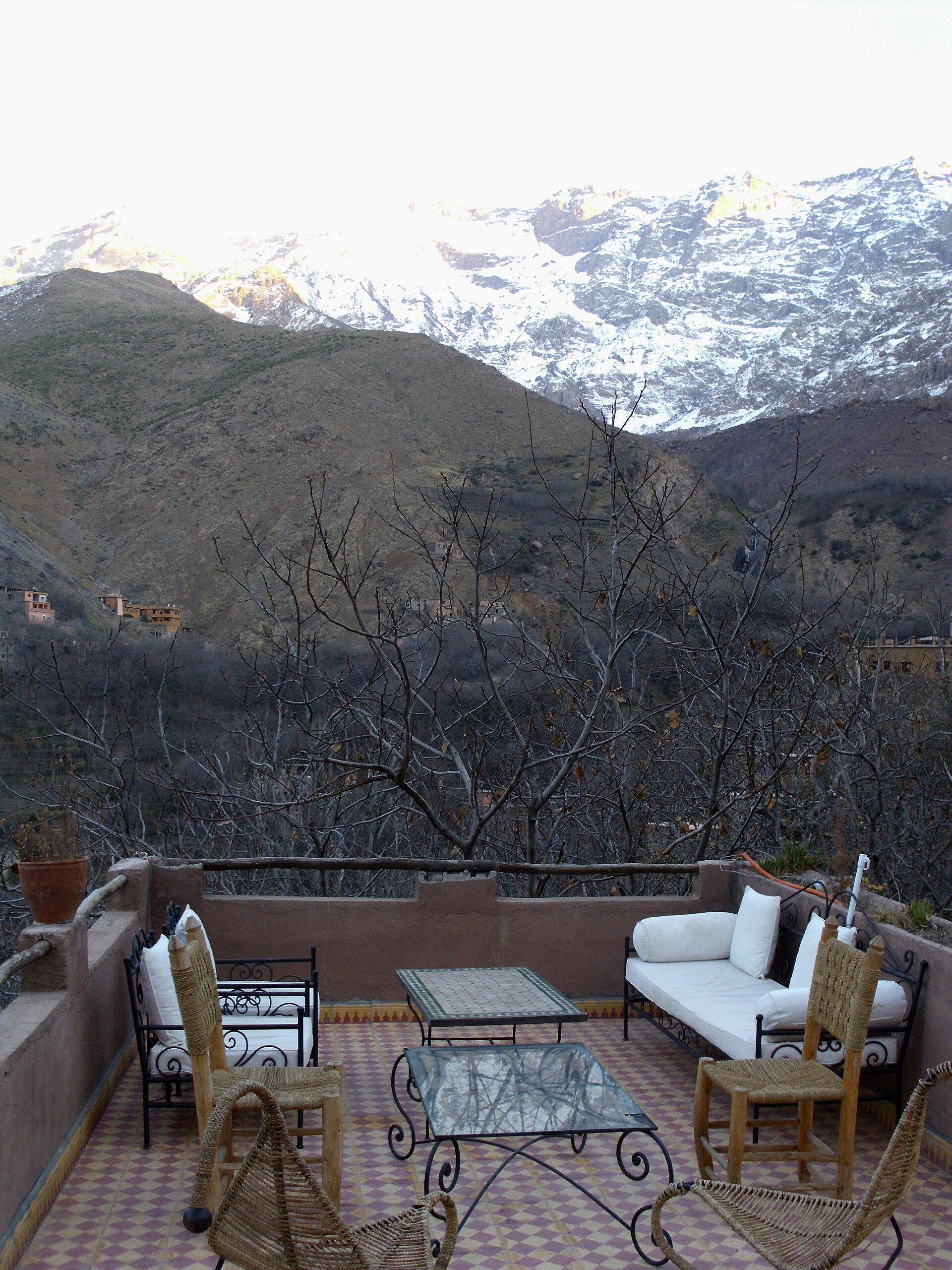
Why Combine a Toubkal Trek With the Sahara?
Most visitors to Morocco choose between the mountains and the desert. Both are a long way from Marrakech, and each needs at least two or three days. Doing them separately often means coming back to the city in between, which wastes time.
This five-day route links them in one loop. The mountain part starts only 90 minutes from Marrakech, in the village of Imlil. The desert part follows the classic road over the High Atlas, through the kasbahs and gorges of the south, to the Erg Chebbi dunes near Merzouga.
Two very different halves
- Days 1 and 2: on foot, with a mountain guide, a cook and mules, from Imlil to the Toubkal Refuge and the summit
- Days 3 to 5: by private vehicle, with a driver-guide, through Aït Benhaddou, the Dades Valley, the Todra Gorge and the Sahara
The contrast is the point. In one week, you go from near-freezing summit mornings to warm afternoons in the dunes, from stone mountain huts to a private tent under the stars.
Who this route suits
A Toubkal trek and Sahara tour suits reasonably fit travelers who enjoy hiking and want a real sense of achievement. You don’t need climbing experience or technical skills, but you do need to be comfortable walking uphill for several hours at altitude.
It is less suited to travelers who want a relaxed holiday, or to families with young children. For them, a desert trip on its own, such as our 3 Day Desert Tour From Marrakech guide describes, is a better fit.
Why go to the mountains first
Starting with the trek means you climb while you are fresh, before any long drives. It also puts the hardest physical effort at the start, so the desert days that follow feel like a reward. Your legs will be grateful for three days mostly in the car.
The 5-Day Route at a Glance
Here is the full trip in one table. Times are approximate and depend on your pace and the weather.
| Day | Route | Time on foot or on the road | Night |
|---|---|---|---|
| 1 | Marrakech, Imlil, Aremd, Sidi Chamharouch, Toubkal Refuge | 1.5 h drive, 5 to 6 h walking | Toubkal Refuge, 3,207 m |
| 2 | Toubkal summit (4,167 m), descent to Imlil | 6 to 8 h walking | Mountain lodge in Imlil |
| 3 | Tizi n’Tichka, Aït Benhaddou, Ouarzazate, Skoura, Dades | About 6 h driving | Hotel in the Dades Valley |
| 4 | Tinghir, Todra Gorge, Erfoud, Merzouga, Erg Chebbi | About 5 h driving | Luxury desert camp |
| 5 | Sunrise in the dunes, Ouarzazate, Tizi n’Tichka, Marrakech | About 9 h driving | Your choice in Marrakech |
How hard is each day?
Day one is a steady uphill hike, long but not steep for most of the way. Day two is the hard one: an early start, a climb of nearly 1,000 meters over loose stones, then a long descent. Days three and four are easy, with short walks at Aït Benhaddou and the Todra Gorge. Day five is a long drive home.
Where you sleep
You spend one night in the mountain refuge, one in a comfortable lodge in Imlil, one in a hotel in the Dades Valley and one in a luxury desert camp. Refuge meals and mountain food are coordinated locally with your trekking team, while desert hotels and camps are arranged directly by travelers.
Day 1: Marrakech to the Toubkal Refuge
Your driver collects you from your Marrakech hotel or riad at around 8:00. The road crosses the Haouz plain and climbs into the High Atlas through the Asni valley. After about 90 minutes, you reach Imlil, a Berber village at around 1,740 meters, surrounded by walnut and apple orchards.
Meeting your team in Imlil
In Imlil, you meet your licensed mountain guide, your cook and the muleteers who will carry your bags. The guide checks your gear, and anything missing, such as poles, a warm jacket or, in winter, crampons, can be rented in the village.
You only carry a daypack with water, snacks, a layer and your camera. Everything else goes on the mules, who are surprisingly fast on the trail.
Through Aremd and the valley
The trail leaves Imlil and climbs gently to Aremd, a terraced village of stone and earth houses on a ridge above the valley floor. From here, the path follows the wide, rocky valley of the Mizane river, with views of the high peaks ahead.
Sidi Chamharouch
After about two to three hours, you reach Sidi Chamharouch at around 2,310 meters, a small pilgrimage site built around a white-painted boulder shrine. The shrine itself is reserved for Muslim pilgrims, but the cluster of stalls nearby is a pleasant place to stop for fresh orange juice or mint tea. Your cook serves a picnic lunch here.
The climb to the refuge
The last part of the day is the steepest stretch of the Toubkal trek: a climb of two to three hours up a winding path to the refuge. The air thins noticeably above 3,000 meters, so walk slowly and steadily. Your guide sets the pace.
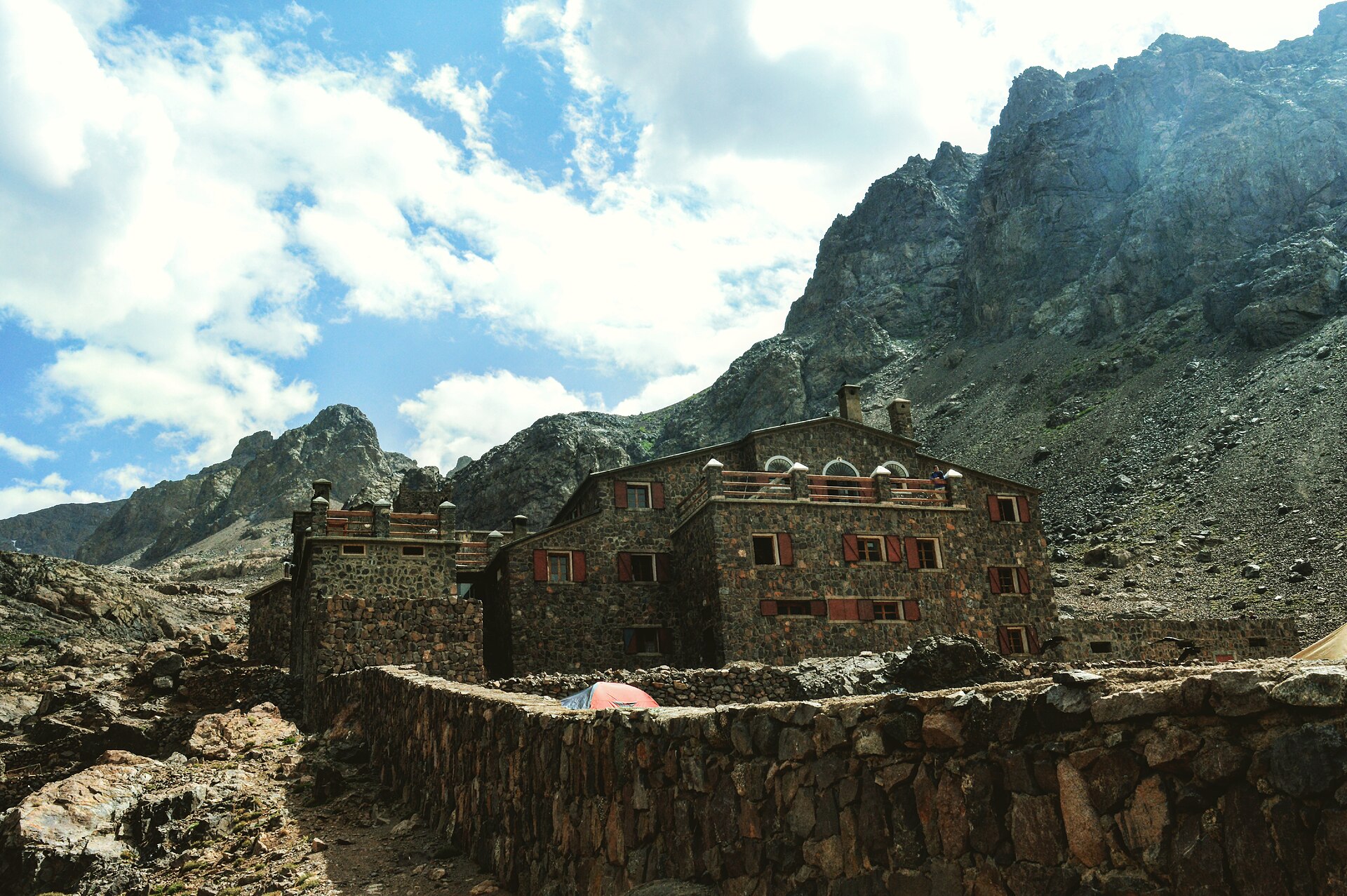
You reach the Toubkal Refuge, or the neighboring Les Mouflons refuge, at 3,207 meters in the late afternoon. Both are stone huts with shared dormitories, blankets, hot meals and basic washrooms. Dinner is served early, and most trekkers are in bed soon after.
Day 2: Summit Day on Mount Toubkal
Summit day on Mount Toubkal starts in the dark. You wake at around 5:00, drink tea, and set off by headtorch at about 5:30, heading into the south cirque above the refuge.
The ascent
The normal route climbs nearly 1,000 meters over three to four hours. Most of it is on scree, small loose stones that slide underfoot, which makes progress slow but not technical. The path zigzags up to the Tizi n’Toubkal col at 3,940 meters, then follows the ridge to the summit.
As the sun rises, the views open up across the High Atlas, with ridge after ridge of bare peaks fading into the distance. On a clear day, you can see south toward the Anti-Atlas and the edge of the Sahara.
On the summit
The summit of Mount Toubkal is marked by a metal pyramid. You spend around 30 minutes on top, eating a packed breakfast and taking photos. It is often cold and windy, even in summer, so keep your warm layers on.
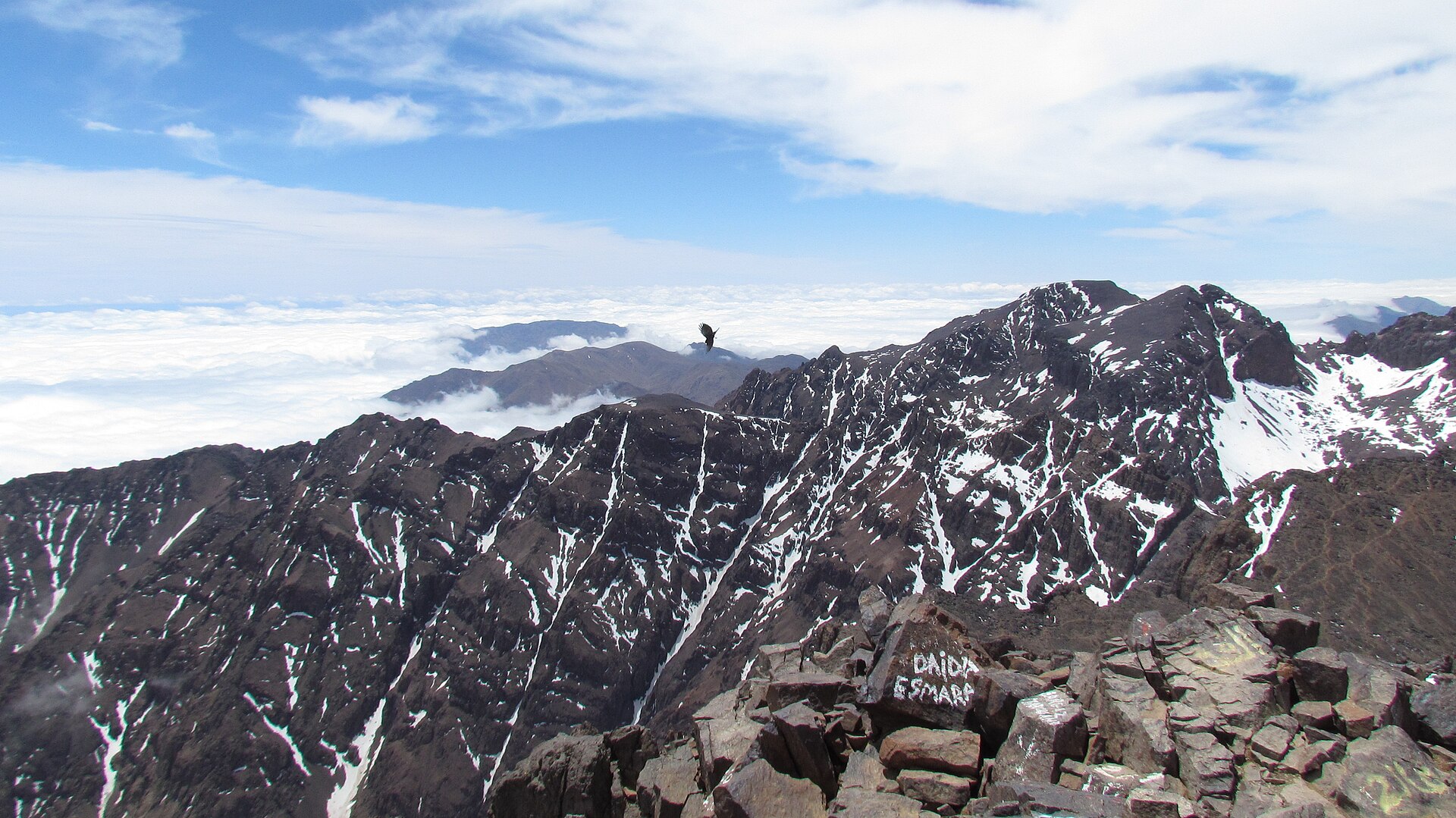
The first recorded ascent was in 1923, by a small French party led by the Marquis de Segonzac. Today, thousands of hikers reach the top each year, but standing on the highest point of North Africa still feels like a real achievement.
The descent to Imlil
The descent back to the refuge takes about two hours. After a hot lunch, you continue down the valley the way you came, past Sidi Chamharouch and Aremd, arriving in Imlil in the late afternoon.
The night is spent in a comfortable mountain lodge in Imlil, with ensuite rooms and dinner. After a night in the refuge, a hot shower and a real bed feel luxurious.
If you decide not to summit
Not everyone wants to climb to the top, and that is fine. Non-summiting travelers can spend day two on valley walks around Imlil instead, visiting Berber villages, waterfalls and the terraces of Aremd, and rejoin the group for the desert part of the tour.
How Hard Is the Toubkal Trek?
This is the question we are asked most, so here is an honest answer.
Fitness, not technique
You don’t need any climbing experience. In summer and early autumn, the normal route is a hike, not a climb. The challenge is the combination of altitude, length and loose ground: about 5 to 6 hours uphill on day one and 6 to 8 hours on summit day.
If you can walk for six hours on a hilly trail at home, you can do the Toubkal trek. If you rarely walk more than an hour, it will be very hard, and some training beforehand is worth it.
How to prepare
- Walk regularly for a few weeks before the trip, ideally on hills and with a daypack.
- Break in your boots well before you arrive.
- Practice on loose ground if you can, as scree is tiring on the legs.
- Sleep well before day one, and avoid alcohol the night before.
Who should think twice
Travelers with heart or lung conditions, serious knee problems or very low fitness should speak to a doctor before booking. Pregnant travelers and young children are better suited to the valley walks around Imlil rather than the summit.
A Simple Training Plan for the Toubkal Trek
You don’t need to be an athlete to reach the summit, but a few weeks of preparation make the Toubkal trek far more enjoyable. Here is a simple plan most of our guests can follow at home.
Six to eight weeks before
Start walking three times a week for 45 to 60 minutes, including some hills or stairs. If you have a gym, add the stair machine or an incline treadmill. The goal is to get used to steady effort uphill.
Three to five weeks before
Add one longer walk each weekend, building up to four or five hours with a loaded daypack. Choose routes with real climbs and, if possible, rough ground. This is also the time to wear your hiking boots on every walk.
The last two weeks
Keep walking, but don’t try to cram in extra training. Rest well in the final days, sort out your gear, and arrive in Marrakech with fresh legs. A relaxed day in the city before pickup is a good idea.
On the trail
The most useful skill on Mount Toubkal is pacing. Walk slower than feels necessary on day one, take short breaks often, and keep drinking. Guides have a saying: the slowest walkers are often the ones who reach the top.
Why a Licensed Mountain Guide Matters
The Toubkal trek is popular, and the trail is easy to follow in good weather. That makes it tempting to go without a guide. We always run it with a licensed mountain guide, for good reasons.
Safety
Weather in the High Atlas can change quickly, and fog, wind or snow can make the upper slopes confusing even for experienced hikers. A guide knows the terrain, watches for signs of altitude sickness and makes the decision to turn back when conditions are not safe.
Logistics
Your guide arranges the refuge beds, the cook, the mules and the timing of the summit attempt. That leaves you free to focus on walking, and it means your bags, food and water are where you need them.
Local knowledge
Guides are usually from the valleys around Imlil. They can tell you about village life, farming, plants and wildlife along the way, and introduce you to the people you meet on the trail. It turns a hike into a much richer experience.
Altitude on Mount Toubkal
Most trekkers on Mount Toubkal feel the altitude above around 3,500 meters. It is the main reason people find summit day hard.
Common symptoms
Mild symptoms include headache, breathlessness, loss of appetite and poor sleep at the refuge. These are common and usually ease with rest. More serious signs, such as confusion, severe headache that doesn’t improve, vomiting or difficulty walking, mean you must descend.
How to reduce the risk
- Walk slowly and steadily, especially on day one.
- Drink plenty of water and keep eating, even if you don’t feel hungry.
- Tell your guide early if you feel unwell.
- Accept that turning back is sometimes the right decision.
The role of your guide
Your licensed mountain guide watches every member of the group for warning signs and will decide when to slow down or turn back. Because the route goes up and down quickly, most mild symptoms disappear soon after descending.
If you have a history of altitude problems, talk to your doctor before the trip, and let us know when you book.
Day 3: Over the High Atlas to the Dades Valley
After the Toubkal trek and a well-earned breakfast in Imlil, your private driver-guide picks you up for the desert part of the tour. The road returns to the main N9 and climbs over the High Atlas.
Tizi n’Tichka
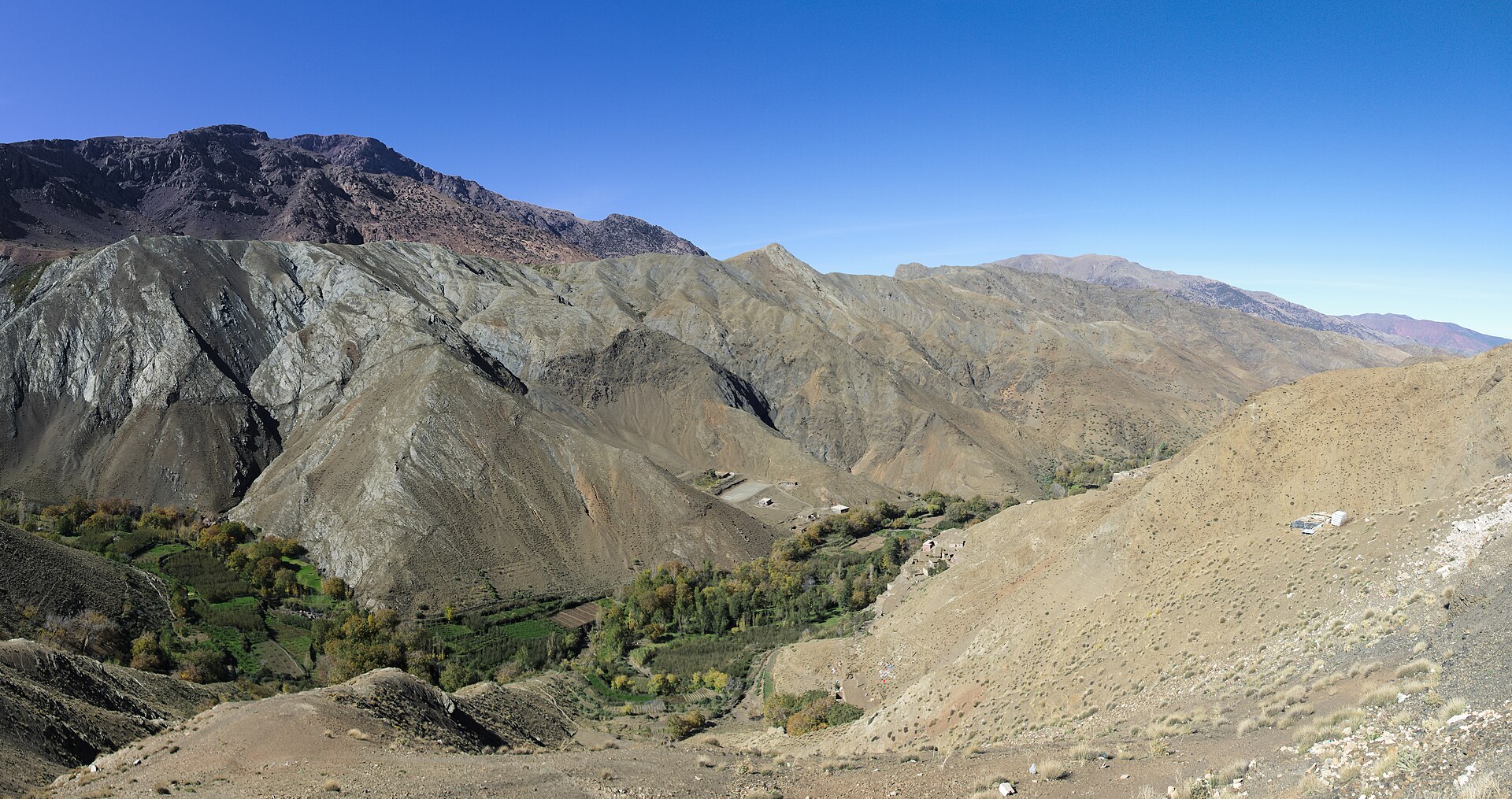
The Tizi n’Tichka pass, whose summit sign reads 2,260 meters, is the highest major road pass in Morocco. After standing on Toubkal, it may feel modest, but the views of terraced villages and red mountains are still superb.
Aït Benhaddou
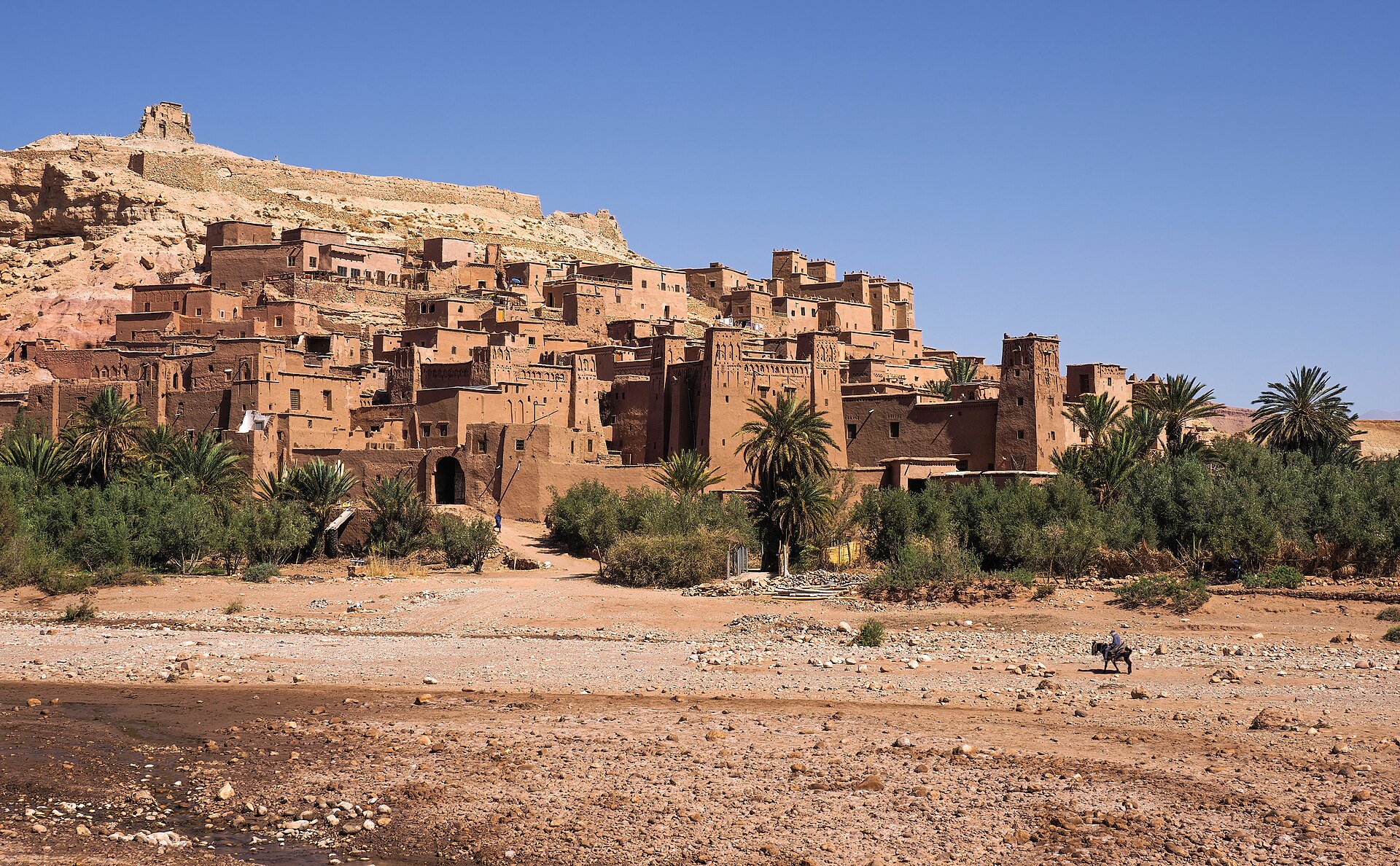
The first big stop is the Ksar of Aït Benhaddou, an earthen fortified village listed by UNESCO in 1987. A local guide takes you across the river and up through the lanes to the old granary at the top, with wide views over the Ounila valley.
After lunch, you pass Ouarzazate, with an optional stop at the film studios, then the Skoura palm oasis and Kasbah Amridil.
The Valley of Roses and the Dades
The road continues through the Valley of Roses around Kelaat M’Gouna to the Dades Valley. Above the gorge, the rock formations known locally as the “Monkey Fingers” are a striking sight in the late afternoon light.
The night is spent in a hotel in the Dades Valley, with ensuite rooms, air conditioning, dinner and breakfast.
Day 4: The Todra Gorge and the Erg Chebbi Dunes
Day four of the Toubkal and Sahara tour takes you to the desert. It is a relaxed day with short walks and plenty of time in the dunes.
Tinghir and the Todra Gorge
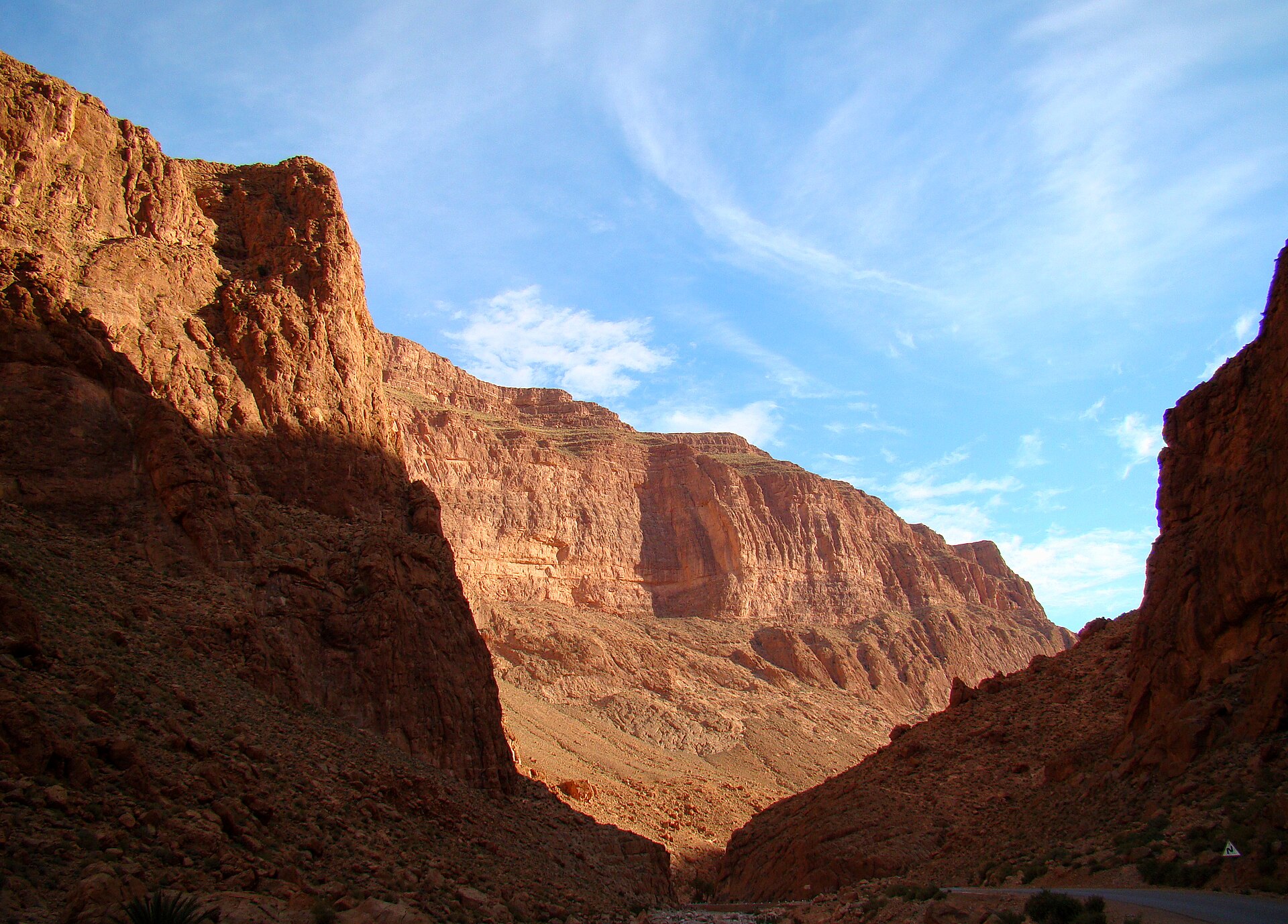
The first stop is Tinghir, where a local guide leads a walk through the palm oasis and its gardens. A few kilometers further, the valley narrows into the Todra Gorge, where limestone walls rise up to about 400 meters above a shallow stream. Lunch is near the gorge.
Into the Sahara
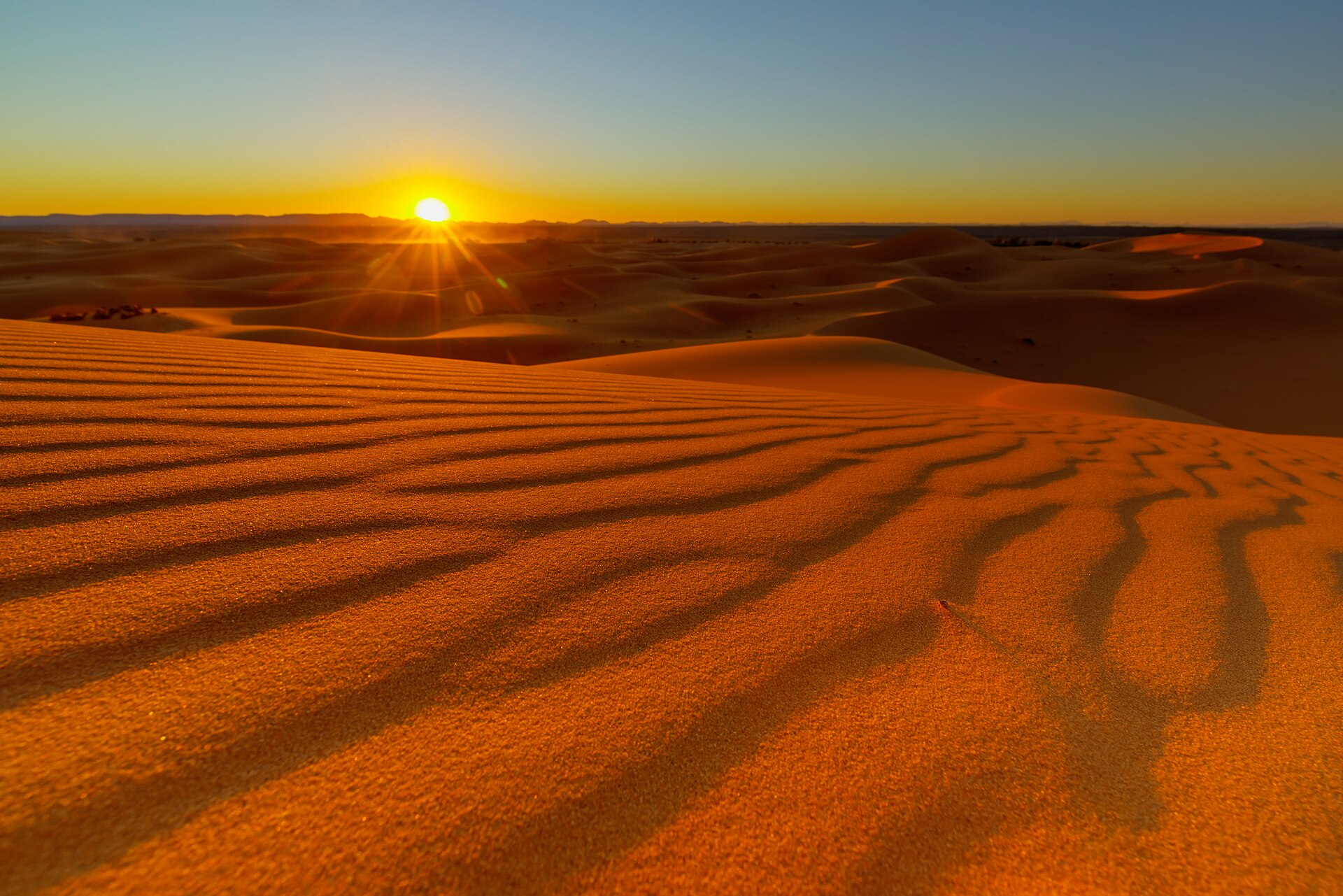
The road continues east through Erfoud and Rissani to Merzouga, at the edge of the Erg Chebbi dunes. Before the camel ride, there is time to try sandboarding on the dunes, with boards provided. After hiking up scree on Toubkal, sliding down sand feels like a well-deserved treat.
Sunset camel trek and the camp
In the late afternoon, you ride a camel into the dunes for about an hour, timed for sunset. If you would rather walk or take a 4×4, that is always possible.

The night is spent in a luxury desert camp with a private ensuite tent, a hot shower, dinner, Berber drumming and a campfire. With almost no light pollution, the night sky is spectacular.
Day 5: Sahara Sunrise and the Road Home
The last day starts with sunrise over the dunes, either on an optional short camel ride or from the top of a dune near the camp. After breakfast, the long drive west begins.
The drive back
The return to Marrakech takes about nine hours with stops, via the Dades and Ouarzazate, where you stop for lunch, and back over Tizi n’Tichka. You arrive in Marrakech in the early evening, at your hotel, riad or the airport.
Splitting the drive
If nine hours sounds like too much, you can add a night in Ouarzazate or the Dades Valley on the way back. This turns the trip into six days and makes the last day much more relaxed.
Toubkal and Sahara: The Best Time to Go
Timing matters more on a Toubkal trek than on a standard desert trip, because you need good conditions in both the mountains and the desert.
The ideal windows
May to June and September to October are the best periods. The mountain trail is usually free of snow, the summit is cold but manageable, and the desert is warm without being extreme.
Summer
July and August are possible on Toubkal, and the mountain is busy with hikers. But the desert can be very hot, with afternoon temperatures well above 40°C in Merzouga. Plan for early starts and rest in the middle of the day.
Winter and early spring
From November to April, Toubkal is usually covered in snow and ice. The climb becomes a winter ascent that requires crampons and an ice axe, which can be rented in Imlil, and the guide decides each day whether conditions are safe. The desert is pleasant during the day, but nights in the camp are cold.
What to Pack for a Toubkal Trek and Desert Tour
Packing for this trip is a challenge, because you need gear for a 4,000-meter peak and a hot desert in the same bag. The key is layers.
For the mountains
- Broken-in hiking boots with good grip
- Warm layers: a fleece, a down or synthetic jacket and a waterproof shell
- A warm hat, gloves and a buff
- Sunglasses, sunscreen and lip balm
- A 25 to 30 liter daypack
- A headtorch for the early start
- A sleeping-bag liner and earplugs for the refuge
- Walking poles (can be rented in Imlil)
For the desert
- Light, breathable clothing
- A scarf for sun and sand
- Sandals for the camp
- A small bag for the camp night
- A power bank
Winter extras
From November to April, add crampons, an ice axe and extra warm layers. All of these can be rented in Imlil, and your guide will check your equipment on day one.
Transport & Trek Logistics: Clear Service Model
Morocco Trip Lines provides private door-to-door transport with a dedicated professional driver-guide. Accommodation, desert camps, meals, and local site guides are arranged and booked directly by travelers, giving you complete flexibility and transparent pricing.
What Morocco Trip Lines Provides
- Private air-conditioned transport from Marrakech to Imlil and for all desert circuit days
- Licensed professional driver-guide for the entire road route
- Licensed mountain guide for days one and two on Mount Toubkal
- Mules and muleteers to carry main luggage on the mountain trail
- All fuel costs, highway tolls, and vehicle expenses
Arranged Directly by Travelers
- Toubkal Refuge reservation at 3,207 meters and Imlil lodge accommodation
- Dades Valley hotel night and Erg Chebbi desert camp night
- Meals, dinners, breakfasts, and beverages on the road and in the desert
- Camel treks or quad bike rentals in Erg Chebbi (arranged directly with camp hosts)
- Personal trekking gear and winter equipment (crampons/ice axes, rentable in Imlil)
- Mountain and altitude travel insurance
Life at the Toubkal Refuge
For many travelers, the night at the Toubkal Refuge is the part they are most curious about. Here is what it is really like.
The building
The refuges below Toubkal are solid stone buildings with dining rooms, dormitories and washrooms. They are busy in spring and autumn, with hikers from all over the world, and the atmosphere in the evening is friendly and lively.
Sleeping
You sleep in shared dormitories on bunks with mattresses and blankets. It can be noisy, so earplugs help, and a sleeping-bag liner makes the bedding more comfortable. Nights are cold, even in summer, so keep a warm layer for sleeping.
Food and water
Your cook prepares hot meals, usually soup, tagine or pasta, with bread and tea. Drink plenty, because the dry mountain air dehydrates you quickly. Water is boiled or filtered for you.
Washing and charging
Washrooms are basic, and hot water can be limited when the refuge is full. Charging points are few, so bring a power bank and keep your phone warm at night, as the cold drains batteries.
Food on the Mountain and in the Desert
Good food makes a big difference on a trek, and Moroccan mountain cooks are famously generous.
On the trek
Your cook travels with the team and prepares every meal from Imlil to the summit and back. Expect a picnic lunch of salads, bread, cheese, sardines and fruit on day one, and hearty dinners of soup, tagine or pasta at the refuge. On summit day, you carry a packed breakfast to eat on top, then return to a hot lunch.
Snacks and energy
Bring your favorite trail snacks from home, such as energy bars, nuts or dried fruit. Local dates and almonds are excellent too and easy to buy in Marrakech. Eating little and often keeps your energy up, especially at altitude, where appetite tends to drop.
In the south and the desert
On the desert days, lunch is at local restaurants along the way, often with a tagine, grilled meat or a big salad. Dinners at your chosen hotels and desert camp are arranged directly with the properties, typically featuring traditional soup, fresh salads, and slow-cooked tagines. Around Merzouga, try madfouna, a stuffed flatbread baked in the embers.
Dietary needs
Vegetarian meals are easy to arrange on both halves of the trip. Tell us about allergies or dietary needs when you book, so the cook and the hotels can prepare.
Adding More Days to Your Trip
Five days is enough for the summit and the dunes, but some travelers like to slow down or add more.
- An extra night in the mountains: a second night in Imlil gives you a free day for village walks after the summit.
- A night on the way back: stopping in Ouarzazate or the Dades Valley splits the long drive on day five.
- A second desert night: gives you a full free day in the dunes for sandboarding, walking or simply resting.
- A northern extension: instead of returning to Marrakech, you can continue north to Fes through the Middle Atlas, as on our 4-day desert tour from Marrakech to Fes.
Tell us how much time you have, and we will suggest the best way to use it.
The People of the High Atlas
The Toubkal trek is not only about the summit. The valleys below are home to Amazigh, or Berber, communities who have farmed these slopes for centuries.
Village life
In Imlil and Aremd, families grow walnuts, apples, cherries and barley on terraces watered by stone irrigation channels. Many also work as muleteers, cooks and guides, and tourism is an important source of income for the valley.
The mules and muleteers
The muleteers who carry your bags are often from nearby villages and know every step of the trail. They usually reach the refuge long before you. Treat them as part of your team, and remember them when you tip at the end of the trek.
Visiting respectfully
Dress modestly in the villages, ask before taking photos of people, and say “salam” when you pass. A few words of Tamazight, such as “tanmirt” for thank you, are always appreciated.
Responsible Trekking in Toubkal National Park
The trek takes place inside Toubkal National Park, created in 1942 and covering around 380 square kilometers of the High Atlas. It is an important area for birds, including the Barbary partridge and Levaillant’s woodpecker, and its valleys are home to working farming communities.
On the mountain
- Carry all your rubbish down, including food scraps and tissues.
- Stay on the main path to avoid erosion on the scree slopes.
- Use the toilets at the refuge and at Sidi Chamharouch rather than the hillside.
- Bring a reusable bottle; water can be filtered or boiled for you.
In the villages
- Pay fair prices and buy snacks or crafts locally.
- Ask before photographing people, especially women and children.
- Respect the shrine at Sidi Chamharouch, which is reserved for Muslim pilgrims.
In the desert
The same rules apply in Erg Chebbi: leave the dunes as you found them and use water carefully at the camp. Small habits, repeated by thousands of visitors, make a real difference to these fragile places.
Photography Tips for Toubkal and Sahara
The contrast between the two halves of this trip makes it a dream for photographers. A few tips help you come home with the shots you want.
- Imlil and Aremd: the terraced fields and stone villages look best in the soft morning light of day one.
- The refuge at dusk: the last light on the peaks above the Toubkal Refuge is often spectacular.
- Summit sunrise: keep your camera or phone warm inside your jacket, as cold drains batteries fast.
- Aït Benhaddou: the classic view is from across the river in the afternoon.
- Erg Chebbi: shoot the dunes in the first and last hour of daylight for long shadows and deep color.
Protect your camera from sand in the desert with a zip bag, and from cold and moisture on the mountain with a padded case. And always ask before photographing people in villages and at the camp.
Is a Toubkal Trek and Sahara Tour Right for You?
A Toubkal and Sahara tour is demanding but hugely rewarding. Here is a quick way to decide.
You will love it if
- You enjoy hiking and want to stand on the highest point in North Africa
- You want both the mountains and the desert in one week
- You like a physical challenge followed by a well-earned rest
- You want to see Berber village life up close
Think twice if
- You are not used to long walks or uphill hiking
- You have health conditions that make altitude risky
- Long drives are difficult for you; day five is around nine hours
- You would prefer a slower, more relaxed trip
Alternatives on our site
If the climb sounds too much, a desert trip on its own may suit you better. Our 4 day desert tour from Marrakech via Zagora adds the Draa Valley to the dunes, and the Marrakech to Fes desert tour continues north instead of returning to Marrakech.
Toubkal Trek FAQ
How hard is the Toubkal trek, and do I need experience?
You don’t need climbing experience, but you do need reasonable fitness. Day one is about 5 to 6 hours uphill, and summit day is 6 to 8 hours over loose scree. The challenge is altitude and length, not technique.
How high is Mount Toubkal?
Mount Toubkal is 4,167 meters high, the highest peak in North Africa and the Atlas Mountains.
Will I get altitude sickness on Mount Toubkal?
Many people feel mild symptoms above about 3,500 meters, such as headache, breathlessness and poor sleep. Drinking plenty, eating well and walking slowly help, and your guide will descend with you if needed.
What gear do I need for the Toubkal trek?
Broken-in boots, warm layers, a hat, gloves, sunglasses, sunscreen and a daypack. From November to April, you also need crampons and an ice axe. Missing items can be rented in Imlil.
Can I skip the summit and still do the tour?
Yes. You can spend day two on valley walks around Imlil and rejoin the group for the desert part of the trip.
When is the best time for a Toubkal and Sahara tour?
May to June and September to October. July and August are very hot in the desert, and from November to April Toubkal usually needs winter gear.
What is the Toubkal Refuge like?
It is a stone mountain hut at 3,207 meters with shared dormitories, blankets, hot meals and basic washrooms. Earplugs and a sleeping-bag liner make the night more comfortable.
Where do I sleep on the desert days?
Travelers arrange their preferred accommodations directly: typically a hotel in the Dades Valley for night three, and a desert camp in Erg Chebbi for night four. Your dedicated driver coordinates door-to-door arrival and luggage transfer.
What meals are included?
Meals are not bundled into Morocco Trip Lines transport pricing. During the mountain trek, local cooks prepare meals in Imlil, and during the desert circuit, travelers enjoy complete freedom to choose local restaurants and dining options at their booked accommodations.
How long is the drive back from Merzouga to Marrakech?
About nine hours with stops. You can add a night in Ouarzazate or the Dades Valley to split the journey.
Is the Toubkal trek safe?
With a licensed guide, in good weather and in the right season, the normal route is safe for fit hikers. In winter, conditions can be dangerous, and your guide will decide whether the summit attempt goes ahead.
How much does the tour cost?
The price depends on your group size, season and options. Send your dates and number of travelers through the enquiry form, and we will reply with a personal quote.
Can I do the Toubkal trek in one day?
Very fit and acclimatized hikers sometimes do it in one long day, but we don’t recommend it. Two days, with a night at the Toubkal Refuge, is safer and much more enjoyable.
Do I need travel insurance for the Toubkal trek?
Yes. Make sure your policy covers trekking at altitude up to at least 4,200 meters, as many standard policies do not.
Is the Toubkal and Sahara tour private?
Yes. You travel only with your own group, with your own mountain guide on the trek and your own driver-guide in the desert.
Plan Your Toubkal Trek and Sahara Adventure With Local Hosts
Few trips in Morocco give you as much contrast in five days. You walk through Berber villages to a mountain refuge, climb to the highest point in North Africa at sunrise, then cross the High Atlas to the kasbahs, the Todra Gorge and a night in the Erg Chebbi dunes. For active travelers, a Toubkal trek combined with the Sahara is one of the most memorable ways to see the country.
The next step is to choose your dates with the season in mind, and decide whether you want to split the drive home with an extra night. Then see our 5-Day Toubkal Trek and Sahara Desert Tour and send us your dates through the enquiry form. If you only want the desert, our 3-day private desert tour to Merzouga is the shorter option.