
On a classic loop from Marrakech, you drive more than 500 kilometers to reach the dunes and then drive the same road back. A Marrakech to Fes desert tour skips the return leg entirely. You cross the Sahara once, keep going north through cedar forests and mountain towns, and finish in the UNESCO-listed medina of Fes, a city that has been lived in for more than 1,200 years. Same three days, same night in the dunes, and a completely different last day.
Prefer a dedicated driver-guide for this route?
- Private air-conditioned vehicle + professional licensed driver-guide
- Flexible pace with customized stops along the mountain passes and valleys
- You choose and book your own preferred hotels and desert camps
- Instant quote requests via WhatsApp and Email
This guide is for travelers who have already decided they want the desert and are now working out how it fits into a bigger Morocco trip. Maybe you are flying into Marrakech and out of Fes. Maybe you want to see both imperial cities without backtracking. Either way, the one-way route is usually the smarter use of your time.
Below you will find what the route looks like, how each day unfolds, what makes the northern leg special, how arrival in Fes works, and how to plan flights and onward travel around it.
Why a Marrakech to Fes Desert Tour Makes More Sense Than a Loop
Most travelers picture a Sahara trip as a round trip from Marrakech. It is the most common product, so it is what shows up first in searches. But if your Morocco itinerary includes both Marrakech and Fes, the loop costs you a full day of retracing your steps, and then you still need to get to Fes.
The roughly 500 kilometers between Marrakech and Fes have to be covered either way. A one-way desert route simply covers them via Merzouga, so the drive to Fes becomes part of the adventure rather than a separate transfer.
The time you save
Here is the simple arithmetic many guests discover when they plan. A three-day loop to the dunes plus a train or transfer from Marrakech to Fes adds up to about four days. A three-day Marrakech to Fes desert tour gets you the same desert night and drops you at your riad in Fes on the evening of day three.
That extra day can go to the Fes medina, to Chefchaouen, or simply to a slow morning on a riad terrace. On a one-week trip, a day is a lot.
The scenery you gain
The loop shows you the High Atlas twice. The one-way route swaps the second crossing for something you would otherwise miss: the palm-lined Ziz Valley, the high plains around Midelt, the cedar forests of the Middle Atlas, and the alpine-style town of Ifrane. It is one of the most varied single days of driving in North Africa.
Who it suits best
- Travelers with an open-jaw ticket, flying into Marrakech and out of Fes, or the other way round
- Anyone planning to visit both imperial cities on one trip
- People who dislike backtracking and want every day to show something new
- Travelers continuing north to Chefchaouen, Tangier or Spain
If you are certain you will finish your trip in Marrakech, the classic loop may still suit you better. Our 3 Day Desert Tour From Marrakech guide covers that route in detail.
The Marrakech to Fes via Merzouga Route at a Glance
The Marrakech to Fes desert tour forms a long arc across the country. It runs south-east over the High Atlas, east along the kasbah valleys, into the dunes near the Algerian border, and then north through the Middle Atlas to Fes. In total, a Marrakech to Fes via Merzouga route covers roughly 1,000 kilometers over three days.
| Day | Route | Driving time (approx.) | Night |
|---|---|---|---|
| 1 | Marrakech, Tizi n’Tichka, Aït Benhaddou, Ouarzazate, Valley of Roses, Dades Valley | 6–7 hours | Hotel in the Dades Valley |
| 2 | Dades Gorge, Tinghir, Todra Gorge, Erfoud, Rissani, Merzouga | 4–5 hours, then a camel ride | Luxury desert camp in Erg Chebbi |
| 3 | Merzouga, Ziz Valley, Midelt, Azrou cedar forest, Ifrane, Fes | About 8 hours | Your riad or hotel in Fes |
How the distances break down
Day one is the mountain day, with the slowest roads and the most stops. On a Sahara desert trip like this, day two is the shortest drive, which leaves time for walks in the oasis and the gorge before the camel ride. Day three is long, but it runs on wide, good roads for most of the way, and the landscape changes every hour.
What stays the same as the loop
The first two days are almost identical to the classic Marrakech desert loop. You still cross the Tizi n’Tichka pass, visit the UNESCO-listed ksar of Aït Benhaddou, sleep above the Dades Gorge, walk in the Todra Gorge and ride a camel into Erg Chebbi for sunset. Only day three changes, and it changes completely.
Days 1 and 2: Marrakech to the Merzouga Dunes
Because the first two days follow the same road as the classic loop, we will keep this part focused on what matters for a one-way trip. For a deeper, stop-by-stop description, see the day-by-day sections of our 3 Day Desert Tour From Marrakech guide.
Day 1: over the High Atlas
On a Marrakech to Fes desert tour, your driver collects you from your riad or hotel in Marrakech at around eight in the morning. The road climbs into the High Atlas over the Tizi n’Tichka pass. Its summit sign says 2,260 meters, although a 2022 GPS survey measured it at 2,205.
Around midday you reach Aït Benhaddou, a fortified earthen village above the Ounila River that UNESCO listed as a World Heritage Site in 1987. The afternoon takes you past Ouarzazate and through the Valley of Roses around Kelaat M’Gouna, where rose water is distilled from the spring harvest. You spend the night in your chosen hotel or riad in the Dades Valley, where dinner and breakfast are arranged directly with your hosts.
Day 2: gorges, oasis and dunes
Morning brings the palm oasis of Tinghir and the Todra Gorge, where the canyon walls rise up to about 400 meters. In the afternoon you cross the stony hamada past Erfoud and Rissani to Merzouga.
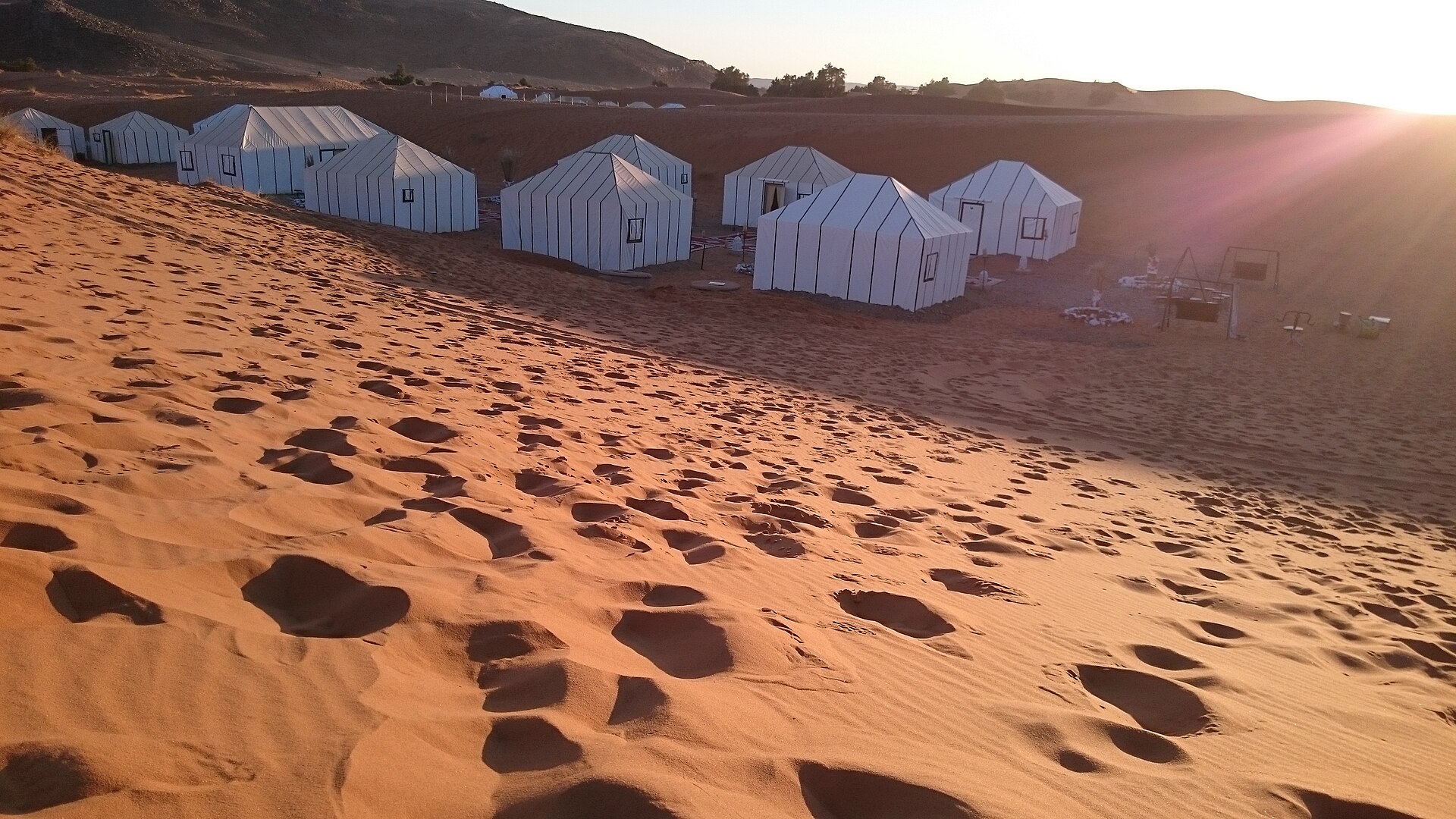
You leave your main luggage in the vehicle, take a small overnight bag, and ride a camel into Erg Chebbi for sunset. Your night in the desert is spent at your chosen camp in Erg Chebbi, where travelers arrange their stay directly with camp hosts. Tents typically feature ensuite bathrooms, dinner by the campfire, and sandboards waiting for the dunes if you want to try the dunes at speed.
Rissani and the caravan road
Before the dunes, take a moment in Rissani. The town stands close to the ruins of Sijilmassa, a city that grew rich between the 8th and 14th centuries by controlling the caravan routes across the Sahara. Gold, salt and goods from West Africa passed through here on their way north.
That history matters on a Marrakech to Fes desert tour, because the road you take on day three follows the same logic. Caravans arriving at Sijilmassa carried their goods north along the Ziz Valley and over the Atlas toward Fes. When you drive from Merzouga to Fes, you are retracing one of the great trade routes of medieval Africa.
Today Rissani is a market town with a busy souk, and nearby Erfoud is known for its fossil workshops, where marble full of ancient sea creatures is cut and polished. Both make good short stops on the way into the desert.
Packing tip for a one-way trip
On a loop, you might leave some luggage at your Marrakech riad. On a one-way Sahara desert trip, everything you own travels with you for three days. Pack a separate small bag for the camp night before you leave Marrakech, so you are not unpacking a large suitcase on the side of the dunes.
Day 3: Merzouga to Fes Through the Middle Atlas
Day three is what makes the Marrakech to Fes desert tour worth choosing. The drive from Merzouga to Fes takes about eight hours with stops, and in that time you travel from the edge of the Sahara to snowy mountain forests and a medieval city. Most guests are surprised by how fast the scenery changes.
Sunrise and an early start
Wake before dawn for an optional sunrise over the dunes, then breakfast at camp. Because the day is long, most drivers like to leave Merzouga by about eight. You will be at your Fes accommodation by late afternoon or early evening.
Along the Ziz Valley
The road heads north past Erfoud and follows the Ziz River upstream. The Ziz rises in the High Atlas and flows about 282 kilometers south toward the Sahara, and its water feeds a long ribbon of palm groves through an otherwise dry landscape. Farmers here share the water through a traditional system that gives each village and family a fair right to it.
North of Errachidia, the road enters the Ziz Gorges, where it winds between red cliffs above the river. Ask your driver for a stop at one of the viewpoints over the palm-filled valley. It is one of the best photo stops of the whole trip.

Errachidia and the Ziz reservoir
Errachidia is the largest town on the route between the desert and the mountains, and a practical place for fuel and a coffee. Just north of it, the Hassan Ad Dakhil Dam holds back the Ziz and supplies drinking and irrigation water to the whole valley downstream.
From the road you see the reservoir stretched out between bare hills, a striking splash of blue after the ochre of the desert. Shortly afterward, the road begins its long climb toward the high plains.
Lunch in Midelt
By midday on the drive from Merzouga to Fes, you climb onto the high plains around Midelt. At about 1,508 meters, it is one of the highest large towns in Morocco, sitting between the Middle Atlas and the High Atlas with the peak of Jbel Ayachi on the horizon. The surrounding farms are known above all for apples, and the town is a natural lunch stop on the Merzouga to Fes road.
The air here feels very different from the desert you woke up in. In winter, there may be snow on the mountains around town, so keep a warm layer within reach.
The cedar forests around Azrou
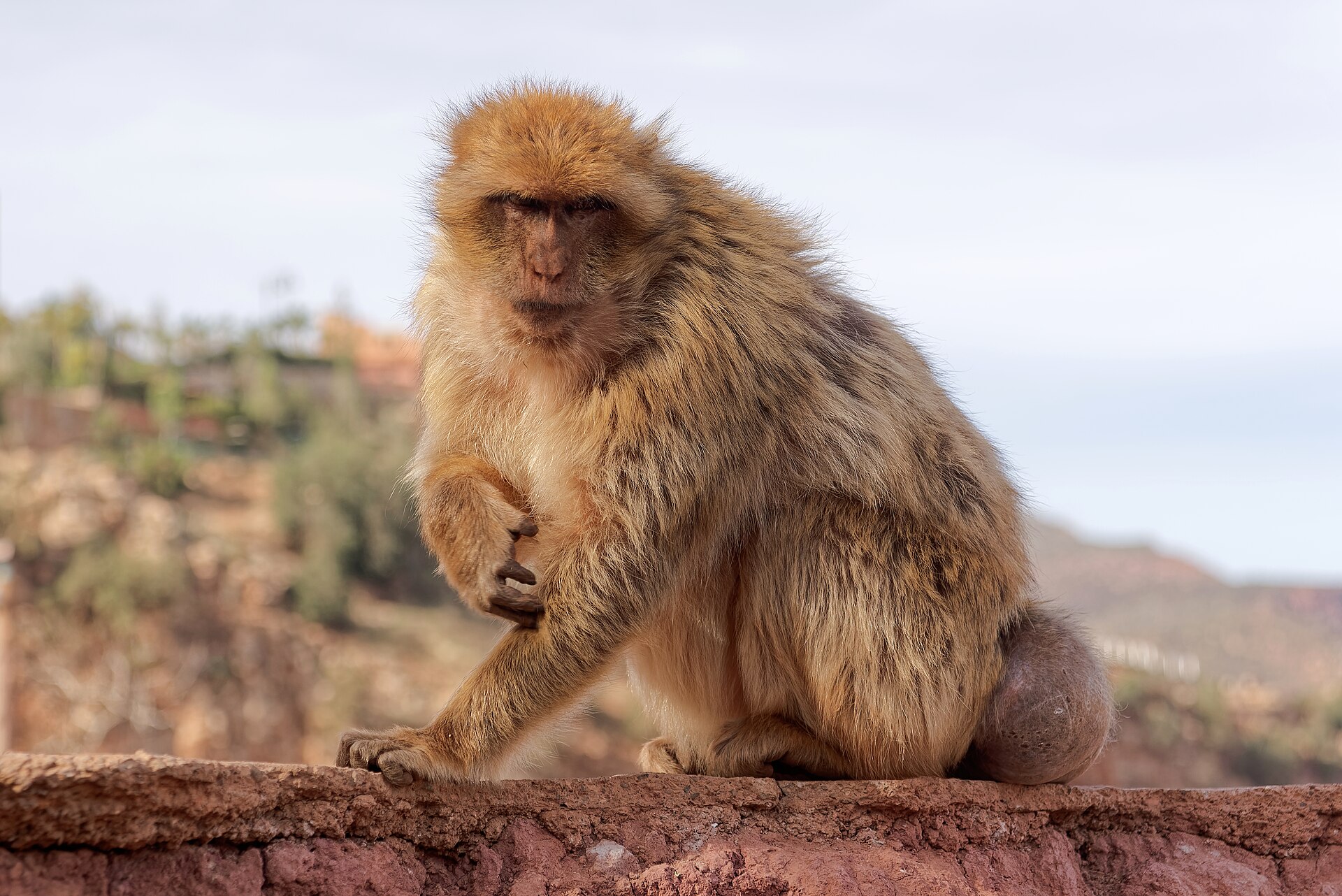
After lunch, the road climbs into the Middle Atlas. Near the town of Azrou, at around 1,250 meters, you drive into forests of Atlas cedar and holm oak. These forests are home to the Barbary macaque, the only monkey in Africa that lives north of the Sahara.

The Barbary macaque has been listed as endangered by the IUCN since 2008, with an estimated 12,000 to 21,000 left in Morocco and Algeria combined. You will often see small groups near the roadside in the forest. Watch them quietly and resist the urge to feed them: studies show that macaques fed by tourists end up with poorer diets and more health problems than wild-feeding groups.
A coffee stop in Ifrane
The last stop on the road from Merzouga to Fes is Ifrane, a town that feels more like the Alps than North Africa. The French built it in 1929 as a mountain resort, with steep roofs, gardens and tidy streets, and locals still call it “Little Switzerland.” At about 1,665 meters, it gets real winters: on February 11, 1935, Ifrane recorded −23.9 °C, the lowest temperature ever observed in Africa.
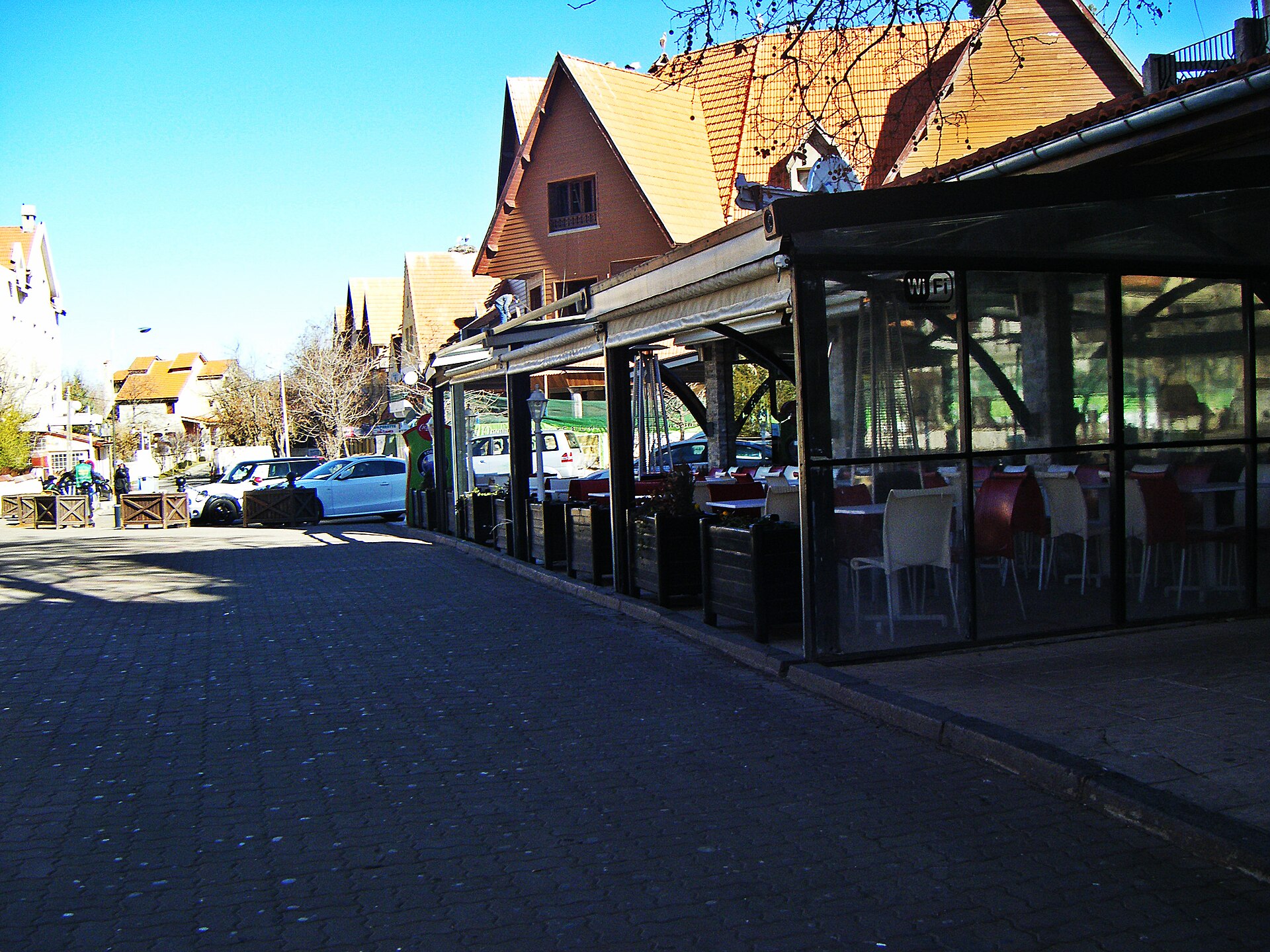
A short coffee stop is enough. Many travelers take a photo with the famous stone lion carved in 1930, stretch their legs in the park, and get back on the road for the final hour down to Fes.
Arriving in Fes: What to Expect When the Tour Ends
The end of a Marrakech to Fes desert tour is different from the end of a loop, and it is worth understanding before you book your accommodation. Fes el Bali, the old medina, is a large car-free area of about 300 hectares. Your vehicle cannot drive to the door of most riads inside it.
How drop-off works in the medina
Your driver will take you to the nearest car-accessible point to your riad, usually one of the medina gates such as Bab Bou Jeloud, the main western gate. From there, a member of staff from your riad, or a local porter with a handcart, walks you and your luggage through the lanes to the door.
Before you travel, send your riad your expected arrival time and ask them to meet you at the right gate. Most riads do this routinely. Share their phone number with your driver too, so the two can coordinate if the traffic changes your timing.
Choosing where to stay in Fes
- Inside the medina: atmospheric riads, walking distance to the sights, but a short walk with your bags from the drop-off point
- On the edge of the medina: easier car access while still close to the old city
- In the new town (Ville Nouvelle): modern hotels with parking, but a taxi ride to the medina each day
If you have heavy luggage or limited mobility, a riad close to a gate makes arrival much easier. Mention this when you book your desert tour and we can suggest the best meeting point.
Your first evening in Fes
After eight hours on the road, most guests prefer a quiet dinner at their riad on the first night. Save the medina for the next morning, when the lanes are fresh and the shops are opening. If you have the energy, a rooftop terrace at sunset gives you your first view over the city.
How to Spend Your First Days in Fes After the Desert
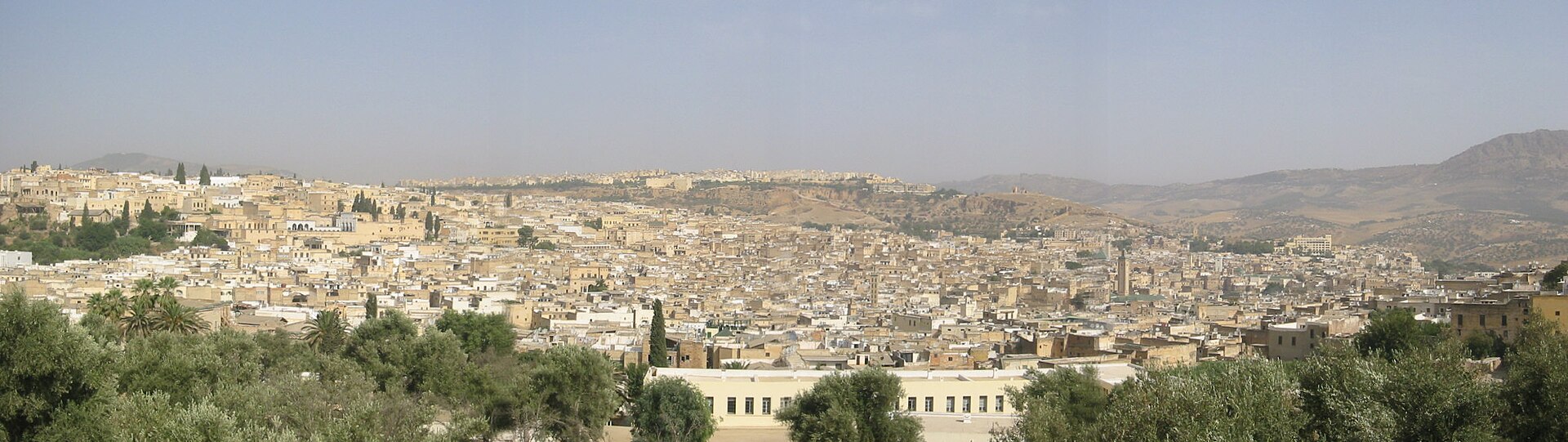
The Medina of Fez was inscribed on the UNESCO World Heritage List in 1981. The city was founded in 789 by Idris I, and its old town has been lived in continuously ever since. After three days of open landscapes, the density of the medina is a wonderful contrast.
Highlights worth a full day
- Al-Qarawiyyin: traditionally founded in 859 by Fatima al-Fihri, and considered by UNESCO and Guinness World Records to be the oldest continuously operating university in the world
- Bou Inania Madrasa: one of the finest examples of Marinid architecture, with carved cedar and plaster
- The Chouara tannery: the famous dye pits, best seen from a terrace above in the morning
- The souks: coppersmiths, weavers and leatherworkers, each trade grouped in its own lanes

Why a local guide helps in Fes
The Fes medina is a maze of narrow lanes, and phone maps are not always reliable inside it. A licensed local guide for your first half-day helps you get your bearings, understand what you are seeing and find the workshops worth visiting. After that, most travelers are happy to explore on their own.
Where to go next
Fes is a natural base for onward travel. Chefchaouen, the blue town of the Rif mountains, is around four hours away by road. The Roman ruins of Volubilis and the imperial city of Meknes make an easy day trip. And Fes has trains to Rabat, Casablanca and Tangier, as well as an international airport.
Fes or Marrakech: Comparing the Two Ends of Your Trip
One of the pleasures of a Marrakech to Fes desert tour is that it links two very different imperial cities. Knowing how they differ helps you decide how many nights to spend at each end.
| Marrakech | Fes | |
|---|---|---|
| Character | Lively, colorful, busy with visitors | Older, quieter, more traditional |
| Medina | Easier to navigate, open main square | Dense maze of lanes, largely car-free |
| Best for | Gardens, palaces, food stalls, nightlife | Craft workshops, medieval architecture, history |
| Suggested stay | 2–3 nights | 2 nights |
| Day trips | Atlas Mountains, Essaouira, Agafay | Volubilis, Meknes, Chefchaouen |
Marrakech before the desert
Marrakech is a gentle introduction to Morocco. The main square comes alive in the evening, the gardens give you shade and calm, and the souks are busy but manageable. Two or three nights here before your tour gives you time to recover from your flight and get used to the rhythm of the country.
Fes after the desert
Fes rewards a slower pace. The medina is older and more intricate, and its workshops still produce leather, brass, ceramics and textiles much as they did centuries ago. Arriving there after the open spaces of the Sahara makes the contrast even richer. Plan at least two nights so you have one full day in the old city.
Planning Flights and Logistics Around a One-Way Desert Route
A Marrakech to Fes desert tour works best when the rest of your trip is built around it. The key is to treat Marrakech and Fes as two separate ends of your journey rather than one base.
Open-jaw flights
Many airlines fly into Marrakech and out of Fes, or the reverse. This is called an open-jaw ticket, and it often costs little more than a return to one city. Check both options when you book, because it can save you a full day of transfers at the end of your trip.
The reverse direction
The Marrakech to Fes desert tour also runs in reverse, from Fes to Marrakech. The days are simply reversed: the Middle Atlas and Ziz Valley on day one, the dunes on the first night, and the kasbahs and High Atlas on the way into Marrakech. Choose the direction that fits your flights; the experience is equally good either way.
Before you set off
- Book your Fes accommodation before the tour and confirm the meeting point with your riad.
- Keep your passport and essentials in your day bag, since your main luggage stays in the vehicle.
- Tell your driver about any dietary needs, so lunch stops can be planned in advance.
- Download offline maps for the Fes medina before you arrive.
Questions to ask before booking a one-way tour
A one-way Sahara desert trip has a few practical details that a loop does not. Ask your operator about each of these before you pay a deposit:
- Where exactly will we be dropped off in Fes, and will the driver coordinate with our riad?
- What time should we expect to arrive in Fes on day three?
- Is there space in the vehicle for all our luggage, including any large suitcases?
- Can the route run in the other direction if that suits our flights better?
- Can we add a night in Merzouga or the Middle Atlas if we want a slower pace?
A good operator will answer all of these clearly. If the answers are vague, ask again, because the end of the trip is where small misunderstandings cause the most stress.
Pacing for families and slower travelers
The three days include long drives, especially day three. Families with young children, or anyone who prefers a gentler pace, can add a night in Merzouga or in the Middle Atlas. For that slower pace, our 4-day private desert tour from Marrakech to Fes adds a full day in the dunes.
A Sample 7-Day Morocco Itinerary With a Marrakech to Fes Desert Tour
Because the route links two cities, it slots neatly into a one-week trip. Here is a simple outline that many of our guests use as a starting point and then adjust.
| Day | Plan | Night |
|---|---|---|
| 1 | Arrive in Marrakech, settle in, evening in the main square | Marrakech |
| 2 | Gardens, palaces and souks of Marrakech | Marrakech |
| 3 | Desert tour day 1: High Atlas and Aït Benhaddou | Dades Valley |
| 4 | Desert tour day 2: gorges, oasis and camel ride | Erg Chebbi camp |
| 5 | Desert tour day 3: Merzouga to Fes | Fes |
| 6 | Guided half-day in the Fes medina, free afternoon | Fes |
| 7 | Day trip to Volubilis and Meknes, or onward travel | Fes or depart |
How to stretch it to ten days
With more time, add Essaouira on the coast before the desert, or Chefchaouen after Fes. Both are easy to reach and very different from the cities and the Sahara. A ten-day trip that runs Marrakech, the desert, Fes and Chefchaouen covers most of what first-time visitors hope to see without feeling rushed.
How to shorten it to five days
If you only have five days, fly into Marrakech, start the desert tour the next morning, and fly out of Fes on the evening of day five or the following morning. It is tight, but the one-way route makes it possible to see Marrakech, the dunes and Fes in a single short trip.
Private Transport Details & Clear Model Inclusions
Morocco Trip Lines provides private door-to-door transport with a dedicated professional driver-guide. Accommodation, desert camps, meals, and local site guides are arranged and booked directly by travelers, giving you complete flexibility and transparent pricing.
What Morocco Trip Lines Provides
- Private air-conditioned vehicle with dedicated English-speaking driver-guide for all three days
- Door-to-door pickup from your hotel or riad in Marrakech and drop-off in Fes
- All fuel costs, highway tolls, and parking throughout the one-way route
- Flexible schedule with stops across the High Atlas, Todra Gorge, Ziz Valley, and cedar forests
Arranged Directly by Travelers
- Hotel in the Dades Valley (Night 1) and desert camp in Erg Chebbi, Merzouga (Night 2)
- Meals, dinners, breakfasts, and drinks (giving you complete dining freedom along the way)
- Sunset camel ride or 4×4 dune shuttle into Erg Chebbi (arranged directly with your camp)
- Local monument entrance fees and site guides
- Personal travel insurance and driver gratuities
Food Along the Marrakech to Fes Desert Tour
Three days on the road are also three days of eating your way across Morocco. Lunches are not included, which gives you the freedom to stop where the food looks best, and your driver will know the reliable places on each stretch.
On the way to the dunes
On day one, lunch near Aït Benhaddou usually means a tagine on a terrace facing the ksar. In the Dades Valley, dinner at your hotel is typically a soup, salads and a slow-cooked tagine or couscous. Around Rissani and Merzouga, look for madfouna, a stuffed flatbread baked in the ashes that locals often call Berber pizza.
On the road from Merzouga to Fes
The northern leg brings different flavors. Midelt is a good place for grilled meat and fresh salads at lunch, and its orchards supply apples to much of the country, so look out for fruit stalls by the road in autumn. In Ifrane, the cafes serve excellent coffee and pastries, a welcome treat in the late afternoon.
Your first meal in Fes
Fes is known as one of Morocco’s great food cities. Pastilla, a sweet and savory pie dusted with cinnamon, is a classic here. After a long day on the road from Merzouga to Fes, many guests are happy to eat at their riad on the first night and save the medina restaurants for the next day.
Photography Tips for a Marrakech to Fes Desert Tour
The light changes dramatically across this route, so a few habits help you come home with better pictures.
- Shoot the dunes in the first and last hour of daylight, when the shadows give them shape.
- Ask your driver for the Ziz Gorges viewpoint in the morning, before the sun flattens the valley.
- Keep your camera in a zip bag at the desert camp; fine sand gets into everything.
- In the Fes medina, always ask before photographing people or shopfronts.
- At the Chouara tannery, the morning light is best, and the terraces above give you the classic view.
Packing for Two Climates on a Marrakech to Fes Desert Tour
A Marrakech to Fes desert tour crosses very different climates in three days. You might have warm sun on the dunes in the afternoon, a cold desert night, and mountain air on day three that feels closer to the Alps than the Sahara. Layers are the answer.
What to bring
- A warm jacket or fleece for the desert night and the Middle Atlas, even in spring and autumn
- Light, breathable clothes for the daytime in the south
- A scarf or cheche for sun and wind-blown sand
- Comfortable closed shoes for the gorges, dunes and medina lanes
- Sunglasses, sunscreen and lip balm
- A small overnight bag for the camp
- Power bank and charging cables
Season by season
Spring and autumn are the most comfortable seasons for a Sahara desert trip on this route, with warm days in the south and mild weather in the mountains. Summer is hot in the desert but pleasant in the Middle Atlas. Winter brings clear skies and cold nights, and snow is possible around Midelt, Azrou and Ifrane, which makes the forests beautiful but can slow the road.
Is the Marrakech to Fes Desert Tour Right for You?
For most travelers who want to see both cities, a Marrakech to Fes via Merzouga route is the better choice. It still asks for long days in the car, so it is worth being honest about who will enjoy it most.
You will love it if
- You want the Erg Chebbi dunes and both imperial cities in one trip
- You enjoy road trips and constantly changing scenery
- You would rather spend your last day discovering new places than retracing your route
- You are flying out of Fes or continuing north
Think twice if
- You must return to Marrakech at the end, in which case the classic loop is simpler
- Long drives make you car sick; day three is around eight hours
- You only have two days, which is not enough for this route
Loop or one-way at a glance
| Classic loop from Marrakech | Marrakech to Fes desert tour | |
|---|---|---|
| Days | 3 | 3 |
| Night in the dunes | Yes, Erg Chebbi | Yes, Erg Chebbi |
| Day three | Back over the High Atlas to Marrakech | Ziz Valley, Middle Atlas and Ifrane to Fes |
| Backtracking | About a full day | None |
| Ends in | Marrakech | Fes |
| Best for | Trips that start and end in Marrakech | Trips that include both imperial cities |
Both routes give you the same night in the Sahara. The difference is where you wake up on day four. If your plans include Fes, the Marrakech to Fes desert tour gives you the desert and the transfer north in one go, and every hour of driving shows you somewhere new. If you must fly home from Marrakech, the loop is the simpler choice, and the Merzouga to Fes road can wait for your next visit. Flying out of Casablanca instead? Our 4-day desert tour from Marrakech to Casablanca follows the same road north through the Middle Atlas, then takes the motorway to the coast.
Adding a fourth day
If three days feels rushed, a four-day Marrakech to Fes desert tour adds either a full day in Merzouga or a night in the Middle Atlas. Both turn the long day three into two relaxed days. With six days, the Marrakech to Chefchaouen tour adds a guided day in Fes and the blue city of Chefchaouen.
When you are ready to look at dates, see our 3-Day Private Desert Tour from Marrakech to Fes page or contact our team.
Marrakech to Fes Desert Tour FAQ
How far is the Marrakech to Fes desert tour?
The Marrakech to Fes desert tour covers roughly 1,000 kilometers over three days, with driving times of about 6–7, 4–5 and 8 hours including stops.
How long is the drive from Merzouga to Fes?
The drive from Merzouga to Fes takes about eight hours with stops for photos, lunch in Midelt, the cedar forest near Azrou and coffee in Ifrane.
Can I do the route in the other direction?
Yes. The same tour runs from Fes to Marrakech, with the Middle Atlas and Ziz Valley on day one and the High Atlas on the final day.
Where will I be dropped off in Fes?
At your hotel or riad, or at the nearest car-accessible point if your riad is inside the car-free medina. Your riad can send someone to meet you there.
What happens to my luggage during the tour?
Your main luggage stays in the vehicle for all three days. You take only a small overnight bag to the desert camp.
Can I skip the camel ride?
Yes. If you prefer not to ride, a 4×4 transfer to the camp can be arranged.
Is this Sahara desert trip suitable for children?
Yes, with good pacing. Children usually love the camels, the dunes and the macaques in the cedar forest. For younger kids, consider adding a fourth day.
What is the best time of year for this route?
Spring and autumn are ideal. Summer is hot in the desert, and winter is clear and cold, with occasional snow in the Middle Atlas.
Do I need to book my Fes riad myself?
On most tours, yes. Accommodation in Fes is not included, because guests prefer to choose their own riad or hotel. Send us the address and we will plan the drop-off point.
Can I add Chefchaouen to the end of the tour?
Yes. Chefchaouen is around four hours from Fes, so it works well as an extra day or two after your Marrakech to Fes desert tour.
Is the road from Merzouga to Fes safe in winter?
The road is well maintained, but snow can occasionally slow traffic around Midelt, Azrou and Ifrane in winter. Drivers watch the forecast and adjust timing when needed.
Book Your Marrakech to Fes Desert Tour With Local Hosts
A loop shows you the Sahara. A one-way route shows you Morocco: the High Atlas, the kasbah valleys, the dunes, the palm groves of the Ziz, the cedar forests and the medina of Fes, all in three days without a single kilometer of backtracking. For most travelers who want both imperial cities, that makes a Marrakech to Fes desert tour the most rewarding way to see the desert.
The next step is simple. Check whether your flights can be booked open-jaw, choose your Fes accommodation, and send us your dates. We will plan the drive around you, from the stops you want on day one to the gate where your riad will meet you in Fes.