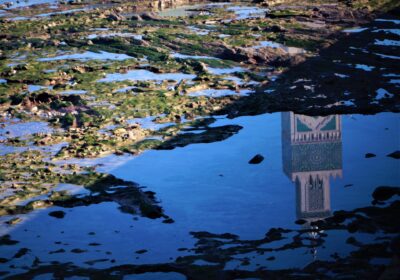

If you only have a weekend, a 2 day desert tour from Marrakech is the shortest way to sleep in the Sahara and be back in the city the next evening. The trip crosses the High Atlas, stops at the UNESCO-listed Ksar of Aït Benhaddou, follows the palm groves of the Draa Valley and ends the first day with a camel ride to a desert camp near Zagora.
Prefer a dedicated driver-guide for this route?
- Private air-conditioned vehicle + professional licensed driver-guide
- Flexible pace with customized stops along the mountain passes and valleys
- You choose and book your own preferred hotels and desert camps
- Instant quote requests via WhatsApp and Email
Zagora is about 360 kilometers from Marrakech, close enough for a round trip in two days. It is not the same desert as the tall orange dunes of Merzouga, and that is something many tours don’t tell you. This guide will.
We will walk you through both days, explain honestly what the Zagora desert looks like, compare it with the longer Merzouga trips, and cover the practical side: driving times, camp types, what to pack and who this short trip suits best.
Why Choose a 2 Day Desert Tour From Marrakech?
Most travelers who visit Marrakech want at least a taste of the desert, and the Zagora desert is the closest place for a real overnight trip. But the classic trip to Merzouga needs three days, with long drives on both sides, and not everyone has that much time.
A two-day trip to Zagora solves this. You leave Marrakech in the morning, cross the mountains, spend the night in a desert camp and return the next evening. It fits into a long weekend or a short city break, and it costs less than the longer tours.
What you see in two days
- The High Atlas and the Tizi n’Tichka pass
- The UNESCO-listed Ksar of Aït Benhaddou
- The Draa Valley, with its palm groves and earthen villages
- A sunset camel ride and a night in a desert camp near Zagora
- A sunrise camel ride the next morning
- The Taourirt Kasbah in Ouarzazate
Who this trip suits
This short trip suits travelers with limited time, families who prefer a shorter trip, and anyone who wants to experience a night under the stars without committing to three or four days on the road. It is also a good choice if you want to see the mountains and the kasbahs as much as the desert.
Who should choose a longer trip
If your dream is the classic image of huge orange dunes, you will be happier with a three-day trip to Merzouga. Our 3 Day Desert Tour From Marrakech guide explains that route in detail, and we compare the two options honestly later in this guide.
The Route at a Glance
Here is the full Marrakech to Zagora round trip in one table. Times are approximate and include short stops for photos and lunch.
| Day | Route | Driving time (approx.) | Night |
|---|---|---|---|
| 1 | Marrakech, Tizi n’Tichka, Aït Benhaddou, Ouarzazate, Agdz, Draa Valley, Zagora | About 7 hours | Desert camp near Zagora |
| 2 | Sunrise ride, Draa Valley, Ouarzazate, Tizi n’Tichka, Marrakech | About 7 hours | Back in Marrakech |
How the days work
Both days of the Marrakech to Zagora trip are long, with a lot of time in the vehicle. That is the trade-off of a short trip: the desert is a long way from Marrakech, and two days means driving there and back. Regular stops break up the journey, and the scenery changes constantly, from mountain passes to kasbahs to palm groves.
Where you sleep
The night is spent in a desert camp near Zagora. The standard camp has private tents with real beds and shared bathrooms. Travelers seeking extra comfort can directly book luxury camps featuring private ensuite bathrooms and hot showers.
Day 1: Marrakech to the Zagora Desert
Your driver-guide collects you from your Marrakech hotel or riad at around 7:30. Within an hour, the road leaves the plain and climbs into the High Atlas.
Over the High Atlas
The road winds up through Berber villages, almond and walnut groves, and terraced fields to the Tizi n’Tichka pass, whose summit sign reads 2,260 meters. There are plenty of stops for photos and mint tea along the way.
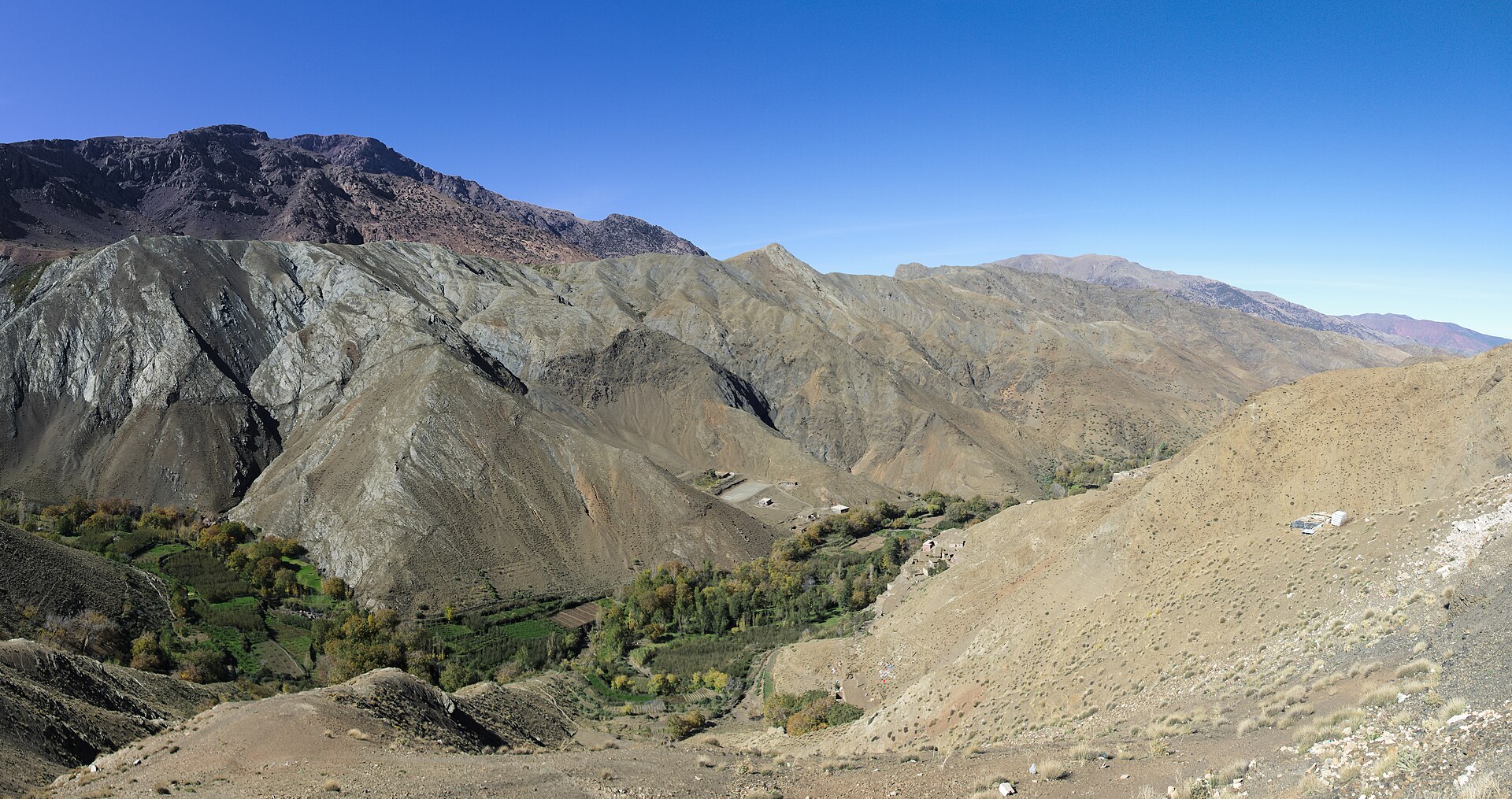
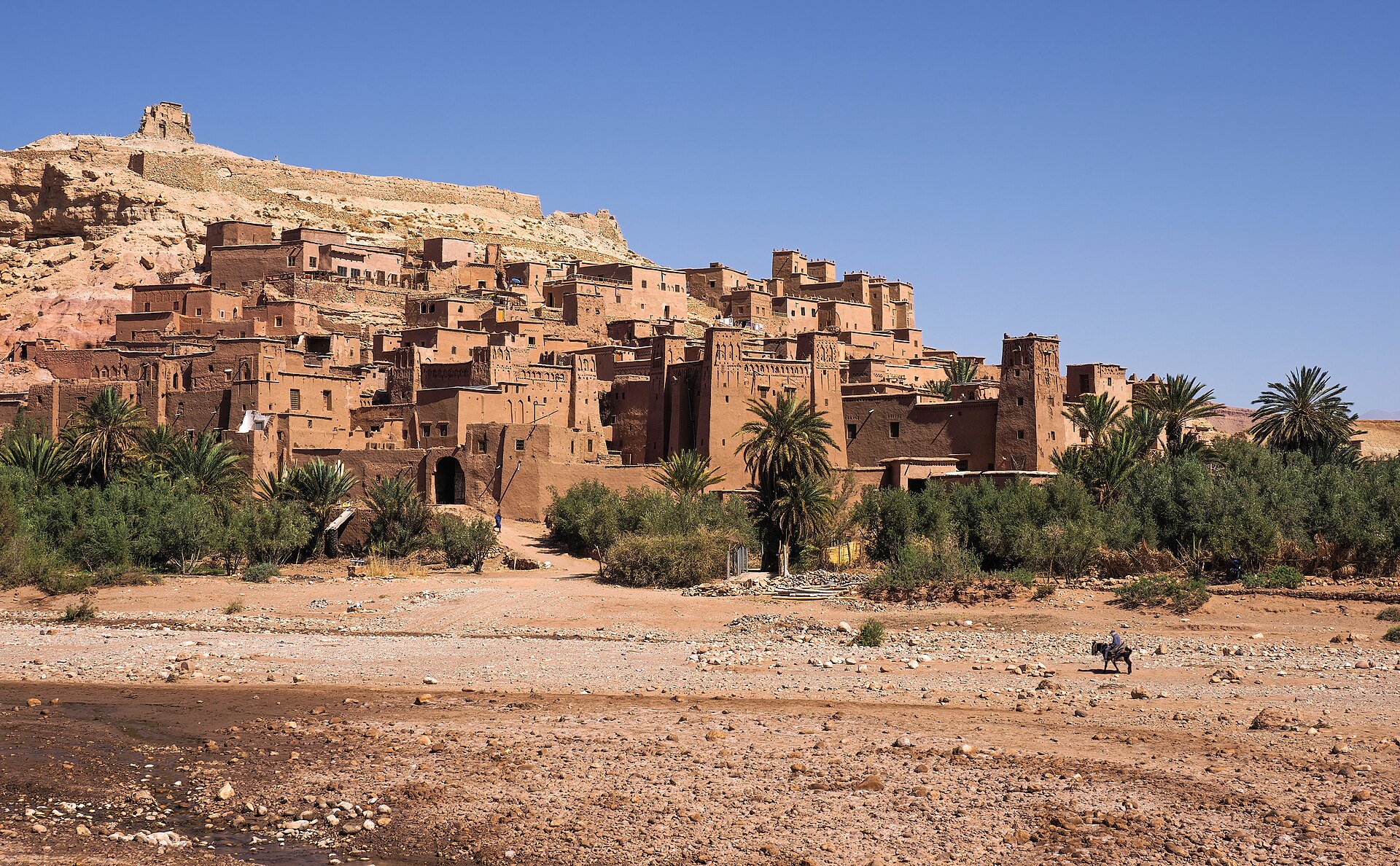
Aït Benhaddou
Around midday, you reach the Ksar of Aït Benhaddou, an earthen fortified village listed by UNESCO in 1987. You can walk up through its lanes to the old granary at the top, with views over the Ounila valley. A local guide is optional and inexpensive, and adds a lot to the visit.
Ouarzazate and the road south
After lunch in Ouarzazate, the road turns south, away from the main desert route. It climbs over the Tizi n’Tinififft pass, a landscape of bare, folded rock, then drops into the Draa Valley near the town of Agdz.
The Draa Valley
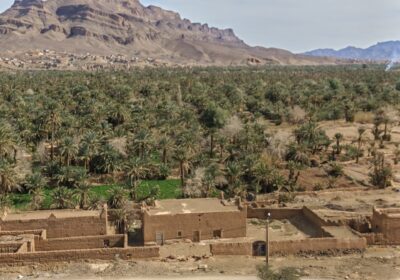
From Agdz, the road follows the Draa River, Morocco’s longest, through a long chain of palm groves. The flat-topped mountain of Jbel Kissane rises above the palms, and earthen villages called ksour line the valley.
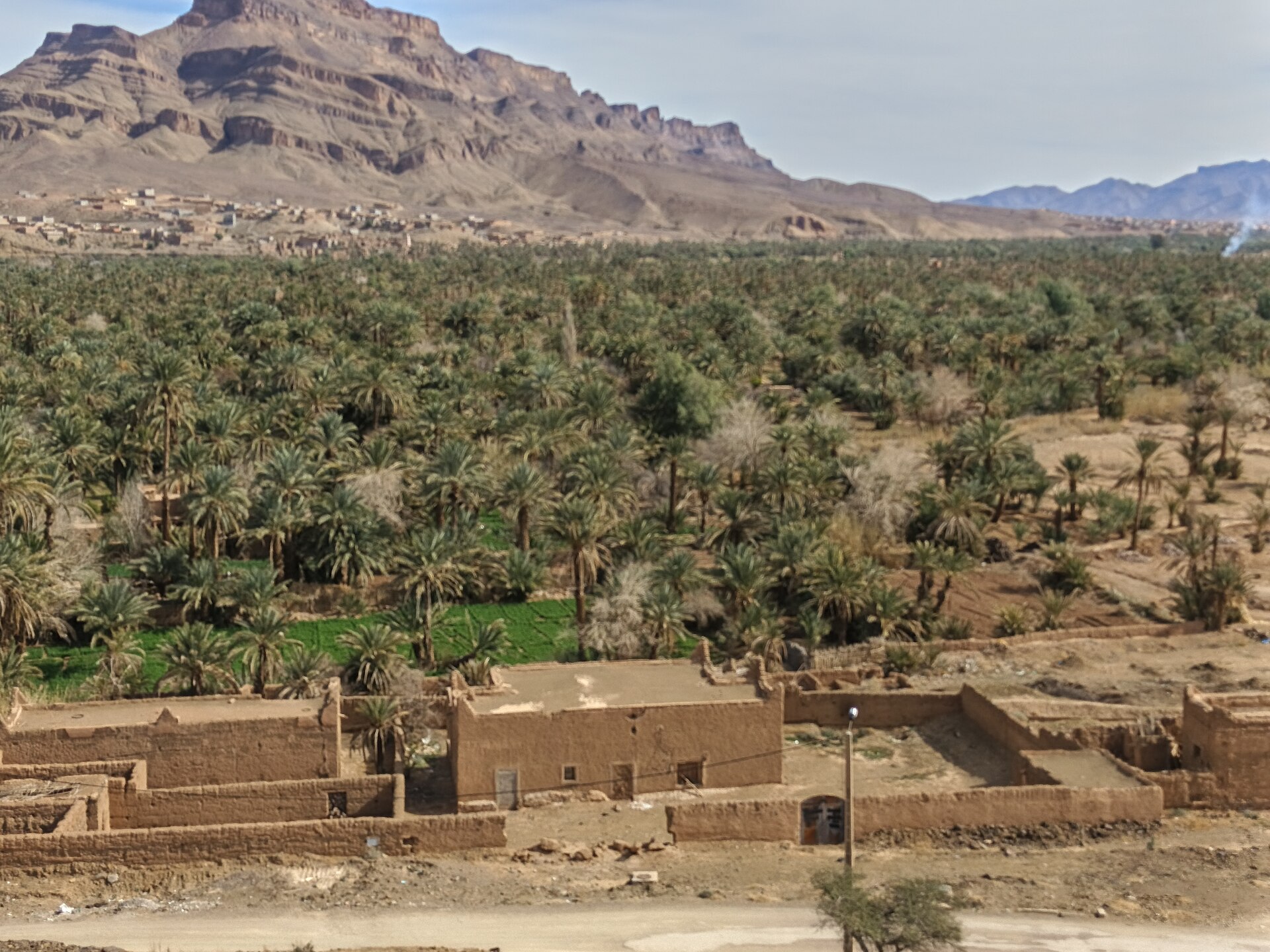
If time allows, you can stop at the ksar of Tamnougalt, an old fortified village with a restored caid’s kasbah, carved wooden ceilings and quiet courtyards.
Sunset camel ride and the camp
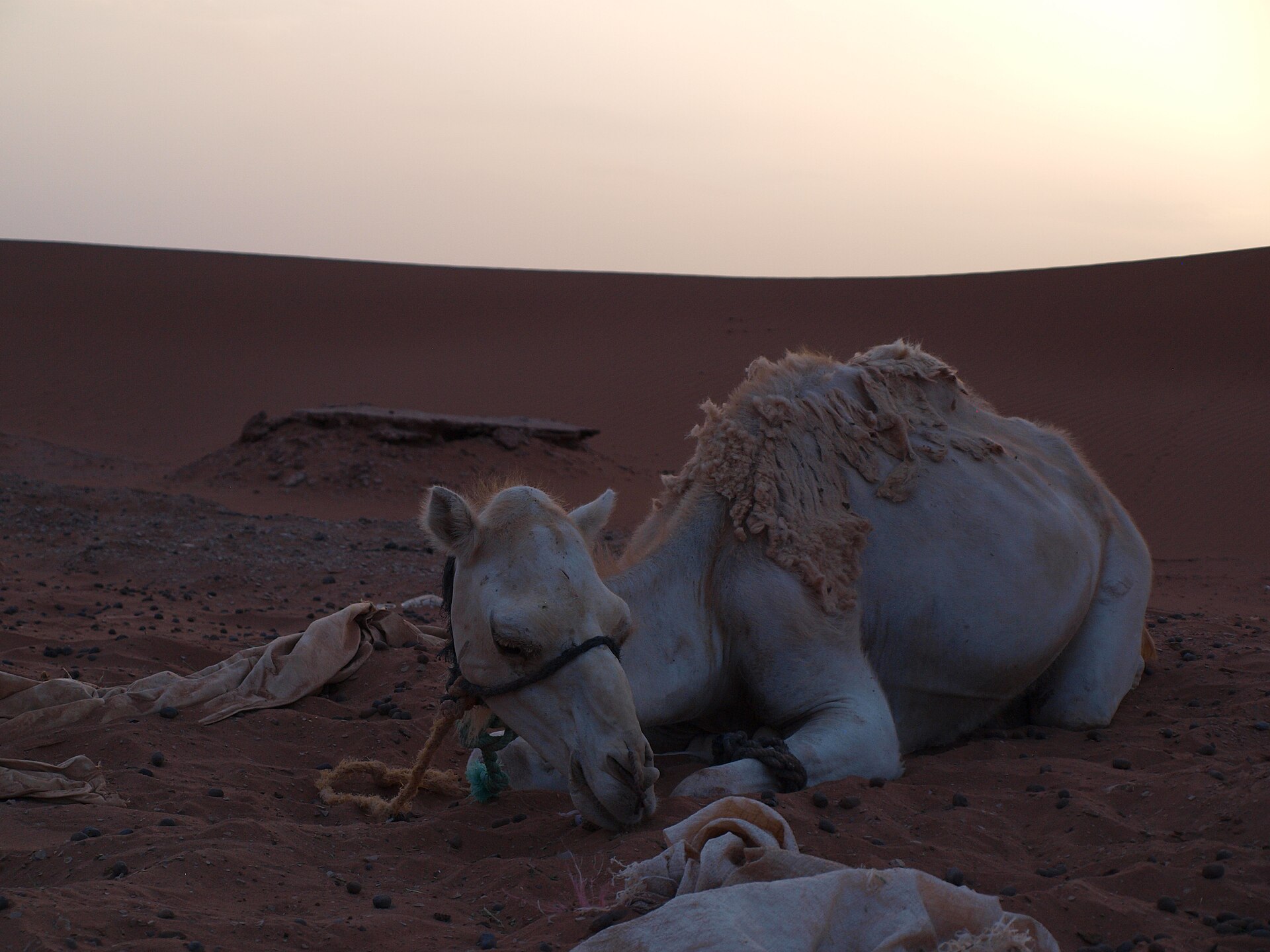
You reach the Zagora desert in the late afternoon. Here you meet your camel guide for a ride of about an hour across the sand and stony plain to the camp, timed for sunset. If you would rather not ride, a 4×4 transfer is always possible.
At the camp, you are welcomed with mint tea. Dinner is usually a tagine, followed by Berber drumming around the campfire and time to look at the stars, which are bright and clear away from the town lights.
Day 2: Sunrise in the Desert and the Road Home
The second day of your 2 day desert tour from Marrakech starts early, with the desert at its quietest.
Sunrise camel ride
An optional camel ride at dawn takes you out to watch the sun rise over the desert. Afterward, breakfast at the camp usually includes fresh bread, msemen pancakes, jam, honey and coffee or tea.
Back through the Draa Valley
The return road follows the Draa Valley north, with stops for photos of the palm groves and kasbahs in the morning light. It is a good chance to see the villages you passed in the late afternoon from a different angle.
The Taourirt Kasbah
In Ouarzazate, you can visit the Taourirt Kasbah, a former residence of the powerful Glaoui family, expanded in the 19th century. Part of it was restored with UNESCO’s help and is open to visitors, with painted cedar ceilings and carved plasterwork.
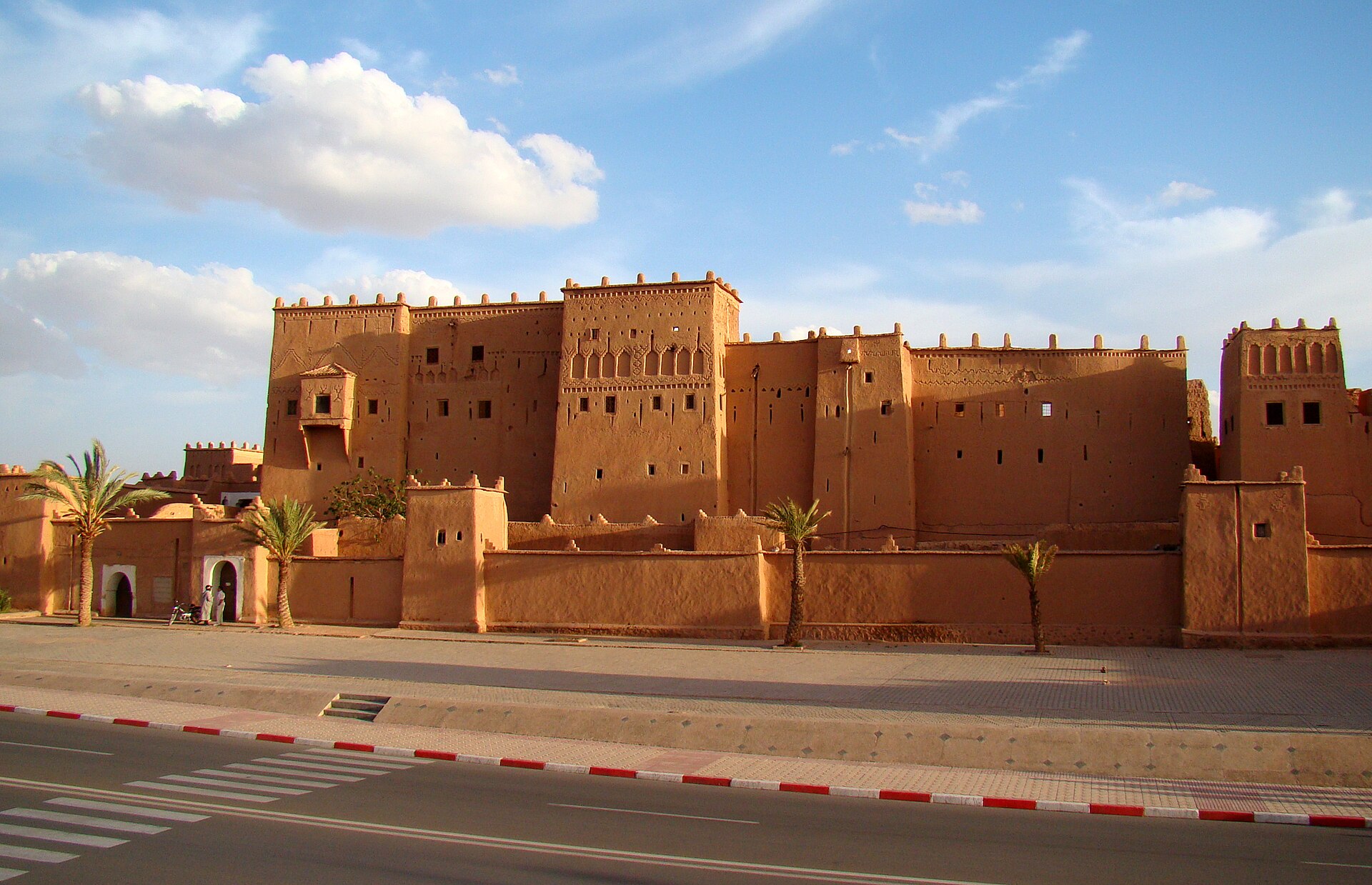
An optional stop at the film studios is also possible. After lunch, the road climbs back over Tizi n’Tichka and descends to Marrakech, arriving between 17:00 and 18:00.
The Zagora Desert: What to Expect
This is the most important section of this 2 day desert tour from Marrakech guide, because expectations make or break a short desert trip.
Rocky desert, not a sea of dunes
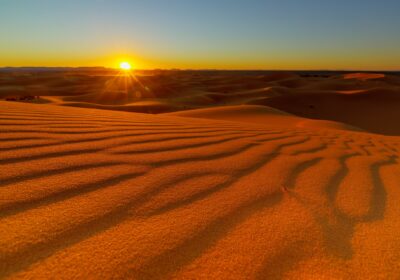
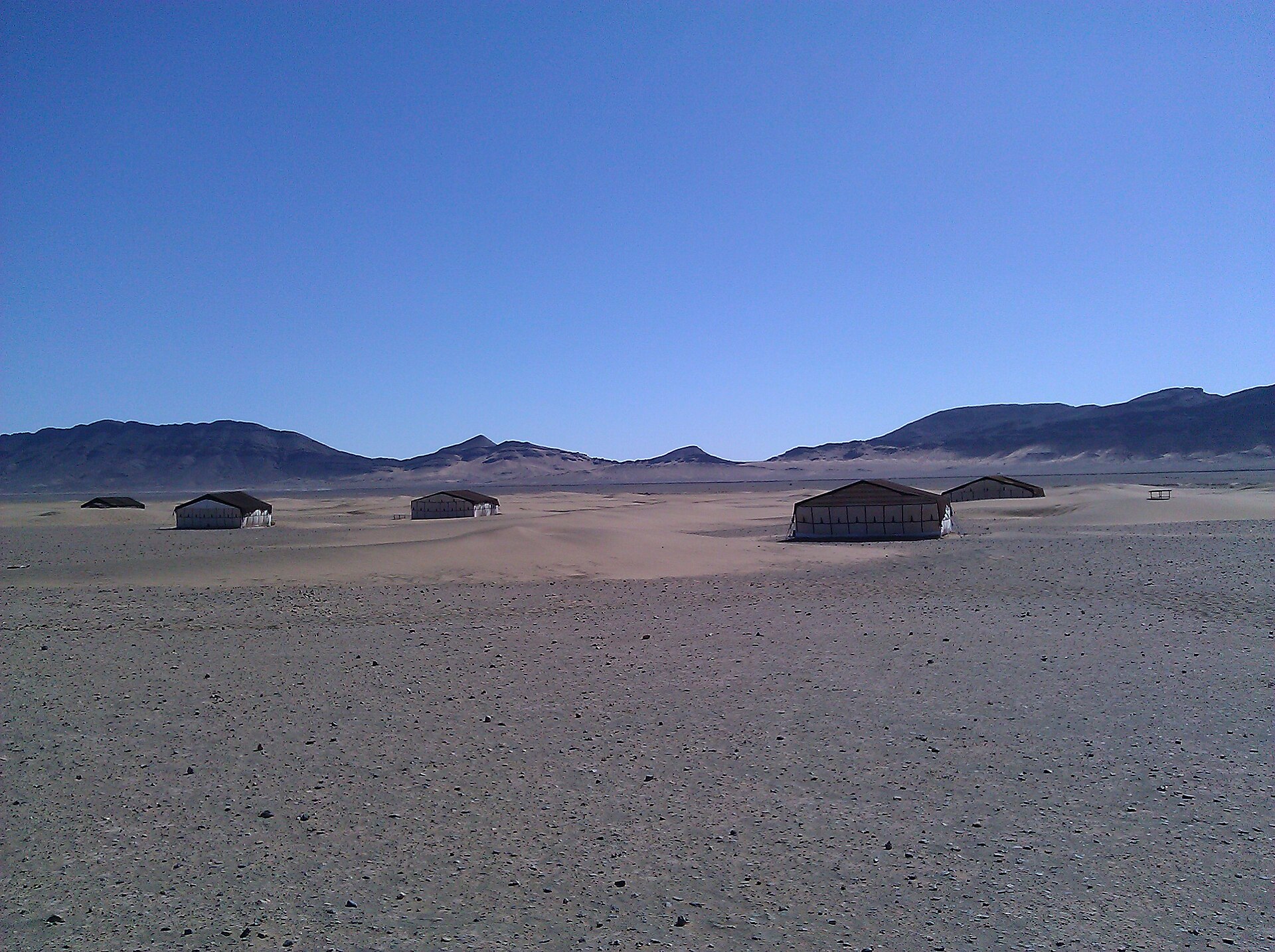
The Zagora desert is mainly hamada: flat, stony desert with low hills, dotted with small dunes. It is beautiful in its own way, especially at sunset and sunrise, but it is not the classic landscape of towering orange dunes you see in photos of the Sahara.
Where the dunes are
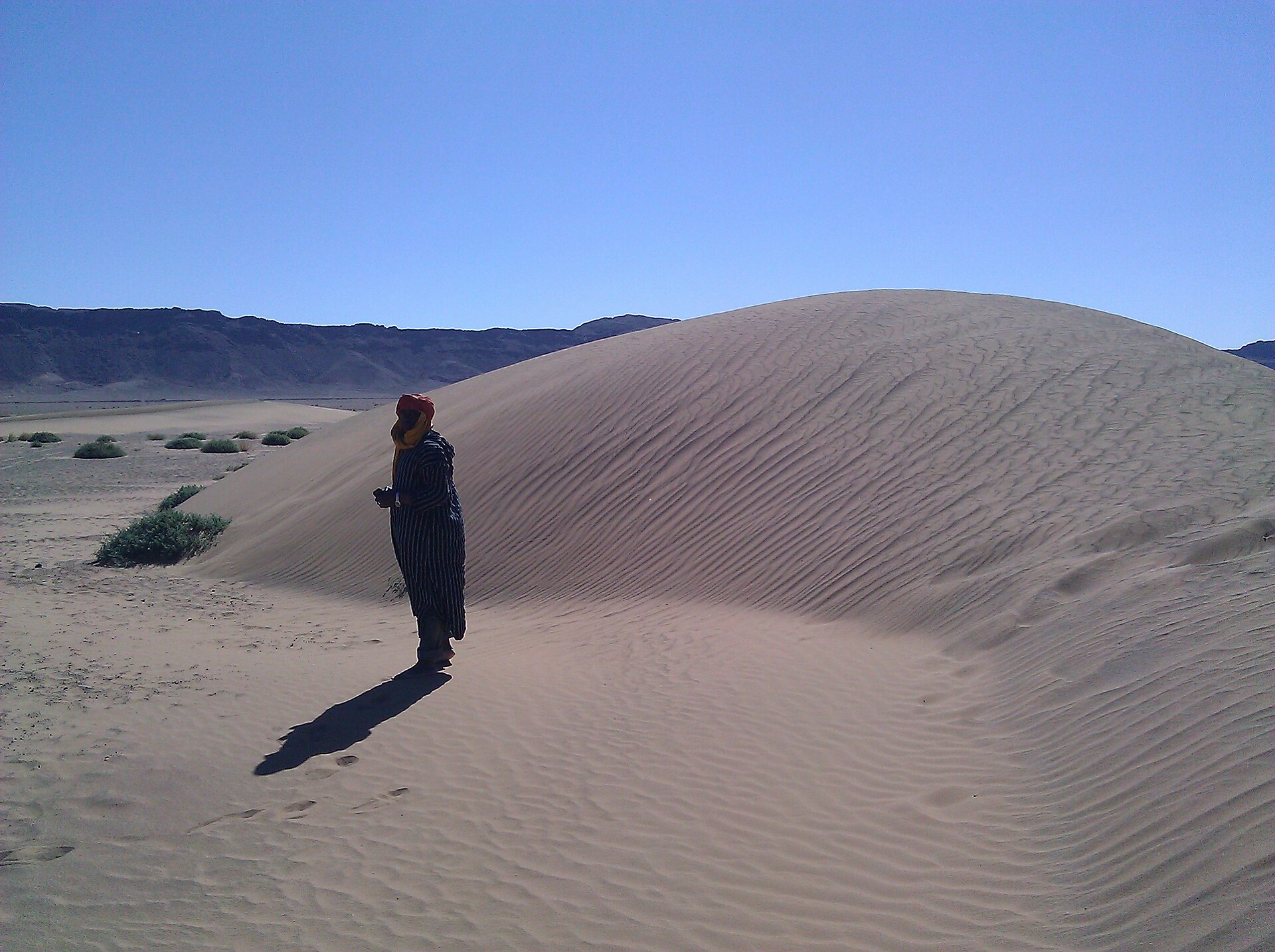
There are sand dunes in the Zagora region, but they are smaller and fewer than in Erg Chebbi. Your camel ride and camp are set near dunes, so you still get the feeling of sand underfoot and a dune to climb at sunrise.
Why travelers still love it
What the Zagora desert lacks in dune height, it makes up for in peace. It is much quieter than Merzouga, the night sky is spectacular, and the journey itself, over the High Atlas and through the Draa Valley, is one of the most beautiful drives in Morocco.
Our honest advice
If you have only two days, Zagora is the right choice: Merzouga is simply too far for a round trip. If you can find a third day, and the big dunes matter to you, choose a three-day trip to Merzouga instead.
The Kasbahs and Ksour of the Draa Valley
The road from Agdz to Zagora is one of the most rewarding stretches of any desert trip from Marrakech, and it is easy to underestimate it. Here is what to look out for.
Agdz and Jbel Kissane
Agdz is a small market town at the entrance to the Draa Valley, set beneath the flat-topped mountain of Jbel Kissane. Its palm grove, the Mezguita oasis, is the first of a long chain of oases that follow the river south toward Zagora.
Tamnougalt
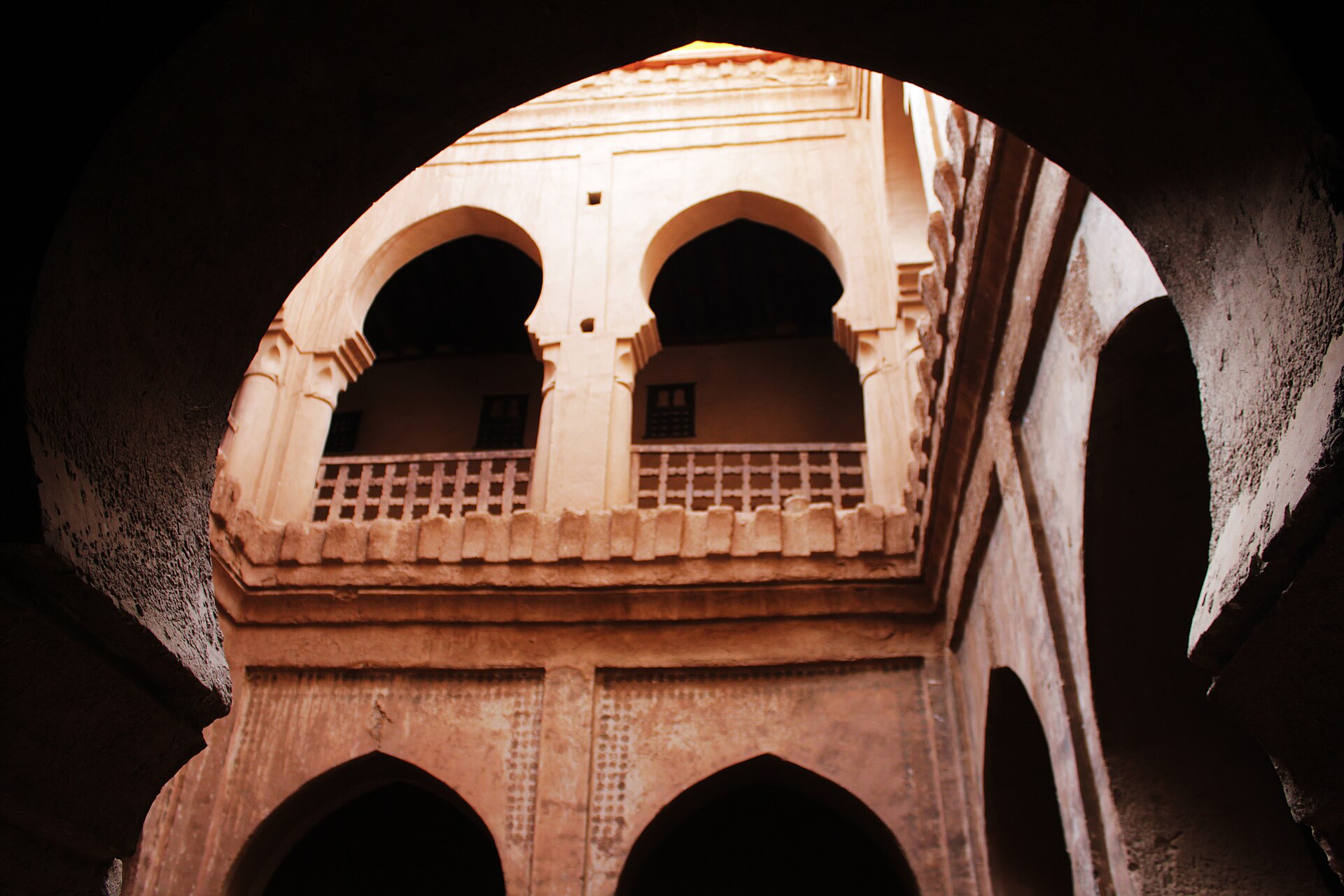
A few kilometers from Agdz, the ksar of Tamnougalt is one of the best-preserved fortified villages in the valley. Its old caid’s kasbah has been partly restored, with carved wooden ceilings, a small hammam and shaded courtyards. A short visit gives a real sense of how these earthen villages were built and lived in.
Life in the oases
The Draa Valley is one of Morocco’s great date-growing regions. Under the palms, families grow wheat, vegetables and henna in small plots watered by irrigation channels. You may see people working in the fields, children walking home from school and donkeys loaded with fodder along the road.
A road for slow travelers
Because it is off the main desert route, the Draa Valley is much quieter than the road to Merzouga. On a private Marrakech to Zagora tour, you can ask your driver to stop at a viewpoint, a village or a pottery stall whenever something catches your eye.
A Short History of Zagora
Zagora is more than a gateway to the desert. For centuries, it was a stop on the caravan routes that linked Morocco with West Africa.
The road to Timbuktu
At the edge of town, a famous sign once read “Tombouctou 52 jours”, the supposed travel time to Timbuktu by camel. The original sign has been replaced by a mural, but it remains a symbol of Zagora’s past as a departure point for the Sahara crossing.
Jbel Zagora
Above the town rises Jbel Zagora, the mountain that gave the town its name. At its foot are the remains of an Almoravid fortress from the 11th century, a reminder of the dynasty that came out of the Sahara to rule Morocco and Andalusia.
Zagora today
Today Zagora is the capital of its province and a busy market town. Its weekly souk is held on Sundays, and the town hosts a marathon and religious festivals during the year. For most visitors, though, it is the last stop before the desert begins.
Zagora Desert vs. Merzouga: Which Should You Choose?
This is the question we are asked most about desert trips from Marrakech, so here is a clear comparison.
| Zagora (2 days) | Merzouga (3 days) | |
|---|---|---|
| Distance from Marrakech | About 360 km | About 560 km |
| Minimum trip | 2 days, 1 night | 3 days, 2 nights |
| Landscape | Stony hamada with small dunes | Tall orange dunes of Erg Chebbi |
| Crowds | Quieter | Busier, more camps |
| Highlights on the way | Aït Benhaddou, Draa Valley | Aït Benhaddou, Dades, Todra Gorge |
| Best for | Short trips, families, budgets | The classic Sahara experience |
Choose Zagora if
- You only have two days
- You want a gentler, cheaper introduction to the desert
- You enjoy kasbahs, oases and mountain scenery as much as dunes
Choose Merzouga if
- You have three days or more
- The image of huge dunes is the main reason for your trip
- You want to see the Todra Gorge and the Dades Valley too
The best of both
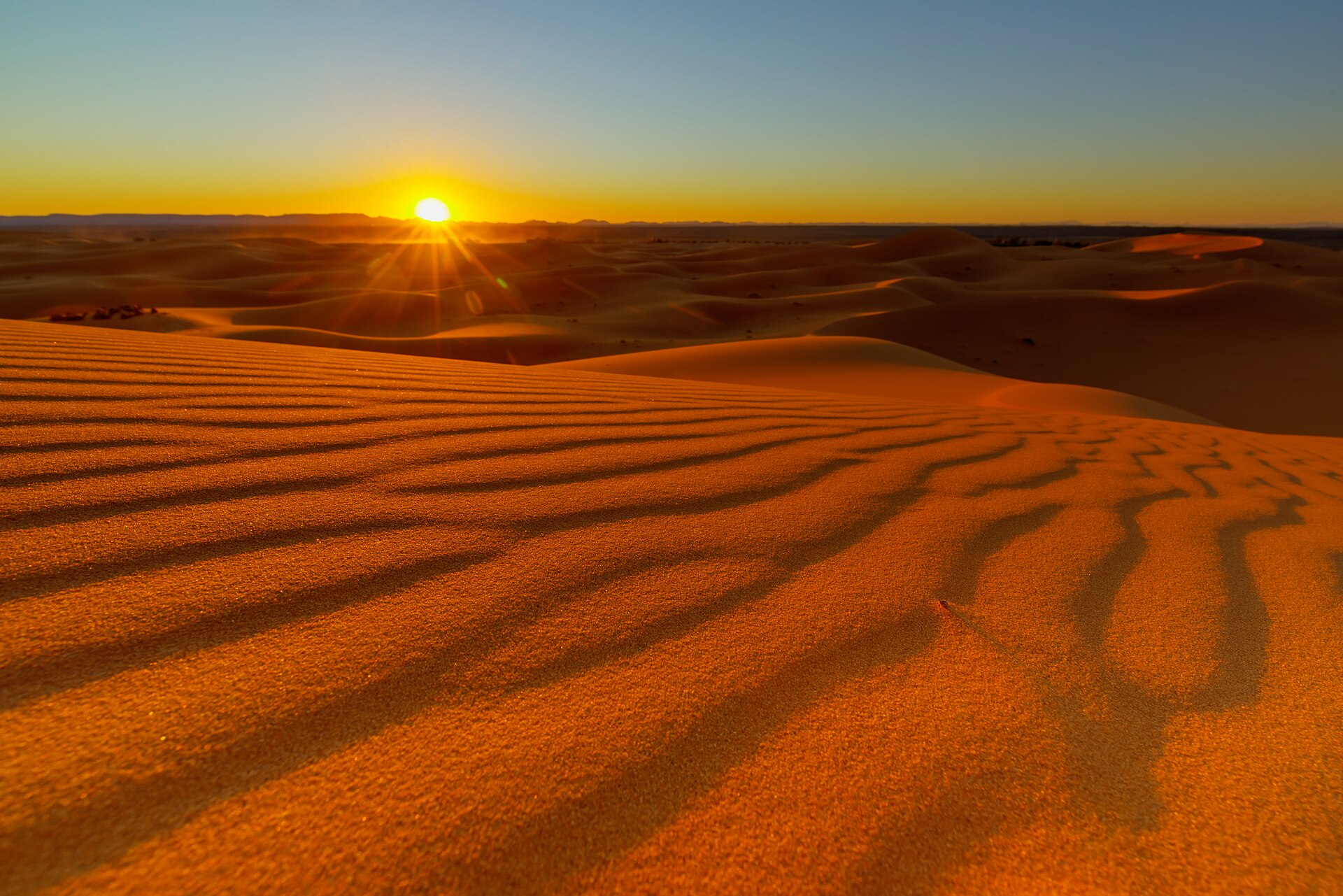
If you have four days, our 4 day desert tour from Marrakech via Zagora combines both: the Draa Valley and Zagora on the first day, then the road across the Anti-Atlas to the big dunes of Erg Chebbi.
The Desert Camp Near Zagora
Where you sleep makes a big difference to your night in the Zagora desert. There are two options.
The standard camp
Standard desert camps near Zagora feature private tents with real beds, blankets and lighting. Bathrooms and showers are shared and located in a separate block. Camp hosts typically serve dinner and breakfast in a dining tent, and the campfire is shared by all guests.
Booking a luxury camp
For more comfort, you can upgrade to a luxury camp. Each tent has its own private bathroom with a hot shower, quality linens and towels. It is a good choice for couples and anyone who values their own bathroom after a long day on the road. Because you book directly, you can choose the exact camp style and budget that works best for you.
What the evening is like
Whichever camp you choose, the evening follows a similar rhythm: mint tea on arrival, a walk to a dune for the last light, dinner, then music around the fire. Later, step away from the camp lights to see the stars. Nights can be cold, even after a hot day, so keep a warm layer handy.
Marrakech to Zagora: The Drive Explained
The drive from Marrakech to Zagora is long, but it is also part of the experience. Here is what to expect.
Distance and time
Zagora is about 360 kilometers from Marrakech. The drive takes six to seven hours without stops, and about seven to eight hours with the visits and breaks on this tour. The return is similar.
Road conditions
The road is paved all the way. The section over Tizi n’Tichka has many bends, and the Tizi n’Tinififft pass south of Ouarzazate has a few more. In a modern air-conditioned vehicle, the journey is comfortable.
Car sickness
If you are prone to car sickness, sit in the front, take medication before the mountain sections, and ask for extra stops. Most of the route after Ouarzazate is straighter and easier.
Why a private tour helps
On a private tour, your driver-guide adapts the pace to you. You can stop for a photo whenever you like, spend longer at Aït Benhaddou, or skip a stop to arrive earlier. Shared group tours follow a fixed schedule.
Can You Visit the Desert in One Day From Marrakech?
Many travelers ask whether they can see the desert as a day trip. For Zagora and Merzouga, the answer is no: they are simply too far.
Why one day is not enough
Zagora is about 360 kilometers from Marrakech, and the round trip would mean around 13 hours of driving in a single day, with no time to enjoy the desert at sunset or sunrise. That is why the shortest trip to the Zagora desert is two days with one night.
The Agafay alternative
If you only have one day, the Agafay desert, about 40 kilometers from Marrakech, offers a taste of the desert landscape. It is a stony desert with rolling hills and views of the High Atlas, not a sand desert, but it is easy to reach for a sunset camel ride and dinner.
Our recommendation
Agafay is fine for a short evening outing. For a real desert night, the High Atlas, Aït Benhaddou and the Draa Valley, a 2 day desert tour from Marrakech is the better choice.
Private or Shared Desert Tour?
When you search for a Marrakech to Zagora trip, you will find both shared group tours and private tours. The difference is bigger than the price.
Shared tours
Shared tours put up to 15 or more travelers in a minibus. They are cheaper, but the schedule is fixed, stops are short, and the camps are often large. You also have less flexibility if someone in your group needs more time or feels unwell.
Private tours
On a private tour, the vehicle and driver-guide are only for your group. You decide when to stop, how long to stay and what to skip. The camp can be chosen to suit you, and the driver-guide can answer questions about everything you see.
Which is right for you?
If budget is your main concern and you are traveling alone, a shared tour may suit you. For couples, families and small groups, a private tour often costs less per person than expected and makes the long days much more enjoyable.
The Night Sky Over the Zagora Desert
For many guests, the stars are the real highlight of the night. Away from the lights of Marrakech, the desert sky is extraordinary.
When to look
The best time is a couple of hours after dinner, when the campfire has burned down. Walk a short distance from the camp lights and give your eyes ten minutes to adjust.
What you can see
On a clear, moonless night, the Milky Way stretches across the sky, and thousands of stars are visible. Shooting stars are common. Around a full moon, the sky is brighter and fewer stars are visible, but the moonlit desert is beautiful in its own way.
Tips
- Check the moon phase before you book if stargazing matters to you.
- Bring a warm layer: desert nights can be cold.
- Use a red light or your phone’s dimmest setting to protect your night vision.
Is a 2 Day Desert Tour From Marrakech Worth It?
Honestly, yes, for the right traveler. Here are the pros and cons to help you decide.
The advantages
- Short: it fits into a weekend or a short stay in Marrakech
- Affordable: the shortest and least expensive of our desert trips
- Varied: mountains, kasbahs, oases and desert in two days
- Quiet: fewer crowds than Merzouga
The disadvantages
- Long drives: both days involve around seven hours on the road
- Smaller dunes: the landscape is not the classic Sahara sea of sand
- Less time to relax: you arrive in the late afternoon and leave the next morning
Our verdict
A 2 day desert tour from Marrakech is worth it if you understand what you are getting: a beautiful road trip with a night in a quiet desert camp. If you expect giant dunes, you may be disappointed. If you want a taste of the south and a night under the stars, it is a great choice.
Mistakes to Avoid When Booking a Desert Trip
Short desert trips from Marrakech are sold everywhere, from hotel lobbies to street stalls. A few common mistakes can turn a great trip into a disappointing one.
Expecting Merzouga dunes in two days
The most common mistake is booking a two-day trip and expecting the giant dunes of Erg Chebbi. As explained above, those are too far for a two-day round trip. Read the itinerary carefully, and if a two-day offer promises Merzouga, expect very long days or a lot of night driving.
Not checking the camp
Camps vary hugely. Ask whether tents are private or shared, whether bathrooms are shared or ensuite, and whether there is hot water. A photo of the actual camp is more useful than a general picture of the desert.
Ignoring what is not included
Lunches, entrance fees, local guides and tips are usually extra. They are not expensive, but it helps to know in advance. Ask for a clear list of inclusions before you pay.
Choosing on price alone
The cheapest shared tours often mean large groups, rushed stops and crowded camps. A private trip costs more, but for a small group the difference per person is often smaller than expected, and the experience is far better.
Forgetting warm clothes
Even in summer, nights in the desert can be cool, and in winter they can be close to freezing. Travelers who pack only summer clothes often spend the evening shivering by the fire.
What to Wear on a Zagora Desert Trip
Dressing well for two days in the south is simple once you know what to expect.
During the day
Light, breathable clothes in natural fabrics work best. Long, loose trousers and tops with sleeves protect you from the sun and are respectful in villages. A hat and sunglasses are essential.
For the camel ride
Long trousers are more comfortable than shorts on a camel saddle. Closed shoes or sturdy sandals are fine. A scarf wrapped around your head and face helps if the wind picks up sand.
In the evening
Bring a fleece or warm jacket for the evening and the early morning ride. In winter, add a hat and gloves. The camp provides blankets, but layers keep you comfortable around the fire.
Modest dress
Southern Morocco is conservative. Covering shoulders and knees in villages and at kasbahs is appreciated, and it also protects you from the sun.
Private Transport Details & What to Expect
Morocco Trip Lines provides private door-to-door transport with a dedicated professional driver-guide. Accommodation, desert camps, meals, and local site guides are arranged and booked directly by travelers, giving you complete flexibility and transparent pricing.
What Morocco Trip Lines Provides
- Private air-conditioned vehicle (modern sedan, 4×4, or minivan suited to your group size)
- Dedicated, professional English-speaking driver-guide for both days
- Door-to-door pickup and drop-off at your Marrakech hotel or riad
- All fuel costs, highway tolls, and parking fees
- Flexible schedule with stops for photos, coffee, and scenic viewpoints along Tizi n’Tichka and the Draa Valley
Arranged Directly by Travelers
- Desert camp night near Zagora (you choose standard bivouac or comfort camp matching your budget)
- Meals and drinks (breakfast, lunches along the road, and dinner at your camp)
- Camel rides or quad rentals (arranged directly with your camp hosts)
- Optional local certified guide and entrance fees at Aït Benhaddou
- Personal travel insurance and tips
Planning Your Trip to the Zagora Desert
A little planning helps you get the most from a 2 day desert tour from Marrakech.
Best time of year
Spring (March to May) and autumn (September to November) are the best seasons. Summer afternoons in Zagora can exceed 40°C, which makes the drive and the camel ride tiring. Winter brings clear skies and pleasant days, but nights in the camp can be very cold.
What to pack
Your main luggage stays in the vehicle, so pack a small bag for the night with:
- Warm layers for the evening and early morning
- A torch or headlamp
- Toiletries and any medication
- A scarf for sun and sand
- A power bank
- Comfortable shoes for walking in the sand
- Sunglasses, a hat and sunscreen
Departure and return times
Pickup is around 7:30 in the morning, and you are back in Marrakech between 17:00 and 18:00 on day two. Times can be adjusted, for example if you have a flight or prefer a later start.
Travelling with children
The trip suits families with children from around four years old. Child seats can be provided, the camel ride can be shortened or replaced with a 4×4, and children usually love the camp, the fire and the stars. The long drives are the main challenge, so bring snacks and entertainment.
Comfort on a Long Day of Driving
Seven hours on the road each day is the main challenge of a short desert trip. A few simple habits make it much easier.
Break up the drive
Your driver-guide stops roughly every one to two hours, for photos, coffee, a short walk or a village visit. Don’t hesitate to ask for an extra stop if you need to stretch your legs.
Stay hydrated and fed
The air in the south is dry, and it is easy to get dehydrated in the car. Keep a bottle of water within reach and bring snacks, such as dates, nuts or biscuits, for the long stretches between towns.
Keep busy
Download music, podcasts or a book before you leave Marrakech, as mobile coverage is patchy in the mountains. Or simply watch the scenery: it changes every hour, from snow-capped peaks to red canyons and green oases.
Sit where you are comfortable
If you are prone to motion sickness, ask for the front seat, and take medication before the mountain sections. Opening a window for fresh air also helps.
Food Along the Way
The Marrakech to Zagora road brings a good taste of southern Moroccan food.
Lunch stops
Lunches are at local restaurants in Ouarzazate and along the route, and are not included. Expect tagines, grilled kebabs, salads and fresh bread, usually at very reasonable prices.
Dinner at the camp
Dinner is prepared and served directly by your desert camp hosts near Zagora. It usually starts with soup or salads, followed by a slow-cooked chicken or vegetable tagine, then fruit and fresh mint tea.
Breakfast in the desert
Breakfast is simple and satisfying: fresh bread, msemen pancakes, jam, honey, butter, olive oil, coffee and tea. Eating it with the desert waking up around you is part of the charm.
Dietary needs
Vegetarian meals are easy to arrange. Tell us about allergies or dietary needs when you book, so the camp can prepare.
Photography Tips for a Zagora Desert Trip
The light in the south of Morocco is spectacular, and a few tips will help you make the most of it.
- Tizi n’Tichka: stop at the viewpoints below the pass in the morning for the switchbacks and terraced villages.
- Aït Benhaddou: the classic view is from across the river; midday light is harsh, so look for shade and detail shots.
- Draa Valley: the palm groves glow in the late afternoon, just before you reach Zagora.
- The desert: the first and last hour of daylight bring the best colors and long shadows.
- Night sky: a small tripod or a steady surface helps with star photos away from the camp lights.
Keep your camera in a bag at the camp to protect it from sand, and always ask before photographing people in the villages.
Responsible Travel in the Draa Valley
The Draa Valley and the desert around Zagora are fragile places, and the communities here depend on scarce water. A few simple habits help.
- Take your rubbish with you and leave the desert as you found it.
- Use water carefully at the camp.
- Dress modestly in villages and ksour.
- Ask before taking photos of people.
- Buy crafts directly from cooperatives and workshops when you can.
Tips are not included and are always your choice. Many travelers tip their driver-guide at the end of the trip and the camel guide and camp staff on the morning of day two.
Extending Your Desert Trip
Two days is the minimum for the Zagora desert, but it is easy to add more if you have time.
Three days: Merzouga instead of Zagora
With one extra day, you can go to Merzouga and the tall dunes of Erg Chebbi instead. Our 3-day private desert tour from Marrakech to Merzouga follows the classic route through the Dades Valley and the Todra Gorge.
Four days: Zagora and Merzouga
With two extra days, you can keep this route through the Draa Valley and Zagora, then cross the Anti-Atlas to Merzouga. It is the most varied way to see the south in four days. See our 4-day private desert tour via Zagora and Merzouga.
One way: ending in Fes or Casablanca
If you are not returning to Marrakech, a one-way route through Merzouga can end in Fes or Casablanca. Our Marrakech to Fes desert tour guide explains the road north, and the 4-day desert tour from Marrakech to Casablanca ends at Casablanca airport.
Mountains and desert
If you love hiking, you can combine the desert with Mount Toubkal. Our Toubkal trek guide explains how to climb North Africa’s highest peak and reach the Sahara in five days.
2 Day Desert Tour From Marrakech FAQ
How far is Zagora from Marrakech?
About 360 kilometers, roughly six to seven hours by road via Tizi n’Tichka and Ouarzazate. With stops, each day of the tour involves around seven hours in the vehicle.
Is Zagora a sand desert or a rocky desert?
The Zagora desert is mainly flat, stony desert called hamada, with smaller sand dunes. It is quieter than Merzouga, which has the tall dunes of Erg Chebbi.
Can I see big sand dunes on a 2 day desert tour from Marrakech?
Not the giant dunes of Erg Chebbi, which are too far for a two-day round trip. For those, you need at least three days.
What’s the difference between the standard and luxury camp?
The standard camp has private tents with real beds and shared bathrooms. The luxury camp has private ensuite tents with a hot shower, quality linens and towels.
Is the tour suitable for families?
Yes. Child seats can be provided, the camel ride can be shortened or replaced with a 4×4, and families with children from around four years old travel with us regularly.
Can the itinerary be customized?
Yes. You can add the film studios, spend longer at Aït Benhaddou, shorten the camel ride for children or add extra photo stops in the Draa Valley.
What time do we leave and return?
Pickup is around 7:30, and you are back in Marrakech between 17:00 and 18:00 on day two. Times can be adjusted.
When is the best time for a Zagora desert trip?
Spring and autumn. Summer afternoons in Zagora can exceed 40°C, and winter nights in the camp are cold.
What should I pack for the desert camp?
A small bag with warm layers, a torch, toiletries, a scarf and a power bank. Your main luggage stays in the vehicle.
Can I extend the trip to Merzouga?
Yes. With one extra day, you can go to Merzouga instead of Zagora. With two extra days, you can keep the Zagora route and continue across the Anti-Atlas to Merzouga.
How much does the tour cost?
The price depends on your group size, season and camp choice. Send your dates and number of travelers through the enquiry form, and we will reply with a personal quote.
Can I do the Zagora desert as a day trip?
No. Zagora is too far for a comfortable day trip from Marrakech. If you only have one day, the Agafay desert near Marrakech is the closest alternative.
Is the 2 day desert tour from Marrakech private?
Yes. You travel only with your own group, in your own vehicle with your own driver-guide.
Is the Marrakech to Zagora drive safe?
Yes. The road is paved and well used, and your driver-guide knows it well. The mountain sections have many bends, so tell us if you are prone to car sickness.
Plan Your 2 Day Desert Tour From Marrakech With Local Hosts
Two days is enough to cross the High Atlas, walk through Aït Benhaddou, follow the palm groves of the Draa Valley and spend a night under the desert stars near Zagora. It is not the giant-dune Sahara of Merzouga, and we would rather tell you that now than have you discover it at the camp. But for travelers short on time, a 2 day desert tour from Marrakech is a beautiful, affordable introduction to the south of Morocco.
The next step is to check your dates and decide between the standard and the luxury camp. Then see our 2-Day Private Desert Tour from Marrakech to Zagora and send us your details through the enquiry form. We will plan the two days around you.