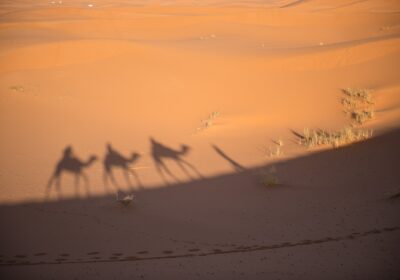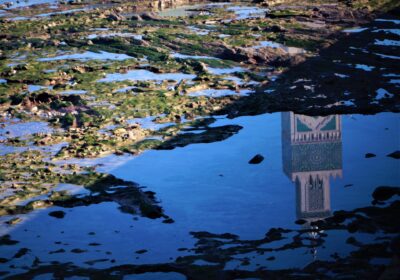

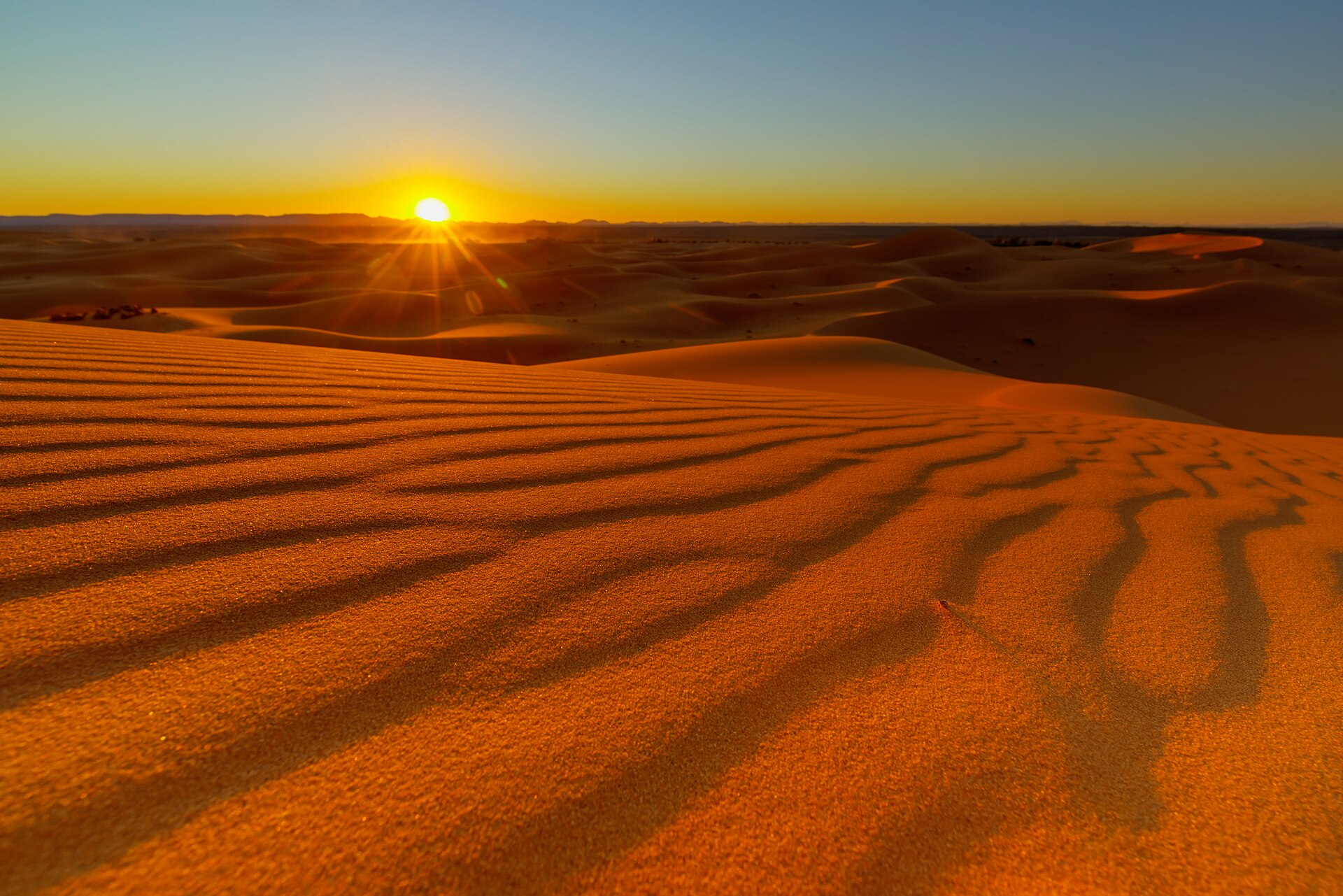
Doing Marrakech to Casablanca in 4 days through the Sahara sounds like a detour, and on a map it is one: the direct motorway between the two cities takes about two and a half hours. But for travelers who land in Marrakech and fly home from Casablanca, the long way round is often the smartest itinerary in Morocco. You see the High Atlas, the kasbah valleys, the Erg Chebbi dunes and the Middle Atlas cedar forests, and you never drive the same road twice.
This guide comes from the Morocco Trip Lines driver-guides who run this one-way route from Marrakech to the Casablanca airport and hotels. It covers each of the four days, the three nights you book yourself, and the part most itineraries skip: how to time the final drive so you reach your flight relaxed instead of watching the clock on the motorway.
Most desert trips from Marrakech are loops. You drive out to the dunes and back over the same pass, or you finish in Fes. Neither suits a traveler whose return flight leaves from Casablanca, because both leave you with an extra transfer at the end, often three or four hours on your last day just to reach the airport.
The one-way route solves that by building the airport into the trip. Day four is the drive from the Middle Atlas to Casablanca, with stops along the way, and it ends at Mohammed V Airport departures or your Casablanca hotel. The total cost of the extra transfer disappears into a day that is already part of the tour.
There is a trade-off, and we want to be clear about it from the start. The route only has one night in the desert, because day three is spent driving north to Midelt rather than sitting in the dunes. If a full free day in the Sahara matters more to you than the airport, our Marrakech to Fes in 4 days guide describes a version with two desert nights.
If your flight home leaves from Casablanca, though, this is the most efficient way to fit the Sahara into the trip. Below we cover:
- Who the one-way route suits, and how it compares to a loop or a Fes ending
- What each day looks like, with realistic drive times and the stops worth leaving the car for
- How to book your nights in the Dades Valley, Merzouga and Midelt
- How to plan your flight so the last day stays relaxed
- Practical tips on seasons, packing, luggage and money
Why Marrakech to Casablanca in 4 Days Works for Open-Jaw Trips
An open-jaw ticket means you fly into one city and out of another. In Morocco, Marrakech and Casablanca are the two busiest international airports, and many travelers end up with exactly this combination, either because the fares are better or because a long-haul connection only leaves from Casablanca.
The problem with a loop from Marrakech
A classic three-day desert loop from Marrakech returns over the Tizi n’Tichka pass and ends back where it started. If your flight leaves from Casablanca, you then need a separate transfer, which costs a half day of travel, a second booking and the risk of cutting it close with your check-in. On a short holiday, that half day is precious.
The problem with ending in Fes
Ending in Fes is excellent if you plan to stay there, but Fes to Casablanca is still around three and a half hours by road or train. Travelers who choose a Fes ending and then fly from Casablanca often lose most of a day to the transfer.
What the one-way route changes
Marrakech to Casablanca in 4 days links the two airports through the most scenic parts of the country, with no backtracking. Here is how it compares on the points our travelers usually care about.
| Loop back to Marrakech | Ending in Fes | Marrakech to Casablanca in 4 days | |
|---|---|---|---|
| Final drop-off | Marrakech | Fes | Casablanca airport or hotel |
| Extra transfer to fly from Casablanca | Yes, about 2.5 hours | Yes, about 3.5 hours | None |
| Roads driven twice | Tizi n’Tichka and the kasbah valleys | None | None |
| Nights in the desert | One | One or two | One |
| Middle Atlas and cedar forests | No | Yes | Yes |
Who the route suits best
In our experience, the one-way route is the right choice for travelers who:
- Have an open-jaw ticket, landing in Marrakech and flying home from Casablanca
- Want to see the Sahara but do not want to spend a day on a separate transfer
- Prefer to see new scenery every day rather than retracing their steps
- Plan to spend their last night in Casablanca before an early flight
If that describes your trip, the rest of this guide walks you through each day.
Day 1: Marrakech to the Dades Valley Over the High Atlas
The first day is about 350 kilometers and six to seven hours of driving, with plenty of stops. Pickup from your Marrakech hotel or riad is usually around 7:30, early enough to reach the High Atlas pass before the trucks and tour buses.
Over the Tizi n’Tichka
The road climbs out of the Haouz plain into walnut groves, then bare slopes and Berber villages built from the same earth as the mountain. At around 2,260 meters, the Tizi n’Tichka is the highest major road pass in Morocco. In winter the summit can see snow, and the road sometimes closes for a few hours after a storm, so your driver-guide checks conditions before you leave.
The descent toward Ouarzazate is gentler, and the landscape changes completely. Green gives way to red rock, and the first kasbahs appear along the river valleys.
Ait Benhaddou
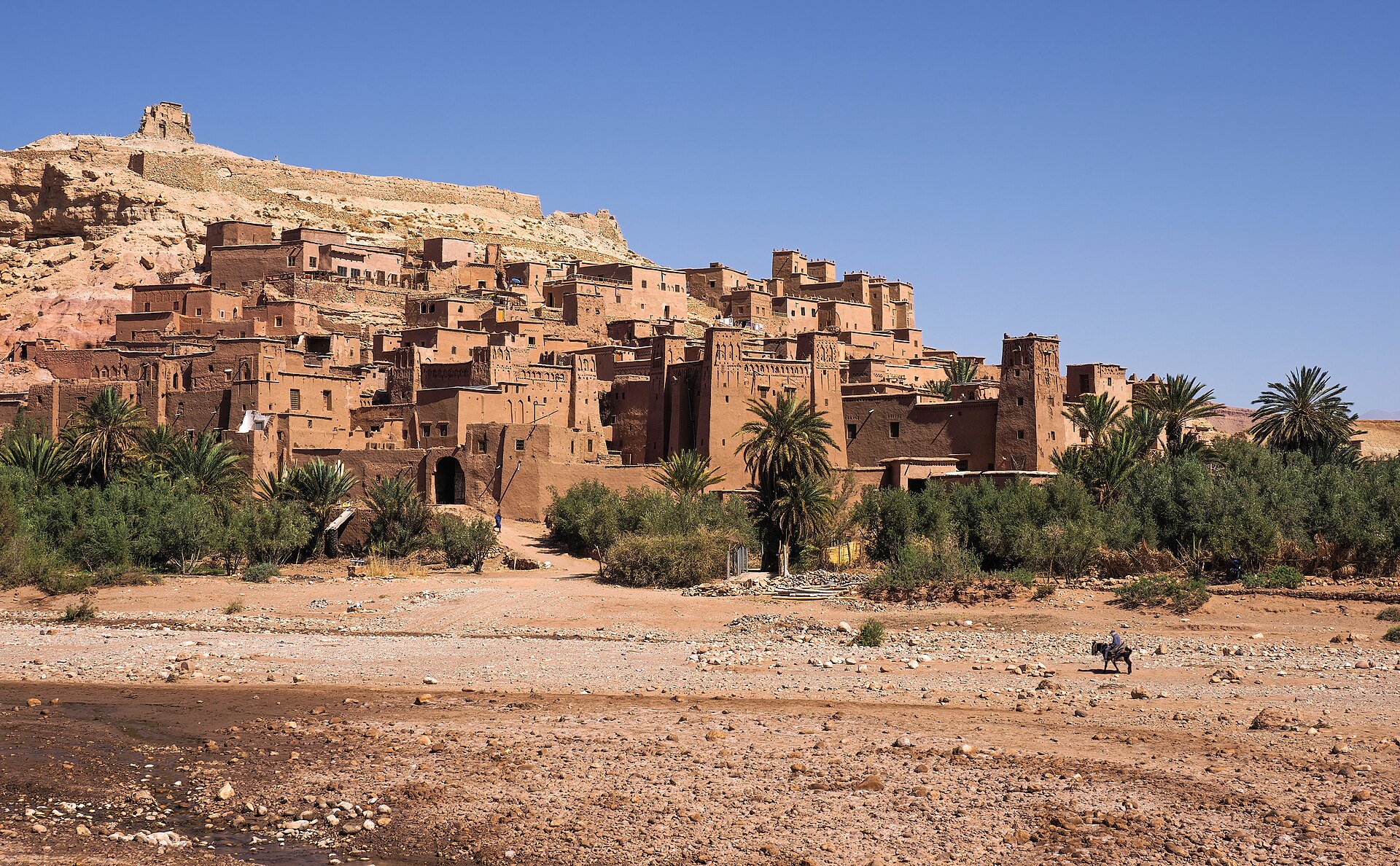
Ait Benhaddou is a fortified village of earthen houses climbing a hill above the Ounila River, once a stop on the caravan route between the Sahara and Marrakech. Allow about an hour to cross the river, walk through the lanes and climb to the old granary at the top, where the view stretches across the valley. Local guides are available at the entrance and paid directly.
Ouarzazate, Skoura and the Valley of Roses
Ouarzazate is the usual lunch stop. If you want to visit the Taourirt Kasbah or the film studios, mention it before the trip so your driver-guide can plan the timing.
East of the city, the road passes the Skoura oasis, where Kasbah Amridil stands among the palms, and continues through the Valley of Roses around Kelaat M’Gouna. In May the rose harvest fills the valley with scent and roadside stalls sell rosewater and dried petals.
Arriving in the Dades Valley
By late afternoon you reach the Dades Valley, known for its red rock formations, sometimes called Monkey Fingers. If the light is good, your driver-guide may take you up to the Dades Gorge viewpoint before dropping you at the accommodation you booked; otherwise it fits into the next morning.

Day 2: Todra Gorge, Rissani and Sunset Over Erg Chebbi
Day two is about five hours of driving and ends with the moment most travelers book this trip for: sunset over the Erg Chebbi dunes. The timing matters, so your driver-guide will plan the stops to reach Merzouga in the late afternoon.
The Dades Gorge and the Tinghir oasis
If you did not see the Dades Gorge viewpoint the evening before, the morning starts there. The road twists up the gorge in tight switchbacks, and the viewpoint at the top is one of the most photographed spots in southern Morocco.
From there, the road heads east to Tinghir, where a long palm grove fills the valley below the town. You can walk part of it on shaded paths between small fields and irrigation channels.
Walking into the Todra Gorge
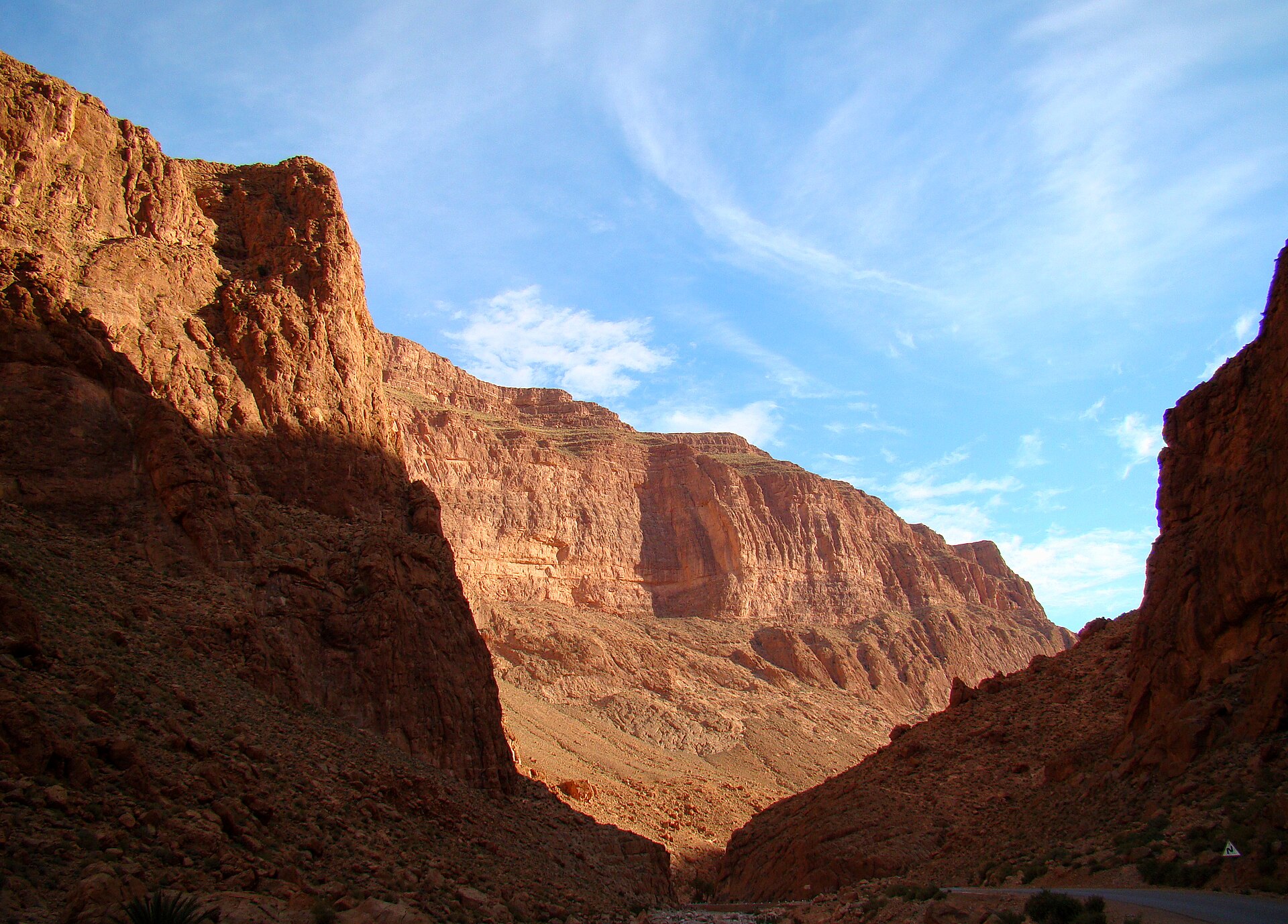
The Todra Gorge is a narrow limestone canyon with walls up to 300 meters high. You walk along the riverbed through the narrowest section, where the cliffs almost close above you, and often see climbers on the rock faces. Plan for 45 minutes to an hour, and bring shoes that can handle a little water.
Khettara wells, Erfoud and Rissani
After lunch near the gorge, the road crosses open desert plains. Along the way you pass lines of khettara, an old system of underground irrigation channels whose access shafts look like small craters in the ground. Your driver-guide can stop at one so you can see how they work.
Erfoud is known for its fossil workshops, where marine fossils from the surrounding hills are cut and polished. Rissani, a little further on, has one of the liveliest souks in the south, especially for dates.
Sunset in Erg Chebbi

You arrive in Merzouga in the late afternoon. Your driver-guide drops you at your hotel at the edge of the dunes, or at the meeting point where your desert camp collects guests. From there, most camps offer a camel ride or a 4×4 transfer into the dunes, timed to reach a high point for sunset.
The colors of Erg Chebbi change quickly as the sun goes down, from gold to deep orange and then red. After dark, the night sky away from town lights is the other highlight. Camel rides, sandboarding and quad biking are not included in the transport, so you book them with your camp or a local provider.
Day 3: Erg Chebbi Sunrise, the Ziz Valley and Midelt
Day three starts early if you want to see the sunrise over Erg Chebbi, and almost everyone does. Climb a dune behind your camp or hotel about half an hour before the sun comes up. Afterward, your driver-guide collects you from your accommodation, usually after breakfast, for about five hours and 280 kilometers of driving to Midelt.
The Ziz Valley palm groves
North of Erfoud, the road follows the Ziz River through a valley of date palms that stretches for around 80 kilometers. The Aoufous viewpoint, above one of the greenest sections, is a good first stop. Small earthen villages sit at the edge of the palms, where the green meets the desert.
The Blue Spring of Meski
Just before Errachidia, the Blue Spring of Meski is a natural pool fed by a spring at the foot of a cliff, surrounded by palm trees. It makes a pleasant short stop, and local families come here to swim in summer. Errachidia is the usual lunch stop.
Through the Ziz Gorges

After Errachidia, the road passes the Hassan Addakhil reservoir and enters the Ziz Gorges, where the river cuts through layered rock. The Legionnaire’s Tunnel, built during the French protectorate, marks the narrowest point. Your driver-guide will stop at the viewpoints and at the famous S-shaped bend.
Over the Tizi n’Talghomt to Midelt
The last climb of the day crosses the Tizi n’Talghomt pass into the high plateau around Midelt. The town sits at around 1,500 meters between the High and Middle Atlas, with the peaks of Jbel Ayachi often snow-capped to the south. The town is known for its apples and its mineral and fossil shops.
Why Midelt is the right third night
Midelt is not a famous destination, and some travelers are surprised to stay there. But it is the reason the last day works. Stopping in Midelt splits the long drive from Merzouga to Casablanca, which would take ten hours or more in one go, into two comfortable days. It also means you cross the cedar forests and Ifrane on the final morning, in daylight and with time to stop.
Day 4: Ifrane, the Cedar Forests and the Road to Casablanca
The final day is about 430 kilometers and six to six and a half hours of driving, with stops. Pickup from your accommodation is usually around 8:00, or earlier if your flight requires it. Arrival in Casablanca is normally between 17:00 and 18:30.
Cedar forests and Barbary macaques near Azrou
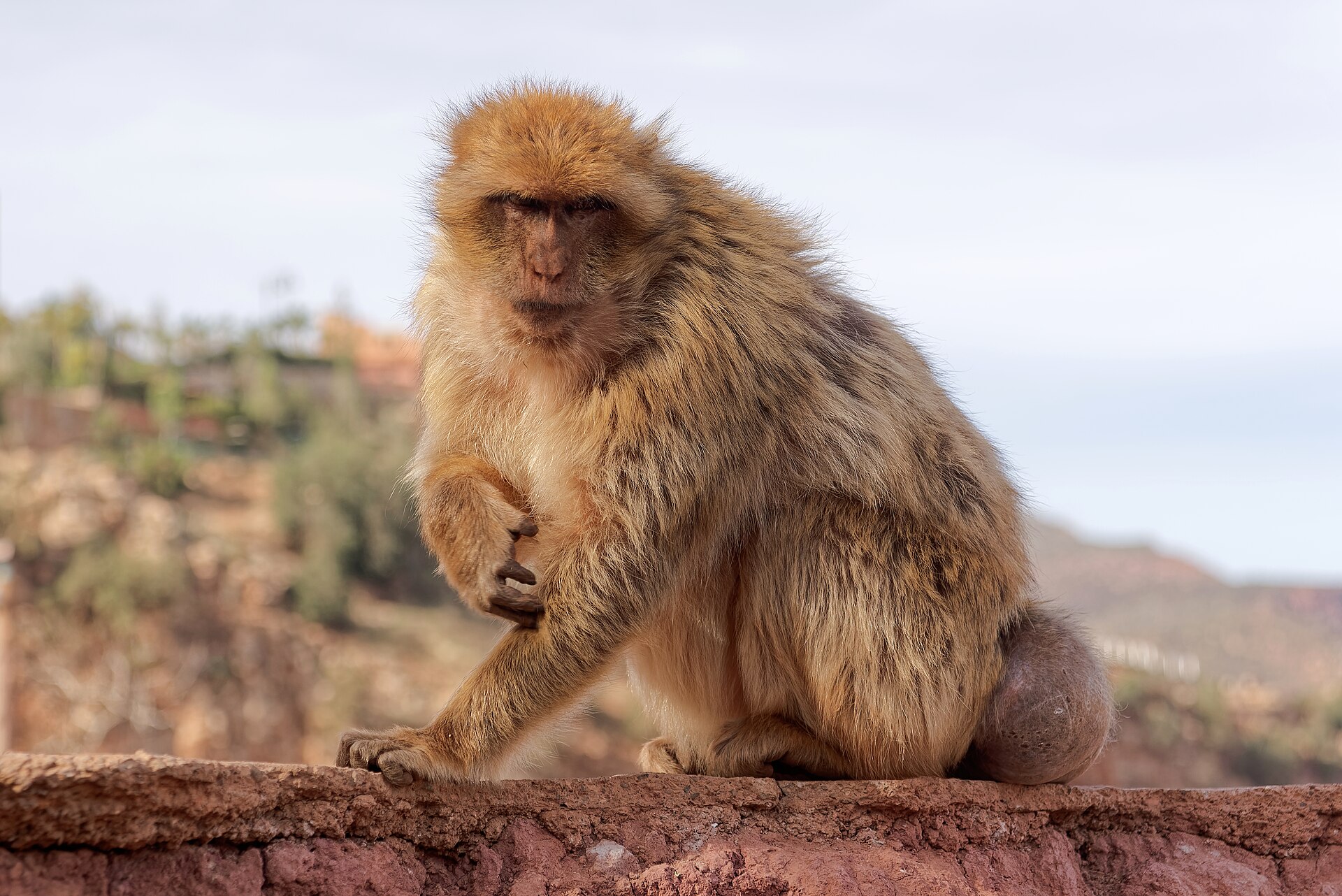
From Midelt, the road crosses a high plateau and climbs into the Middle Atlas. Near Azrou you enter the cedar forests, tall and dark green, where Barbary macaques live. These endangered monkeys are found only in Morocco and Algeria, and they often come to the edge of the road. Please do not feed them: human food makes them ill and changes their behavior.
Ifrane, the Alpine-style town
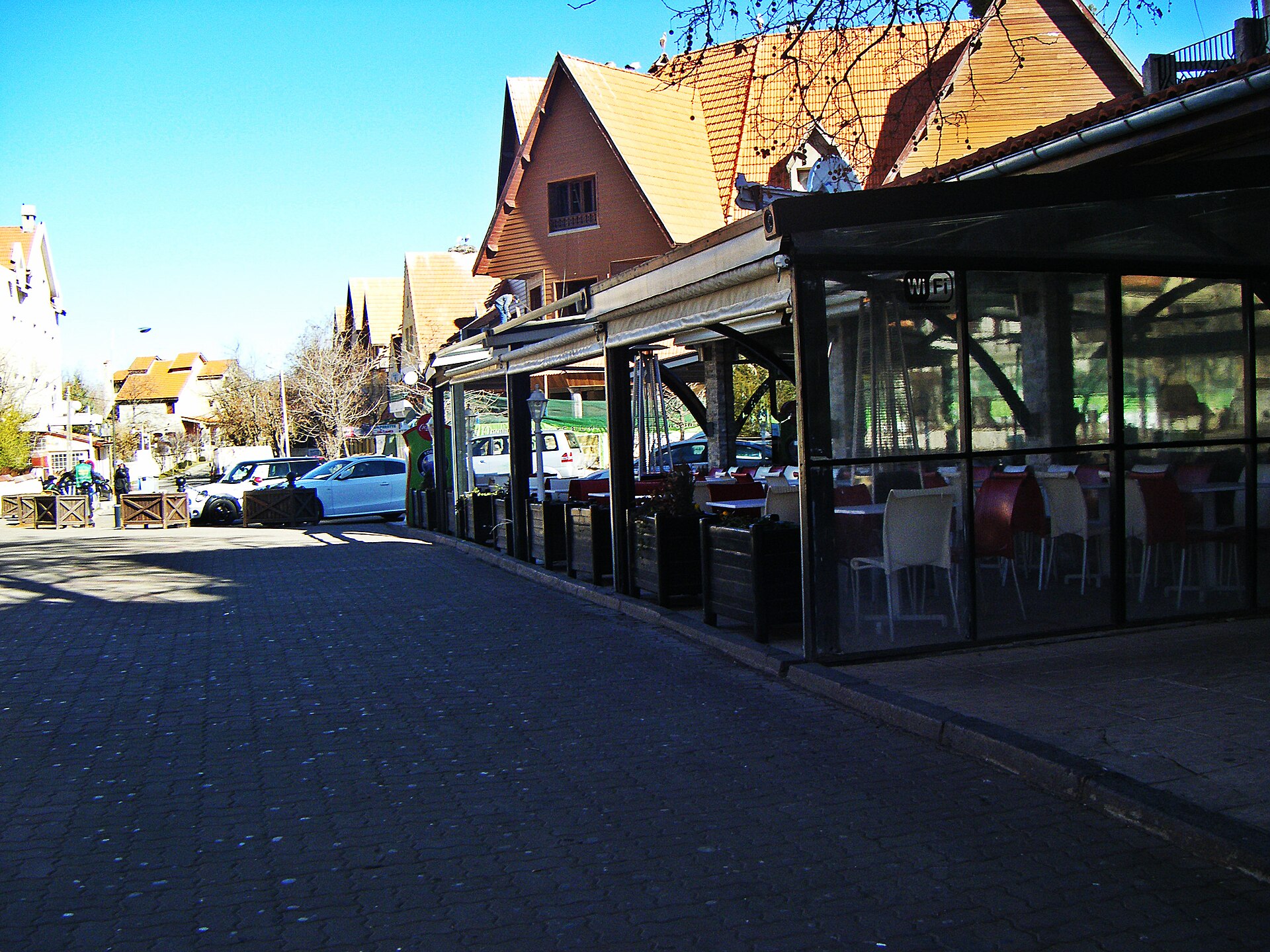
Ifrane surprises almost everyone. Built with sloping roofs, gardens and clean streets, it looks more like a European mountain resort than a Moroccan town. It is a good place to stretch your legs, take photos of the stone lion and have lunch before the motorway section.
An optional stop in Meknes
If time allows, your driver-guide can make a short stop in Meknes, one of Morocco’s imperial cities, to see Bab Mansour, its monumental gate. The historic city is listed by UNESCO as a World Heritage Site, and even a 20-minute stop gives you a sense of its scale. If your flight is early in the evening, skip it and keep the margin.
The motorway to Casablanca
After Meknes, the motorway runs west past Rabat to Casablanca. This is the fastest part of the trip, and the scenery shifts from farmland to the Atlantic coast. Your driver-guide drops you at Mohammed V Airport departures or your Casablanca hotel.
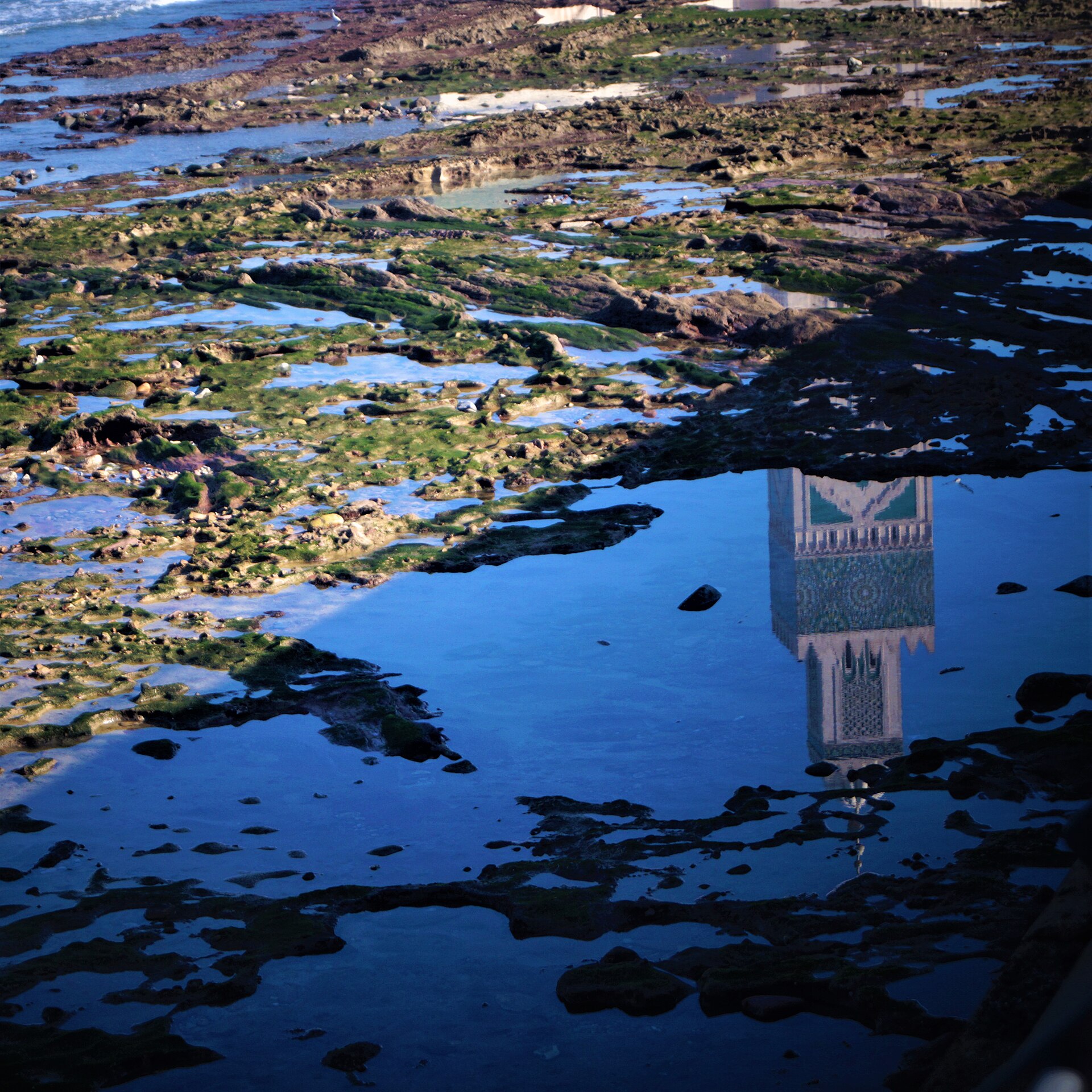
If you are staying in Casablanca, ask for a photo stop at the Hassan II Mosque on the way to your hotel. Its minaret is one of the tallest in the world, and the mosque stands directly on the Atlantic shore.
Planning Your Flight From Casablanca Airport
The last day ends at the airport for many of our travelers, so the flight time shapes the whole trip. Getting this right is the difference between a relaxed final day and an anxious one.
How late should your flight be?
Arrival in Casablanca is usually between 17:00 and 18:30. Mohammed V Airport is south of the city, and international check-in normally closes well before departure. With that in mind, here is how we advise travelers:
| Flight departure from Casablanca airport | Our advice |
|---|---|
| Before 17:00 | Not recommended on day four; add a night in Casablanca |
| 17:00 to 20:00 | Possible with a very early start and no Meknes stop |
| 20:00 to 22:00 | Comfortable with a normal start; Meknes stop optional |
| After 22:00 or next day | Relaxed; time for Meknes and Ifrane at a slow pace |
If you have any doubt, the safest plan is to book a night near the airport or in Casablanca and fly the next morning. A missed long-haul flight costs far more than one hotel night.
Tell us your flight details early
When you send your enquiry, include your flight number and departure time. Your driver-guide plans the final morning’s pickup time around it and adjusts the stops on the day if roadworks or weather slow the drive.
Luggage on a four-day trip
Your luggage stays in the vehicle for the whole trip, so you only need a small overnight bag each evening. This is especially useful in Merzouga, where camps inside the dunes often ask guests to bring only a small bag on the camel or 4×4 transfer. Pack your overnight bag on the first morning and leave the suitcase in the car.
If you stay a night in Casablanca
Many travelers end up adding a night in Casablanca, either for a morning flight or simply to finish the trip without pressure. The city is often overlooked, but one evening and morning are enough to see its best side.
- The Hassan II Mosque is the obvious first stop. It is one of the few mosques in Morocco open to non-Muslim visitors on guided tours, and the views of the building against the ocean at sunset are worth the detour even without going inside.
- The Corniche runs along the coast west of the mosque, with cafes, beach clubs and an evening crowd of families and joggers.
- The Habous quarter, south of the center, is a calm, planned neighborhood with arcades, bookshops and pastry shops, a gentler shopping experience than the big medinas.
- The art deco center around the old boulevards has some of the finest early twentieth-century architecture in North Africa, best seen on foot in the morning.
After the dunes and the mountains, a night by the Atlantic makes a good final chapter.
Getting from your hotel to the airport the next day
If you spend the night in the city, the airport is about 30 kilometers south of the center. Taxis and private transfers take around 40 minutes outside rush hour. There is also a direct train from the city’s main stations to the airport, which avoids traffic and runs regularly through the day. Ask your hotel for current times, and leave a generous margin in the morning rush.
If your flight is delayed or changed
Plans change. If your flight is moved after you book, tell us as soon as you know. We can change the pickup time, add a night in Casablanca or drop you at a hotel instead of the airport.
Booking Your Nights in the Dades Valley, Merzouga and Midelt
Morocco Trip Lines works on a transport-only model. The private vehicle, fuel, tolls and dedicated driver-guide are covered; your hotels, camps, meals and activities are not. You book each night directly with the property, which gives you full control over budget and style.
The Dades Valley
The valley has guesthouses, family-run hotels and a few higher-end properties with gorge views. We recommend staying along the valley road rather than in Boumalne town, so you wake up to the scenery. Choose a place with a good dinner, because there is little else open in the evening.
Merzouga and Erg Chebbi
This is the most important booking of the trip. In Merzouga, the main options are:
- Hotels and guesthouses at the edge of the dunes, with rooms, often a pool, and the dunes a short walk away
- Standard desert camps inside Erg Chebbi, simple tents with shared bathrooms
- Comfort and luxury camps inside the dunes, with private bathrooms, hot showers and proper beds
With only one night in the desert on this route, many travelers choose a camp inside the dunes for the full experience. Ask the camp how guests arrive and leave, because some camps are an hour away by camel, and you need to be back at the meeting point in time for your morning pickup.
Midelt
Midelt has a handful of comfortable hotels and guesthouses, some with gardens and mountain views. It is a quiet town, so a hotel with its own restaurant makes the evening easier.
Send us your bookings
Once you have booked, send us the names and addresses of all three properties. Your driver-guide plans each day around them and, for Merzouga camps, coordinates the meeting point and luggage directly with the camp.
A Sample Timeline for the Four Days
Every private trip moves at its own pace, but most departures on this route follow a similar rhythm. The timeline below is the one our driver-guides start from before adjusting it to your flight, the season and how often you want to stop.
| Day | Typical pickup | Main stops | Typical drop-off |
|---|---|---|---|
| 1 | 7:30, Marrakech | Tizi n’Tichka, Ait Benhaddou, Ouarzazate lunch, Skoura, Valley of Roses | 17:30 to 18:30, Dades Valley |
| 2 | 8:30, Dades Valley | Dades Gorge viewpoint, Tinghir, Todra Gorge, khettara, Erfoud, Rissani | 16:30 to 17:30, Merzouga |
| 3 | 8:30 to 9:00, Merzouga | Ziz Valley, Aoufous, Blue Spring of Meski, Errachidia lunch, Ziz Gorges | 16:00 to 17:00, Midelt |
| 4 | 8:00, Midelt | Azrou cedar forest, Ifrane lunch, optional Meknes, motorway | 17:00 to 18:30, Casablanca |
Reading the timeline
Day two is the one to watch. Sunset over the dunes is fixed by the season, so in winter, when the sun sets early, your driver-guide will shorten the Rissani stop to make sure you reach Merzouga with light to spare. In summer, the day stretches comfortably and you can take the Todra Gorge walk at a slower pace.
Day three is the most flexible. If you slept in a camp deep in the dunes, the morning transfer back to the meeting point can take longer than planned, and that is fine: the drive to Midelt has room to absorb it.
Day four is the least flexible, because it ends with a flight for many travelers. That is why the final pickup time is set from your flight time backward, not from a standard schedule.
Where the time really goes
Travelers often ask why a day with five hours of driving takes eight or nine hours in total. The answer is the stops. A typical day includes two or three photo stops, one or two visits of 45 minutes to an hour, a lunch of about an hour and short breaks for coffee and restrooms. In a private vehicle, you can add or skip any of them, but it helps to know where the hours go before you plan your evenings.
Mistakes to Avoid on the One-Way Route
The one-way format has a few traps that loops do not. Our driver-guides see them often enough that it is worth listing them before you book.
- Booking a flight that leaves too early on day four. This is the biggest one. A delay on the motorway or a slow lunch in Ifrane should never put your flight at risk. Use the flight table above and add a hotel night if in doubt.
- Choosing a desert camp that is far from the meeting point. On a route with only one desert night and a fixed drive the next day, a camp that takes an hour to reach by camel can make day three start late. Ask the camp how long the transfer takes.
- Packing everything in one big suitcase. Camps in the dunes usually ask for small bags only. Pack an overnight bag on the first morning.
- Underestimating the cold in Midelt. The town sits high on a plateau, and evenings are cool even when Marrakech is warm. A sweater in your overnight bag makes a big difference.
- Forgetting cash for the last day. Ifrane and Meknes have ATMs, but roadside stops and tips for porters at the airport or hotel are easier with small notes.
None of these mistakes ruins a trip, but each one is easy to avoid with a few minutes of planning.
Customizing the Route
Because the tour is private, the four-day plan is a starting point rather than a fixed package. These are the changes travelers ask for most often.
Adding a second night in the desert
If you want a full free day around Erg Chebbi, the route can be extended to five days, with two nights in Merzouga. The extra day can include a visit to Khamlia village for Gnawa music, an afternoon in the dunes and a second sunset. The rest of the route stays the same, with Midelt on night four and Casablanca on day five.
Swapping Midelt for Fes
Some travelers prefer to spend the third night in Fes rather than Midelt, then drive to Casablanca on day four. This makes day three much longer, about seven hours of driving from Merzouga, but gives you an evening in one of Morocco’s great medinas. It works best if you also stay a second night in Fes and add a fifth day.
Adding Rabat on the way
If your flight is late or you stay the night in Casablanca, the motorway passes Rabat, the capital. A short stop at the Kasbah of the Udayas, a blue-and-white walled neighborhood above the Atlantic, is an easy addition.
Starting at Marrakech airport
If you land in Marrakech and want to leave the same day, your driver-guide can collect you at the airport instead of a hotel. In practice, we recommend at least one night in Marrakech first, so the long first day over the High Atlas does not follow an overnight flight.
Best Time to Go and Practical Tips
The route runs all year, but the seasons change the experience. The desert is not always hot, and the mountains are not always mild.
Season by season
| Season | What to expect |
|---|---|
| Spring (March to May) | Ideal: warm days, cool nights, rose harvest in May |
| Summer (June to August) | Hot in the desert; early starts and air conditioning make it manageable |
| Autumn (September to November) | Excellent: clear skies, date harvest in the Ziz Valley |
| Winter (December to February) | Cold nights in the desert and on the plateau; snow possible around Ifrane and on the Tizi n’Tichka |
Midelt and Ifrane are noticeably colder than Marrakech or Casablanca, even in spring and autumn. Keep a warm layer accessible in the vehicle.
What to pack
- A warm layer for desert nights, Midelt and the mountain passes
- Sunglasses, sunscreen and a hat or scarf
- Comfortable shoes for the Todra Gorge and Ait Benhaddou
- A small overnight bag, so your suitcase can stay in the car
- Cash in dirhams for entrance fees, local guides, lunches and tips
Money and connectivity
Card payments work in larger hotels and city restaurants but not in small villages or at many sites. ATMs are available in Ouarzazate, Tinghir, Erfoud, Errachidia and Ifrane. Mobile coverage is good on most of the route, with gaps in the gorges and deep in the dunes.
Traveling with children
The route works well for families. Child seats can be provided on request. Children usually love the dunes, the camels and the macaques, and the varied scenery helps on the driving days. Choose family tents or connected rooms in Merzouga.
Marrakech to Casablanca in 4 Days FAQ
Can I be dropped at Casablanca airport on the last day?
Yes. Your driver-guide drops you at Mohammed V Airport departures or any Casablanca hotel. Arrival is usually between 17:00 and 18:30, so share your flight time when you book.
How much driving is there each day?
About six to seven hours on day one, five on day two, five on day three and six to six and a half on day four. Stops are built in, and in a private vehicle you set the pace.
Why is the third night in Midelt and not in the desert?
Midelt splits the long drive from Merzouga to Casablanca into two manageable days. Without it, the last day would take ten hours or more and leave no time for Ifrane or the cedar forests.
How many nights are in Erg Chebbi?
One. You arrive for sunset on day two and leave after sunrise on day three. If you want two desert nights, consider our Marrakech to Fes route or ask us to add a day.
Are hotels, camps and meals included?
No. Morocco Trip Lines provides private transport only: the vehicle, fuel, tolls and a dedicated driver-guide. You book your own hotels and camp, and your driver-guide drops you off and picks you up at each one.
Can I do the route in reverse, from Casablanca to Marrakech?
Yes. The same route works in reverse, starting with a pickup at Casablanca airport or your hotel. Our desert tour from Casablanca guide covers a longer version.
Is the stop in Meknes included?
It is optional and depends on your flight time. If you have a late flight or a hotel night in Casablanca, there is time for a short stop at Bab Mansour.
Can I add a night in Casablanca?
Yes, and we recommend it for flights before 20:00. Your driver-guide drops you at your Casablanca hotel, and you take a taxi or the train to the airport the next day.
How much does the tour cost?
We do not publish fixed prices, because the quote depends on your group size, vehicle and season. Send your dates and number of travelers through the enquiry form, and we will reply with a personal price for the private transport.
Is the route possible in winter?
Yes. Winter days are often clear and sunny, but nights are cold in the desert and on the plateau. Snow can briefly close the Tizi n’Tichka or slow the road near Ifrane, so your driver-guide checks conditions each morning and adjusts the timing.
Is Marrakech to Casablanca in 4 Days Right for You?
The case for this route is simple. If you land in Marrakech and fly home from Casablanca, you have to cross the country anyway. Marrakech to Casablanca in 4 days turns that crossing into the trip itself: the High Atlas, Ait Benhaddou, the Dades Valley and the Todra Gorge, a night in Erg Chebbi, the Ziz Valley, the cedar forests and Ifrane, ending at the airport or your hotel.
The honest trade-off is one night in the desert instead of two. If that matters more than the airport, the Marrakech to Fes in 4 days route gives you a full free day in the dunes. If you are starting in Casablanca instead, read our desert tour from Casablanca guide, and for shorter trips compare the Marrakech to Merzouga in 3 days guide and the Marrakech to Zagora in 2 days guide.
The next step is to check your flight time against the table above, then send us an enquiry for the 4-day tour. Include your dates, group size and flight number, and we will reply with a private quote and a pickup plan built around your departure.