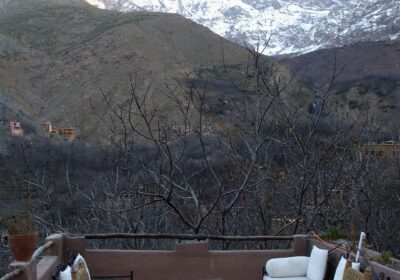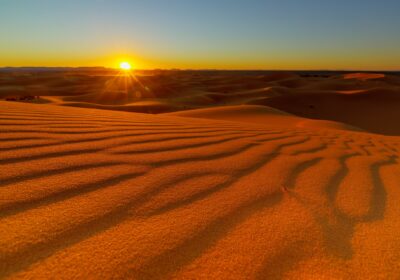

The Draa is Morocco’s longest river, running about 1,100 kilometers from the High Atlas toward the Atlantic, and its upper valley holds roughly 200 kilometers of palm groves and earthen villages. Most desert trips skip it entirely. A 4 day desert tour from Marrakech that goes through Zagora puts the Draa Valley on day one, then crosses the dark ridges of the Anti-Atlas to reach the big dunes of Erg Chebbi on day two.
Prefer a dedicated driver-guide for this route?
- Private air-conditioned vehicle + professional licensed driver-guide
- Flexible pace with customized stops along the mountain passes and valleys
- You choose and book your own preferred hotels and desert camps
- Instant quote requests via WhatsApp and Email
The result is a loop with almost no repeated road. You leave Marrakech heading south, swing east through some of the emptiest country in Morocco, and come back west along the gorges and kasbahs of the Dades. Four days, four nights of scenery you would never see from a standard route.
This guide is for travelers who already know they want the Sahara and are deciding between a three-day trip and something longer. We will walk through each day, explain what the extra day really buys you, and cover the practical side: driving times, where you sleep, what to pack and how to choose the right version of the route.
Why Choose a 4 Day Desert Tour From Marrakech?
The classic short trip from Marrakech to the dunes takes three days. It goes out and back on the same main road through Ouarzazate and the Dades Valley, with one long day each way. It works, and our 3 Day Desert Tour From Marrakech guide explains it in detail. But it has two weak points: long hours in the car and a return journey that repeats much of the outward one.
Adding a fourth day changes both. It spreads the driving more evenly, and it lets the route become a true loop: south through the Draa Valley and Zagora on the way out, back through the Todra and Dades gorges on the way home.
What the extra day buys you
- A new region: the Draa Valley, Zagora and the Anti-Atlas, which three-day trips never reach
- Less backtracking: only the stretch between Marrakech and Ouarzazate is driven twice
- Shorter return days: the gorges and kasbahs are split across two calmer days
- More time to stop: for photos, village walks, a fossil workshop or a long lunch
Who this route suits
This 4 day desert tour from Marrakech suits travelers who want more than a quick look at the dunes. It works well for couples and friends, for photographers who want different landscapes every day, and for families who would rather avoid one or two very long drives.
It is less suitable if you only have a long weekend. In that case, a three-day trip makes more sense, and you can always come back for the Draa Valley another time.
Zagora versus Merzouga: the honest answer
Many travelers have heard that Zagora has a desert and wonder whether they need to go further. The small dunes near Zagora are pleasant, but they are not the Sahara most people picture. Erg Chebbi near Merzouga is a sea of orange dunes, some rising over 150 meters.
This route gives you both: the oases and history of the Zagora region on day one, and the real dunes of Erg Chebbi on day two. You don’t have to choose.
The 4 Day Route at a Glance
Here is the whole Marrakech desert tour 4 days in one table. Driving times are approximate and include short stops for photos, coffee and lunch.
| Day | Route | Driving time (approx.) | Night |
|---|---|---|---|
| 1 | Marrakech, Tizi n’Tichka, Ouarzazate, Draa Valley, Zagora | About 7 hours | Hotel in Zagora |
| 2 | Zagora, Anti-Atlas, Tazarine, Alnif, Erfoud, Merzouga | About 6 hours | Luxury desert camp in Erg Chebbi |
| 3 | Sunrise ride, Rissani, Tinghir, Todra Gorge, Dades Valley | About 4 hours | Hotel in the Dades Valley |
| 4 | Valley of Roses, Skoura, Aït Benhaddou, Tizi n’Tichka, Marrakech | About 6 hours | Your choice in Marrakech |
How the pace works
The first two days carry most of the driving, as you head south and then east into the desert. Day three is the shortest of the trip, with time to walk in the Tinghir oasis and the Todra Gorge. Day four brings you back over the mountains to Marrakech in the late afternoon.
On a private tour, the timing is flexible. If you want a longer stop somewhere, your driver-guide adjusts the day around it.
Where you sleep
You stay in three different places: a hotel in Zagora on the edge of the palm grove, a private ensuite tent in the Erg Chebbi dunes, and a hotel in the Dades Valley. Dinners and breakfasts are typically arranged directly with your chosen hotels and desert camp.
Day 1: Marrakech to Zagora Through the Draa Valley
Your driver-guide collects you from your Marrakech hotel or riad at around 7:30. The road heads south-east across the plain and starts climbing into the High Atlas within the hour.
Over the Tizi n’Tichka pass
The N9 road crosses the High Atlas by the Tizi n’Tichka pass, whose summit sign reads 2,260 meters. The climb is a series of long bends through walnut groves and terraced Berber villages, with plenty of places to stop for photos and mint tea.
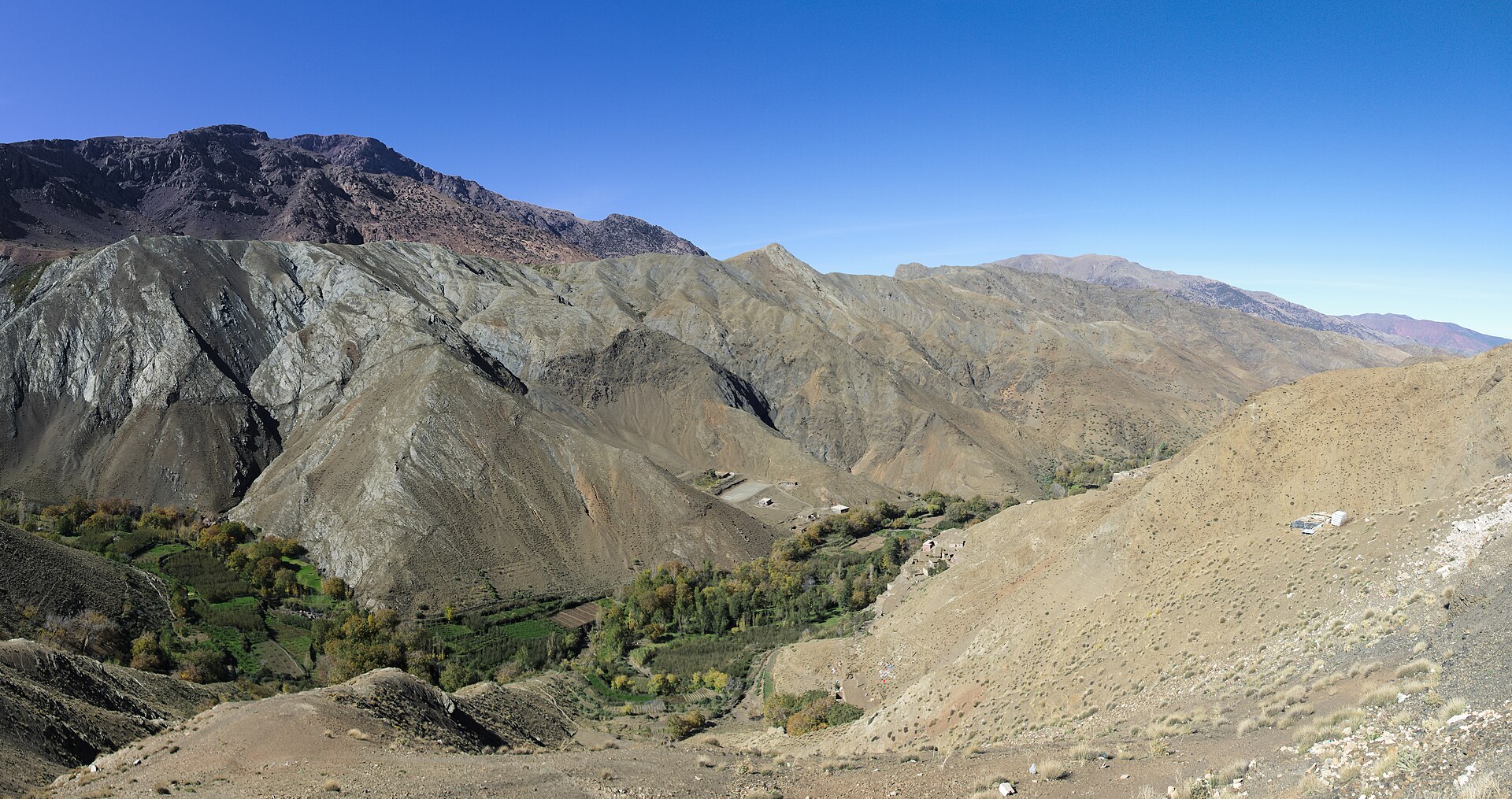
On the far side, the landscape changes quickly. Green slopes give way to dry red and ochre hills, and you start to see the earthen kasbahs that mark the south.
Ouarzazate and the Taourirt Kasbah
Ouarzazate is the main town of the south and a crossroads of the Draa and Dades valleys. Its best-known landmark is the Taourirt Kasbah, which oral tradition says was built in the 17th century and which the powerful Glaoui family expanded in the 19th. Part of it was restored with UNESCO’s help in the 1990s and is open to visitors.
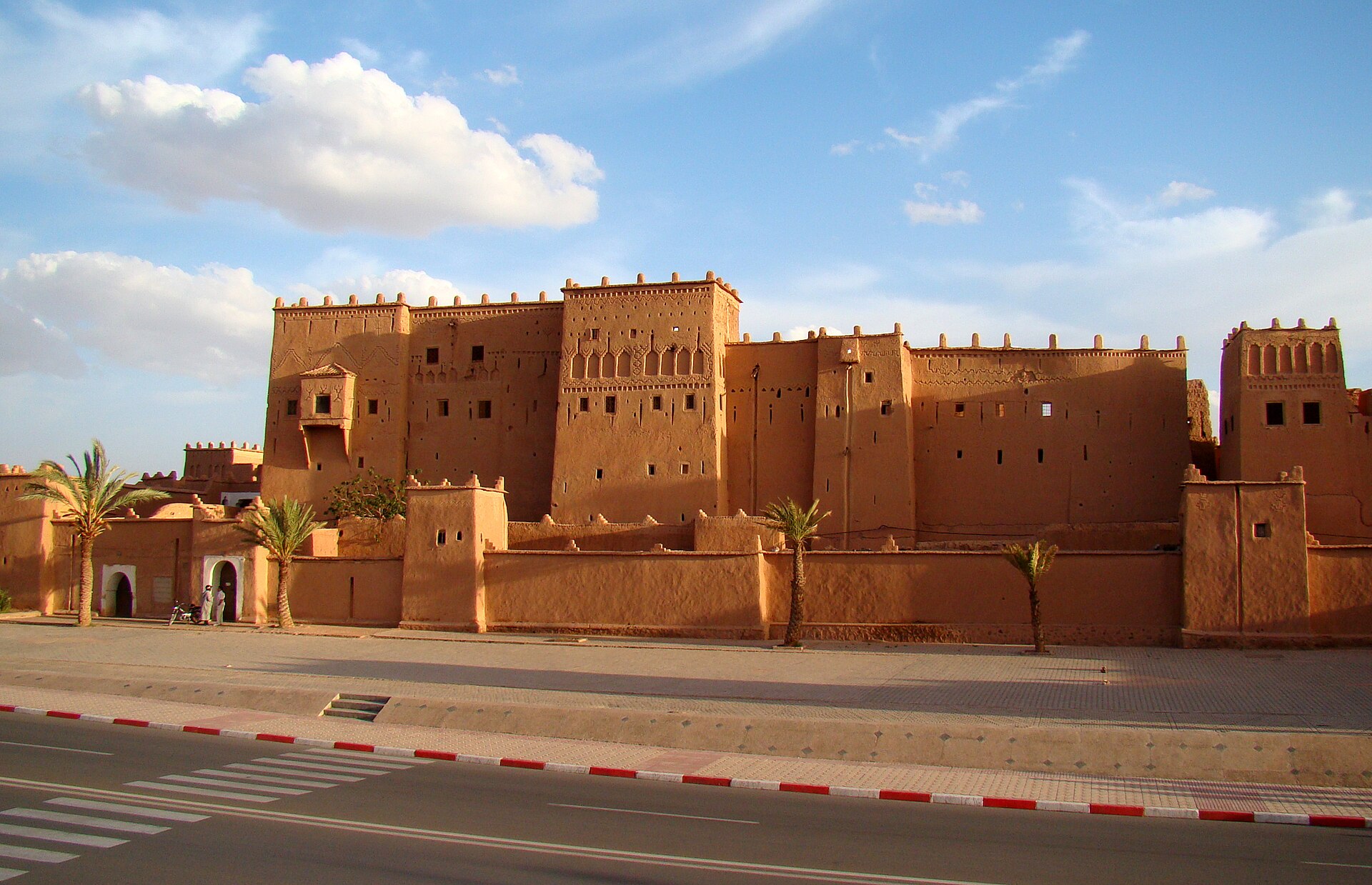
The town is also known for its film studios, and you will see their gates on the way in. Lunch is at leisure in Ouarzazate before the afternoon drive south.
Into the Draa Valley
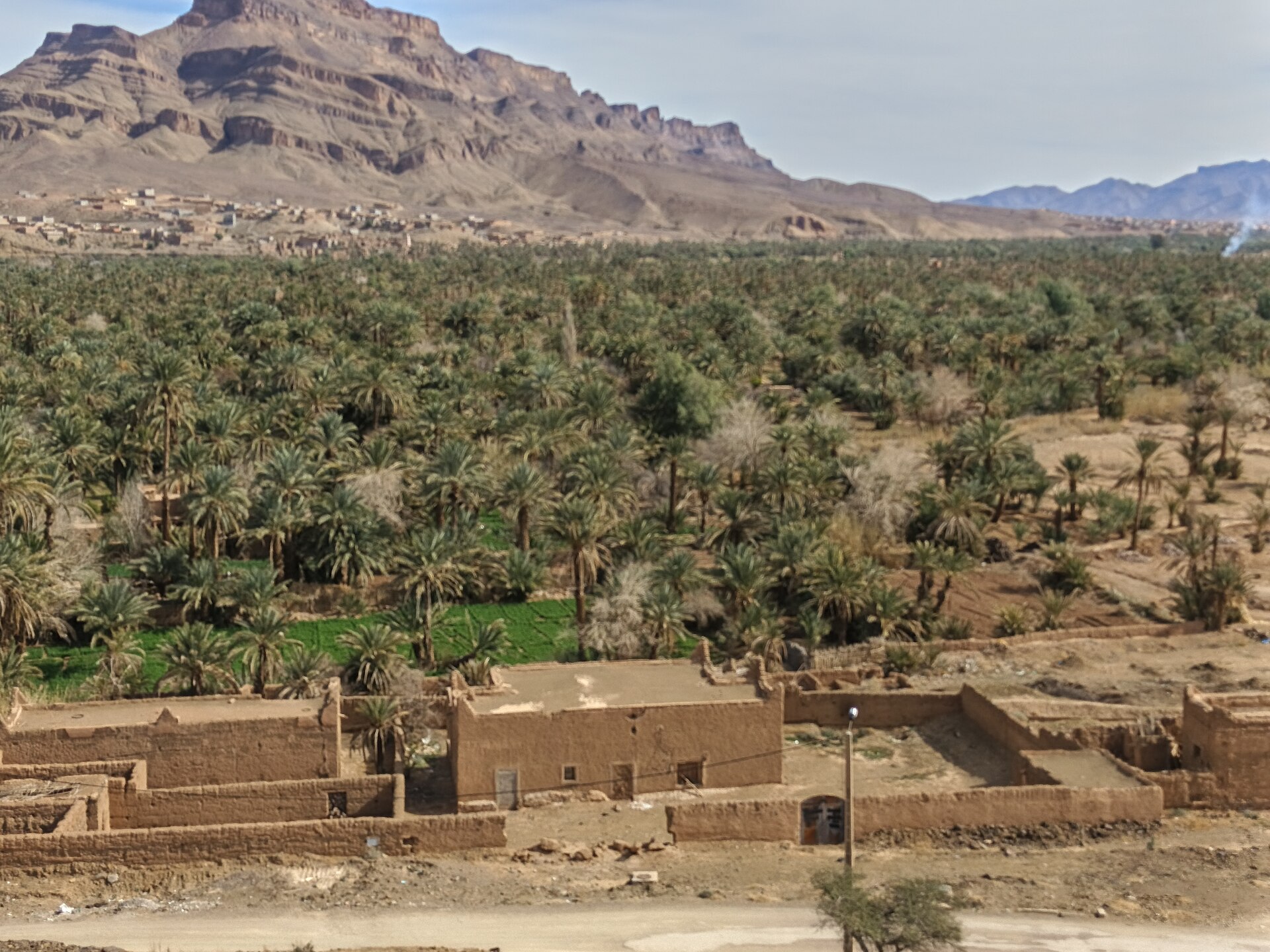
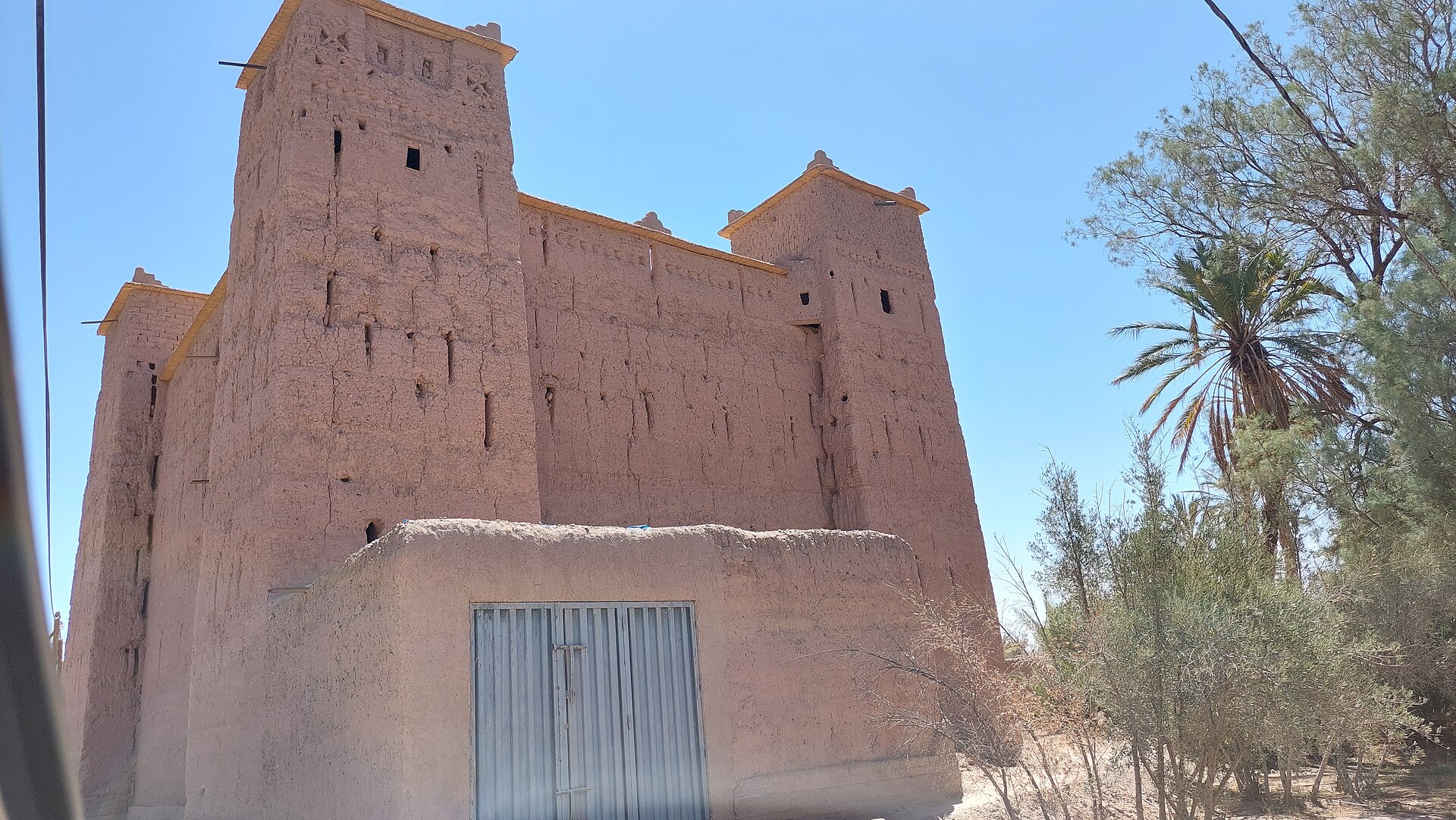
From Ouarzazate, the road climbs over the Tizi n’Tinififft pass and drops into the Draa Valley near Agdz. From here to Zagora, the road follows the river through a long chain of oases: date palms, wheat fields, almond trees and earthen villages called ksour, many of them still lived in.
The Draa River is Morocco’s longest, and its upper valley is one of the country’s great date-growing regions. In the late afternoon light, the palms against the bare mountains make this one of the most beautiful drives of the trip.
Evening in Zagora
You reach Zagora at the southern end of the Draa Valley in the early evening. The town is famous for an old sign at its edge that read “Tombouctou 52 jours”, the supposed travel time by camel to Timbuktu, a reminder that caravans once set out from here across the Sahara. The original sign has since been replaced by a mural.
Zagora offers welcoming hotels along the edge of the palm grove, featuring ensuite rooms, air conditioning, and gardens. Dinners and breakfasts can be booked directly with the hotel.
Day 2: From Zagora to Merzouga Across the Anti-Atlas
Day two is the heart of this 4 day desert tour from Marrakech and the stretch most visitors never see. The drive from Zagora to Merzouga crosses the eastern Anti-Atlas, a world of bare ridges, dry riverbeds and small, isolated oases.
The Jbel Saghro landscape
East of the Draa, the road skirts the southern edge of Jbel Saghro, an eastern extension of the Anti-Atlas and the driest mountain area in the whole Atlas system. Its highest peak, Amalou n’Mansour, reaches 2,712 meters. The range is the traditional home of the Aït Atta, a Berber people known for their semi-nomadic life.
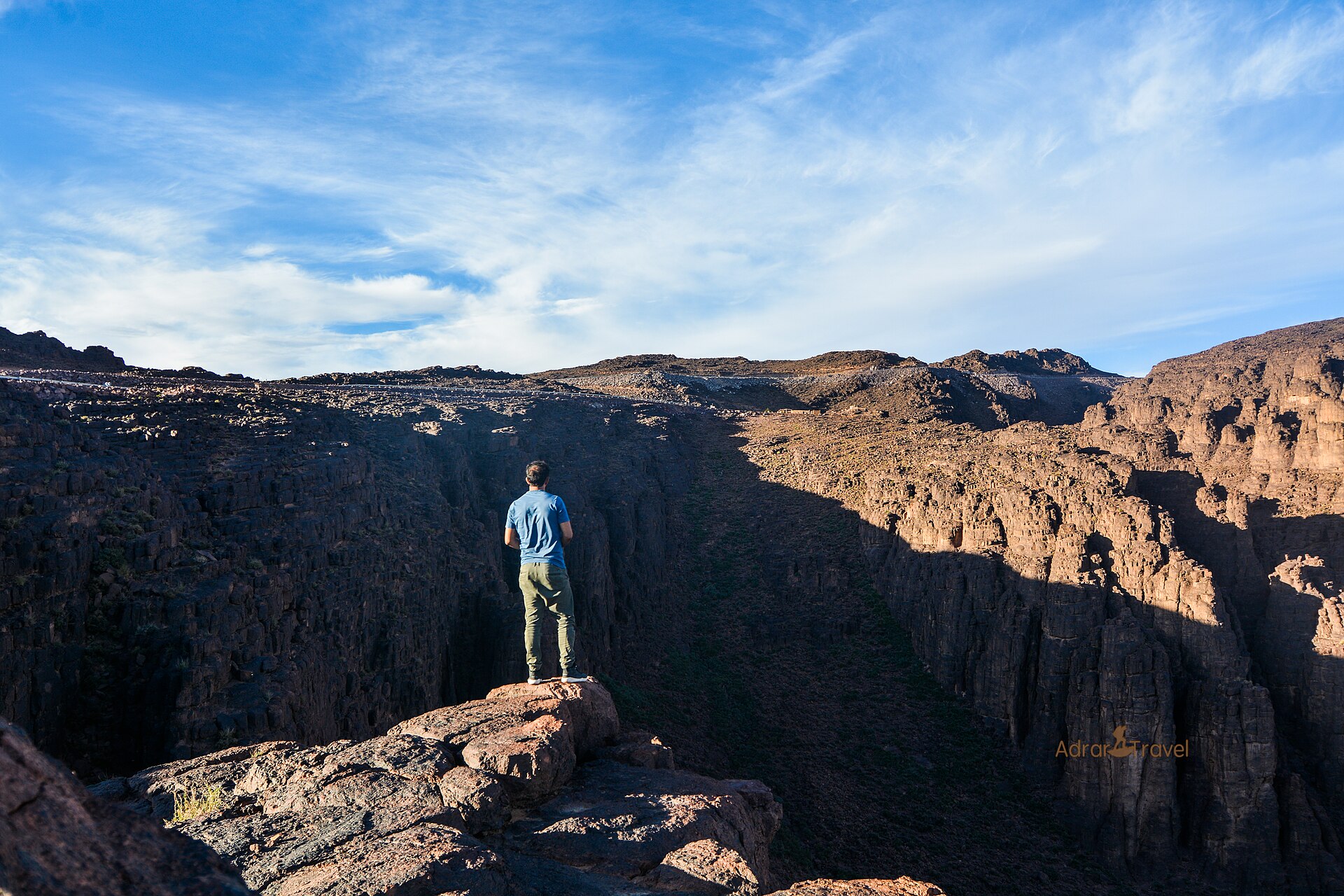
The scenery is stark and almost lunar: dark rock, flat-topped hills, and long views with hardly a building in sight. It is a very different Morocco from the busy main road through the Dades.
Tazarine and Alnif
The road passes through the oasis town of Tazarine and continues to Alnif for lunch. Alnif is one of the best-known fossil areas in the world, especially for trilobites, the sea creatures that lived here hundreds of millions of years ago, when this desert was under water.

Local workshops prepare and sell fossils, and some will show you how a trilobite is freed from the rock. If you buy one, ask for a receipt, and remember that the best pieces can be expensive.
Erfoud and the edge of the dunes
From Alnif, the road continues east to Erfoud, a date-market town and another fossil center, then south toward Merzouga. As you approach, the first orange dunes of Erg Chebbi appear on the horizon, rising suddenly out of the flat stony desert.
Sunset camel trek and the camp
In the late afternoon you meet your camel guide at the edge of the dunes. The ride takes about an hour, timed to reach the camp for sunset. If you would rather not ride, a 4×4 transfer to the camp is always possible at no extra cost.
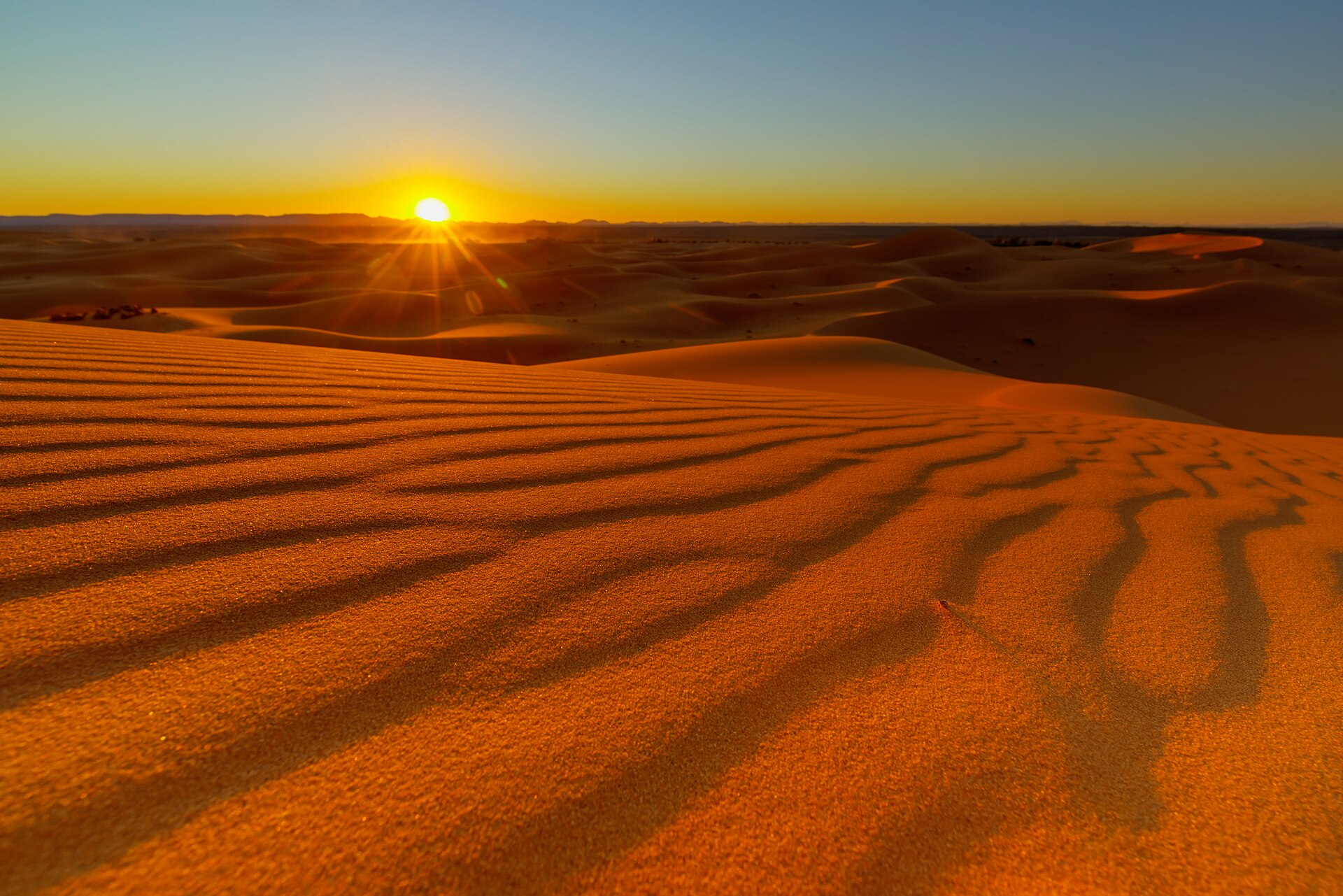
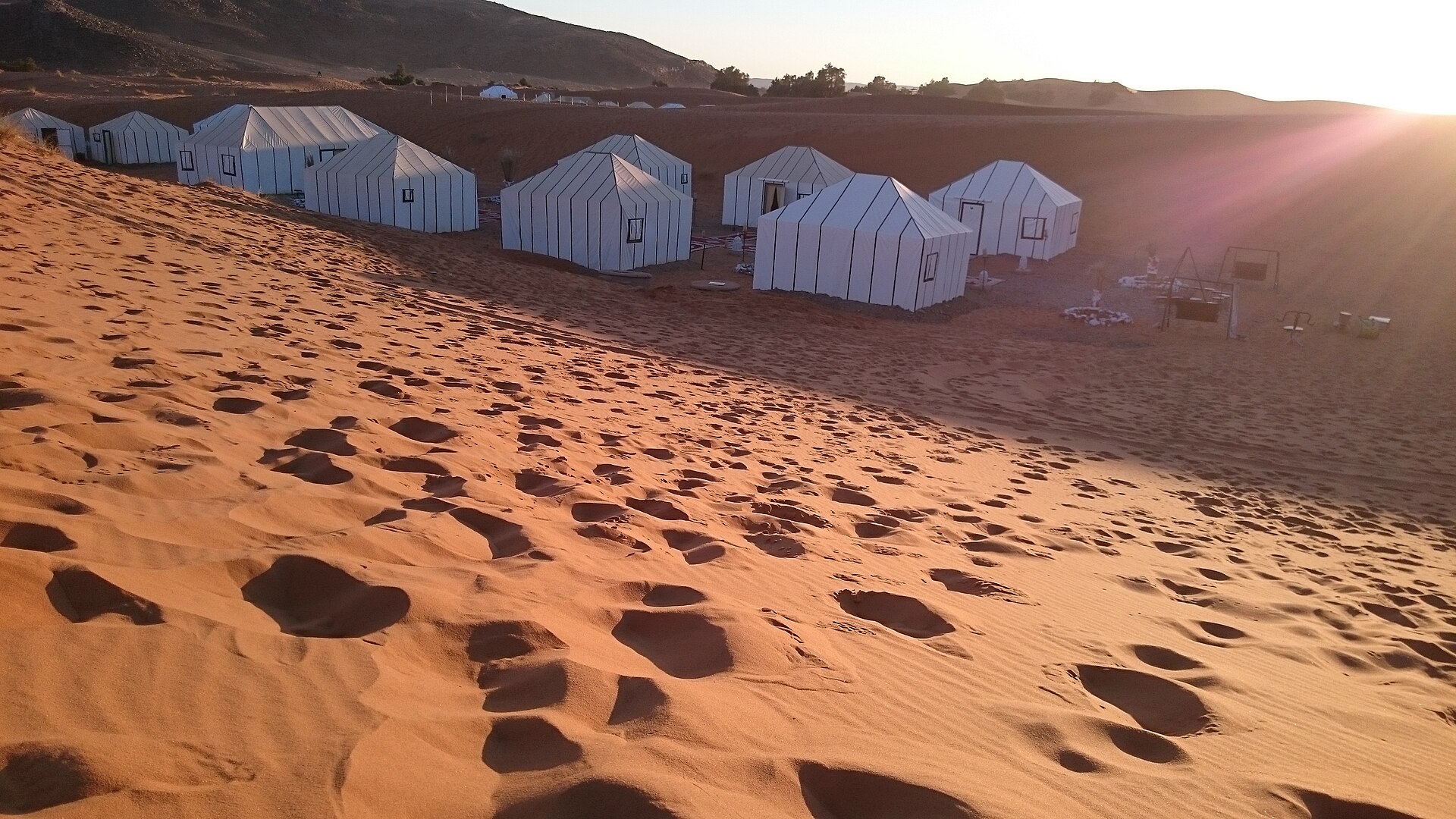
The night is spent in a luxury desert camp with a private ensuite tent, real beds, a hot shower, dinner, Berber drumming and a campfire. Away from any town, the stars are extraordinary on a clear night.
Day 3: Rissani, Tinghir and the Todra Gorge
An early wake-up brings a short sunrise camel ride to a high dune, then back to camp for breakfast. Watching the light move across the dunes is, for many travelers, the moment they remember most.
Rissani and the Tafilalt
The first stop is Rissani, the former capital of the Tafilalt oasis and the place most closely linked to the origins of the Alaouite dynasty, Morocco’s ruling family. After the medieval caravan city of Sijilmasa was destroyed in the 14th century, Rissani took its place as a hub of trans-Saharan trade.
Its big souk is busiest on Sundays, Tuesdays and Thursdays, but the date stalls and old ksar gateways are worth a short walk on any day. Dates from the Tafilalt are among the best in Morocco.
The Tinghir oasis
From Rissani, the road heads west to Tinghir, a town set above a long palm oasis. A local guide leads a walk along the riverbank through the gardens, where families grow vegetables, fruit trees and alfalfa beneath the palms using an old system of irrigation channels.
The Todra Gorge
A few kilometers beyond Tinghir, the valley narrows into the Todra Gorge. Here limestone walls rise up to about 400 meters on either side of a shallow, clear stream, and in the narrowest stretch the gorge is only a few meters wide. It is a favorite spot with rock climbers.
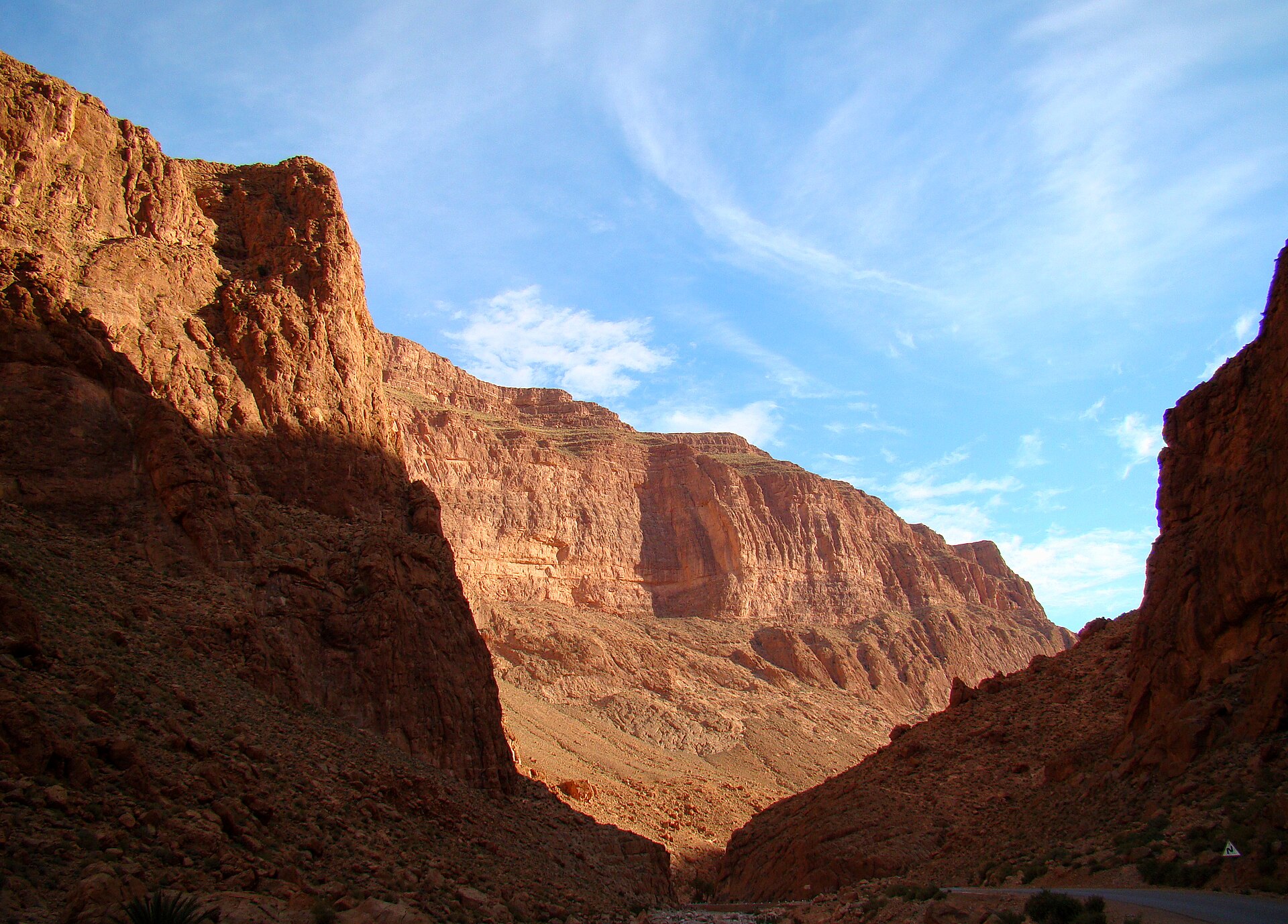
After lunch near the gorge, the Road of a Thousand Kasbahs leads to the Dades Valley. The afternoon is relaxed, with time to rest at your hotel before dinner.
Evening in the Dades Valley
The Dades Valley is known for its red rock formations and winding gorge roads. Hotels here offer comfortable ensuite rooms with valley views and on-site dining.

Day 4: Dades to Marrakech via Aït Benhaddou
The final day of your 4 day desert tour from Marrakech follows the kasbah country west and crosses the High Atlas back to the city.
The Valley of Roses
From Dades, the road passes through the Valley of Roses around Kelaat M’Gouna. The area is known for its rosewater and rose products, and in May it hosts a rose festival. A stop at a local cooperative shows how the petals are distilled.
Skoura and Kasbah Amridil
Next comes the Skoura oasis, a large palm grove dotted with old earthen kasbahs. The best known is Kasbah Amridil, a family kasbah from the 17th century that you can visit, with rooms, terraces and a small museum of daily life.
Aït Benhaddou
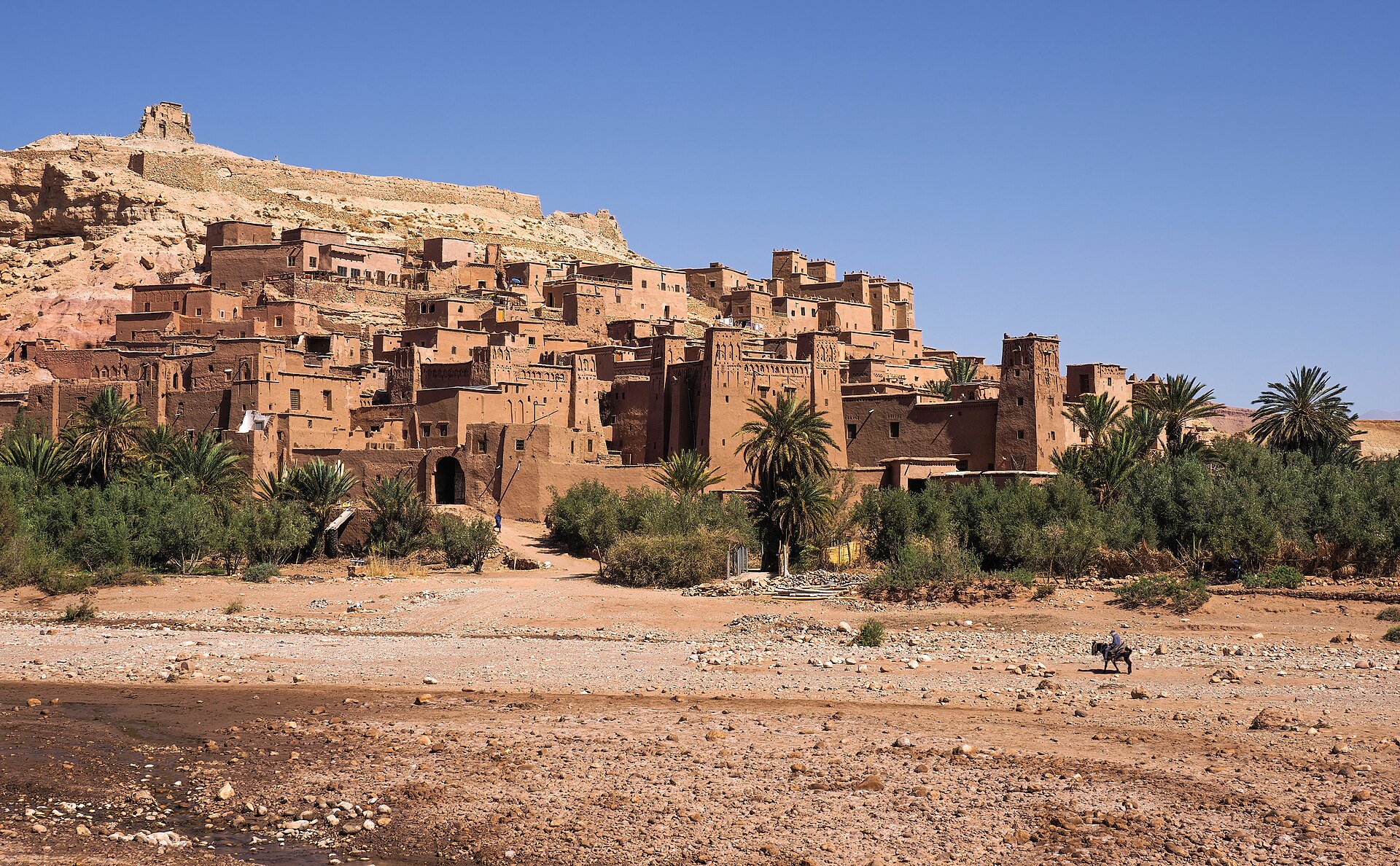
After passing Ouarzazate again, you reach the Ksar of Aït Benhaddou, listed by UNESCO in 1987. A local guide takes you across the river and up through the earthen lanes to the old granary at the top, with wide views over the valley. Many films and series have been shot here.
Back over the mountains
After lunch nearby, the road climbs back over Tizi n’Tichka and winds down to the plain. You are dropped at your Marrakech hotel or riad in the late afternoon, in time for a last evening in the medina.
Zagora to Merzouga: The Road Most Tours Skip
The drive from Zagora to Merzouga is what makes this route different, so it deserves a closer look.
Why so few tours go this way
Most desert trips from Marrakech take the main road east through the Dades and Todra valleys, because it is the fastest way to the dunes. The southern road from Zagora to Merzouga is quieter, longer and runs through sparsely populated country. For a three-day trip, it simply doesn’t fit.
With four days, it does. And because you come back through the Dades and Todra on day three, you still see the famous gorges, just on the return leg.
What makes the drive special
- Emptiness: long stretches with no towns, few cars and huge views
- Geology: dark ridges, flat-topped mesas and dry riverbeds that tell the story of an ancient landscape
- Oasis life: small villages such as Tazarine, where palm groves appear suddenly in the middle of bare rock
- Fossils: the workshops of Alnif and Erfoud, among the richest fossil areas on earth
Practical points
The road is paved all the way and comfortable in a modern 4×4 or van. Services are fewer than on the main route, so your driver plans fuel and lunch stops in advance. Bring water and snacks, and keep a layer handy, because the Anti-Atlas can be windy.
The Draa Valley in Depth
Day one is long, but the Draa Valley is the reason many travelers choose this route. Here is what to look out for along the way.
A river of palms
Between Agdz and Zagora, the Draa Valley is a continuous ribbon of green. The palm groves are divided into oases such as Mezguita around Agdz and Ternata around Zagora, each with its own villages and fields. The upper valley is around 200 kilometers long.
Ksour and kasbahs
The villages here are ksour: fortified villages of earthen houses, built close together for defense and shade. Some are still lived in, while others are slowly returning to the earth. Your driver can stop at a viewpoint or a village for a short walk.
Dates and daily life
Dates are the main crop, and the harvest takes place in the autumn. You may see families climbing the palms or drying fruit on rooftops. Under the palms, smaller plots of wheat, vegetables and henna make use of every drop of water.
Beyond Zagora
South of Zagora, the valley continues toward Tamegroute, known for its green-glazed pottery and an old religious library, and on to M’Hamid, where the road ends and the desert begins. These are not on the standard route, but they can be added with an extra night.
Marrakech Desert Tour 4 Days: Which Version Should You Choose?
Not every four-day trip from Marrakech is the same. When you compare offers, it helps to know the main options.
Via Zagora (this route)
Out through the Draa Valley and Zagora, across the Anti-Atlas to Merzouga, and back through the Todra and Dades gorges. Best for variety and for avoiding backtracking.
The standard 4-day Merzouga route
Out and back through the Dades and Todra, with an extra night in the desert or at the gorges. Easier and slightly shorter on the road, but you see the same valleys twice.
Ending in Fes instead
If you are continuing your trip in the north, a one-way route from Marrakech to Fes via the desert may suit you better. Our Marrakech to Fes desert tour guide explains that option, and the longer Marrakech to Chefchaouen tour continues to the blue city. Our 4-day private desert tour from Marrakech to Fes includes a full day in the dunes, and the 4-day tour from Marrakech to Casablanca suits travelers flying home from the coast.
Only two days?
If four days is too long, our 2 day desert tour from Marrakech guide covers the shortest overnight trip, to a desert camp near Zagora on the same Draa Valley road.
How to choose
- Want the most variety in four days? Choose the Zagora route.
- Want the easiest pace? Choose the standard route.
- Not coming back to Marrakech? Choose a one-way route to Fes or Casablanca.
- Only two days? Choose the overnight trip to Zagora.
Activities You Can Add Along the Way
The core route is full, but a private tour leaves room for extras. These are the add-ons guests ask about most on a 4 day desert tour from Marrakech.
In the dunes
- Sandboarding: boards are usually available at the camp, and the high dunes near the tents are perfect for a first try.
- Quad biking or buggies: available around Merzouga for an extra fee, best booked through your driver so you go with a reputable operator.
- A longer camel trek: if you love the camels, ask for a longer ride or a short walk in the dunes with your camel guide.
On the road
- A village visit near Merzouga: Khamlia is known for Gnawa music, with families who descend from people brought across the Sahara, and visitors are welcome to listen.
- A pottery stop in Tamegroute: a short detour south of Zagora, worth it if you add time on day one or an extra night.
- A short hike in the Dades: easy trails lead into the side canyons above the valley, ideal for an hour on the afternoon of day three.
Tell us which extras interest you when you enquire, and we will plan the days around them.
What a Typical Day Looks Like on a 4 Day Desert Tour From Marrakech
Four days on the road can sound tiring, so it helps to know how a normal day runs.
Mornings
Breakfast is usually between seven and eight, or earlier on the camp morning because of the sunrise ride. On driving days you leave soon after, so the longest stretches happen in the cool of the morning.
On the road
Your driver-guide stops roughly every two hours: for a viewpoint, a coffee, a village or a short walk. Lunch is usually somewhere simple and local. If something catches your eye, ask to stop.
Evenings
You reach each night’s stop in the late afternoon, with time to rest before dinner. The desert evening is the highlight, with music, a campfire and the stars.
Your driver-guide
The same English-speaking driver-guide stays with you for all four days. They are your translator, local expert and problem solver, and the conversations in the car are often one of the best parts of the trip.
Your Night in the Erg Chebbi Dunes
For most travelers, the night in the dunes is the reason for the whole trip. Here is what to expect so you can enjoy it fully.
Arriving at camp
The camel ride ends at the camp just as the sun goes down. Staff welcome you with mint tea, show you to your tent and give you time to settle in. Many guests climb the nearest dune before dinner to watch the last light fade over the sand.
The tents
Each tent is private, with real beds, linens, blankets and a private bathroom with a hot shower. Electricity is usually available for lighting and charging phones, though power can be limited, so a power bank is useful. The tents are comfortable, but remember that you are in the desert: sand gets everywhere.
Dinner and the evening
Dinner is served in a dining tent or outside under the sky, depending on the weather. Afterward, the camp staff play traditional drums around the campfire and often invite guests to join in. Later, when the fire burns down, step away from the lights and look up; on a clear night the Milky Way is easy to see.
Sleeping in the desert
Nights in Erg Chebbi can be surprisingly cold, even after a hot day, especially from November to March. Blankets are provided, but wear a warm layer to bed if you feel the cold. Set an alarm for the sunrise ride; your guide will knock on the tent too.
Photography Tips for the Zagora to Merzouga Loop
Few routes in Morocco give photographers as much variety in such a short time. The light and colors change almost every day of this 4 day desert tour from Marrakech.
- Tizi n’Tichka: the switchbacks look best from the viewpoints just below the pass, in the morning light.
- Draa Valley: the palm groves glow in the late afternoon, so the last hour before Zagora is the time to stop.
- Anti-Atlas: the empty ridges between Zagora and Merzouga work well in wide shots with a road or a single tree for scale.
- Erg Chebbi: shoot the dunes in the first and last hour of daylight, when the ridges throw long shadows.
- Todra Gorge: the cliffs catch the sun around midday, while the stream is lovely in the softer morning light.
- Aït Benhaddou: the classic view is from across the river in the late afternoon.
Keep your camera in a zip bag at the camp, carry a spare battery, and always ask before photographing people. In villages and ksour, a smile and a question go a long way.
Comfort and Safety on the Road
Long days on unfamiliar roads raise fair questions. Here is how a private Marrakech desert tour 4 days is set up to stay comfortable and safe.
The vehicle and the driver
You travel in a modern air-conditioned 4×4 or van, sized for your group. Your driver-guide knows these roads well, including the quieter southern route from Zagora to Merzouga, and plans fuel, rest and lunch stops in advance.
Motion and mountain roads
The Tizi n’Tichka road has many bends. If you are prone to car sickness, sit in the front, take medication before the climb, and ask for extra stops. The rest of the route is mostly straight and flat.
Health and water
Drink bottled or filtered water, which is easy to buy along the way. Use sunscreen, wear a hat, and drink more than you think you need on the desert days. Bring any medication you take regularly, as pharmacies are fewer in the south.
Private Transport Details & Model Clarity
Morocco Trip Lines provides private door-to-door transport with a dedicated professional driver-guide. Accommodation, desert camps, meals, and local site guides are arranged and booked directly by travelers, giving you complete flexibility and transparent pricing.
What Morocco Trip Lines Provides
- Private air-conditioned 4×4 or van with a dedicated English-speaking driver-guide for all four days
- Door-to-door pickup and drop-off at your Marrakech hotel or riad
- All fuel costs, highway tolls, and parking fees throughout the circuit
- Flexible itinerary adjustments and custom photo stops across the Draa Valley, Anti-Atlas, and Todra Gorge
Arranged Directly by Travelers
- Hotel accommodations in Zagora (Night 1) and the Dades Valley (Night 3)
- Desert camp stay in Erg Chebbi, Merzouga (Night 2)
- Meals, dinners, breakfasts, and drinks (arranged directly at your chosen accommodations)
- Camel treks or quad biking activities (coordinated directly with your desert camp)
- Site entrance fees and optional local medina/kasbah guides
- Personal travel insurance and driver gratuities
Planning Your 4 Day Desert Tour From Marrakech
A little planning makes a Marrakech desert tour 4 days long much smoother.
Best time of year
Spring (March to May) and autumn (September to November) are the best seasons: warm days and cool nights in the desert, with clear skies. Summer is very hot in Zagora and Merzouga, so the middle of the day is spent driving or resting. Winter days are pleasant, but desert nights can drop close to freezing, and snow sometimes closes Tizi n’Tichka for a few hours.
What to pack
- A warm jacket or fleece for the desert night and the mountain pass
- Light, breathable clothes for the day
- A hat, sunglasses and sunscreen
- Comfortable shoes for the oasis walks and Aït Benhaddou
- Long trousers for the camel ride
- A scarf for sun and sand
- A small backpack for the camp night, so your main bag can stay in the vehicle
Travelling with children
Children usually love the camels, the dunes and the fossils. Day one is long, so bring snacks and something to do in the car. Children can ride a camel with a handler walking alongside, or take the 4×4 to camp.
Customizing the route
Because the tour is private, it is easy to adjust. You can add a second night in the desert, extend the trip to Tamegroute and M’Hamid, spend longer in the gorges or slow the pace for children. Tell us what you have in mind when you enquire.
Food Along the Way
Four days from the Draa Valley to the Dades bring some of the best home cooking in Morocco.
Lunch stops
Lunches are usually simple and local: tagines, grilled kebabs, salads and fresh bread. In Ouarzazate and the gorges there are good restaurants with terraces and views.
Desert dinners
At the camp, dinner is usually soup, salads and a slow-cooked tagine or couscous, followed by fruit and mint tea. Around Rissani and Merzouga, look for madfouna, a stuffed flatbread baked in the embers and often called Berber pizza.
Dietary needs
Vegetarian meals are easy to find, and most hotels and camps can adapt dishes with notice. Tell us about allergies or dietary needs when you book.
Responsible Travel in the Draa Valley and the Desert
The south is a fragile landscape, and many of the communities along this route depend on water and tourism. A few habits make a real difference.
- Take your rubbish with you and leave the dunes as you found them.
- Use water carefully at the camp; it is brought in from far away.
- Dress modestly in villages and ksour.
- Always ask before photographing people.
- Buy fossils, carpets and crafts from workshops and cooperatives when you can, so more of the money stays with the makers.
Tips are not included and are always your choice. Many travelers tip their driver-guide at the end of the trip and local guides after each visit.
4 Day Desert Tour From Marrakech FAQ
How is this route different from a standard 4-day Merzouga tour?
It goes south through the Draa Valley and Zagora first, then crosses the Anti-Atlas from Zagora to Merzouga. The standard route goes out and back through the Dades Valley.
What is the drive from Zagora to Merzouga like?
It crosses the eastern Anti-Atlas, a dry, rocky and very empty landscape with small oases such as Tazarine. Lunch is in Alnif, a famous fossil area, and the road is paved all the way.
Why go to Zagora first?
Going south first lets you see the Draa Valley, the Anti-Atlas and Erg Chebbi within about 48 hours, and then come back through the gorges without repeating the outward road.
What is the Draa Valley?
It is the valley of Morocco’s longest river, with around 200 kilometers of date palms, ksour and farmland between Agdz and Zagora.
Is the luxury desert camp included?
No. Morocco Trip Lines provides private transport with a dedicated driver-guide. You choose and book your preferred desert camp in Erg Chebbi directly based on your budget, from authentic bivouacs to luxury ensuite tents with hot showers.
Can I skip the camel ride?
Yes. Camel rides and 4×4 dune transfers are arranged directly through your booked desert camp. If you prefer not to ride a camel, your driver coordinates seamlessly with your camp for vehicle arrival.
Is a Marrakech desert tour 4 days long enough?
For the desert, the Draa Valley and the gorges, yes. It is a comfortable length that avoids very long drives. If you want more time in the dunes, you can add a second night at the camp.
Can the 4 day desert tour from Marrakech be customized?
Yes. Stop times, activities and the route itself can be adjusted. Contact us with your ideas.
How much does the tour cost?
The price depends on your group size, season and room choices. Send your dates and number of travelers through the enquiry form, and we will reply with a personal quote.
Is the tour private?
Yes. You travel only with your own group, in your own vehicle with your own driver-guide, for all four days.
Can I add a second night in the desert?
Yes. A second night at the Erg Chebbi camp turns this into a five-day trip with a full free day in the dunes, which is ideal for sandboarding, a longer camel ride or simply relaxing.
Is the Draa Valley worth the longer first day?
For most travelers, yes. The Draa Valley is one of the most beautiful oasis landscapes in Morocco, and the road through it is far quieter than the main desert route.
Do I need a 4×4 for the Zagora to Merzouga road?
No special vehicle is required, because the road is paved all the way. We use air-conditioned 4x4s or vans, depending on group size, which are comfortable on long stretches and can reach the camp area in the dunes.
What if it rains or Tizi n’Tichka is closed?
Rain is rare in the south, but winter snow occasionally closes the pass for a few hours. Your driver-guide follows road reports and will adjust timings, or wait for the road to reopen, so the trip continues safely.
Can we start the tour in the afternoon?
It is better to start early, because day one is the longest. If you arrive in Marrakech late, we recommend a night in the city first and an early pickup the next morning.
Plan Your 4 Day Desert Tour From Marrakech With Local Hosts
Three days gets you to the dunes. Four days, on the right route, shows you the south: the palm groves of the Draa Valley, the empty ridges of the Anti-Atlas, a night in the Erg Chebbi dunes and the gorges and kasbahs on the way home. For travelers who want the Sahara without spending most of the trip retracing their steps, a 4 day desert tour from Marrakech via Zagora is the better choice.
The next step is simple: pick your dates and decide whether you want a second desert night or the standard four days. Then see our 4-Day Private Desert Tour from Marrakech via Zagora and send us your dates through the enquiry form. If you only have three days, our 3-day private desert tour to Merzouga is the shorter alternative.